
What does lubrication level benefits mean in sewing thread applications?
In the realm of sewing thread manufacturing, the term lubrication level benefits refers to the advantages gained from the application of lubricants during the production of sewing threads. This concept is pivotal, as it directly influences the performance and durability of the thread in various sewing applications.
Basic definition
Lubrication in sewing threads involves the application of substances that reduce friction between the fibers and the sewing machine components. This can include oils, waxes, or other chemical agents. The primary goal is to enhance the thread’s performance by improving its smoothness and reducing wear during sewing.
Why it matters in sewing performance
The lubrication level benefits are significant for several reasons:
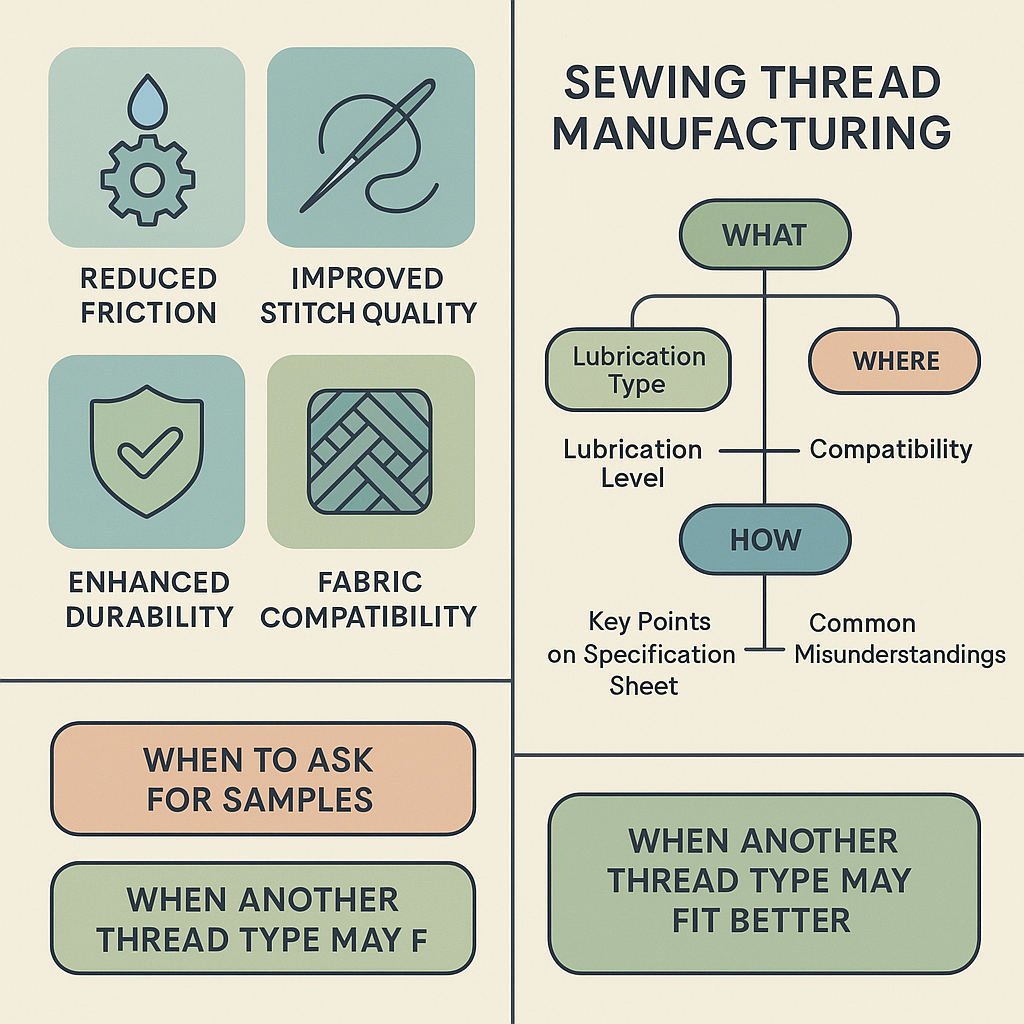
- Reduced Friction: Proper lubrication minimizes friction, allowing the thread to glide smoothly through the fabric and machine. This reduces the risk of thread breakage and ensures consistent stitching.
- Improved Stitch Quality: Threads with optimal lubrication levels produce cleaner, more uniform stitches, which is crucial for aesthetic and functional quality in finished products.
- Enhanced Durability: Lubricated threads tend to withstand wear and tear better, extending their lifespan and maintaining performance over time.
- Compatibility with Different Fabrics: The right lubrication can help threads perform better across various fabric types, accommodating diverse sewing applications.
Where is lubrication level benefits used?
Understanding where lubrication level benefits are applied can help buyers make informed decisions when sourcing sewing threads.
Common sewing thread products or applications
Lubrication level benefits are particularly relevant in the following thread types and applications:
- 100% Spun Staple Polyester Yarn: This type of thread benefits from lubrication to enhance its softness and flexibility, making it suitable for garments and home textiles.
- High Tenacity Polyester Filament Yarn: Used in heavy-duty applications, lubrication helps maintain strength and reduces the risk of fraying.
- Bonded Yarns: These threads require precise lubrication levels to ensure that the bonding agents adhere properly without compromising the thread’s integrity.
- Nylon Yarns: Lubrication is critical in nylon threads to prevent heat buildup during sewing, which can lead to melting or degradation.
What buyers usually check
When evaluating sewing threads, buyers typically consider:
- Lubrication Type: Different lubricants can affect thread performance in various ways. Buyers should understand which type is best suited for their specific application.
- Lubrication Level: The amount of lubricant applied can influence sewing behavior. Buyers should assess whether a higher or lower lubrication level is needed based on their sewing conditions.
- Compatibility: Ensuring that the thread’s lubrication is compatible with the sewing machine and fabric is essential to avoid issues during production.
How to evaluate lubrication level benefits
Evaluating lubrication level benefits requires a careful examination of specifications and performance indicators.
Key points on a specification sheet
When reviewing a thread’s specification sheet, consider the following:
- Lubrication Type and Amount: Look for detailed information on the type of lubricant used and its concentration.
- Performance Metrics: Check for data on friction coefficients, tensile strength, and elongation, which can indicate how well the thread will perform under various conditions.
- Application Suitability: Ensure that the thread is specified for the intended sewing application, taking into account the fabric type and sewing techniques.
Common misunderstandings
There are several misconceptions regarding lubrication levels in sewing threads:
- More Lubrication is Always Better: While lubrication is beneficial, excessive amounts can lead to issues such as thread slippage or contamination of the fabric.
- All Lubricants are the Same: Different lubricants have unique properties and effects on thread performance. Understanding these differences is crucial for optimal thread selection.
- Lubrication is Only for Specific Threads: All threads can benefit from appropriate lubrication, regardless of their composition or intended use.
Practical takeaway for sourcing teams
For sourcing teams, understanding lubrication level benefits can lead to better decision-making and improved sewing outcomes.
When to ask for samples
Requesting samples is advisable when:
- You are exploring a new application or fabric type that may require different lubrication levels.
- You need to assess how a specific thread performs under your sewing conditions.
- You want to compare different threads to determine which offers the best lubrication level benefits for your needs.
When another thread type may fit better
Consider alternative thread types if:
- The current thread consistently experiences issues such as breakage or poor stitch quality, indicating that the lubrication level may not be optimal.
- Your application requires specific characteristics that are not met by the current thread, such as higher durability or compatibility with certain fabrics.
- You are working with a new sewing machine that may have different lubrication requirements than your previous equipment.
In conclusion, understanding the lubrication level benefits in sewing thread manufacturing is essential for optimizing sewing performance and ensuring the right fit for various applications. By evaluating lubrication types, levels, and their impact on thread performance, sourcing teams can make informed decisions that enhance the quality and durability of their sewing projects.