
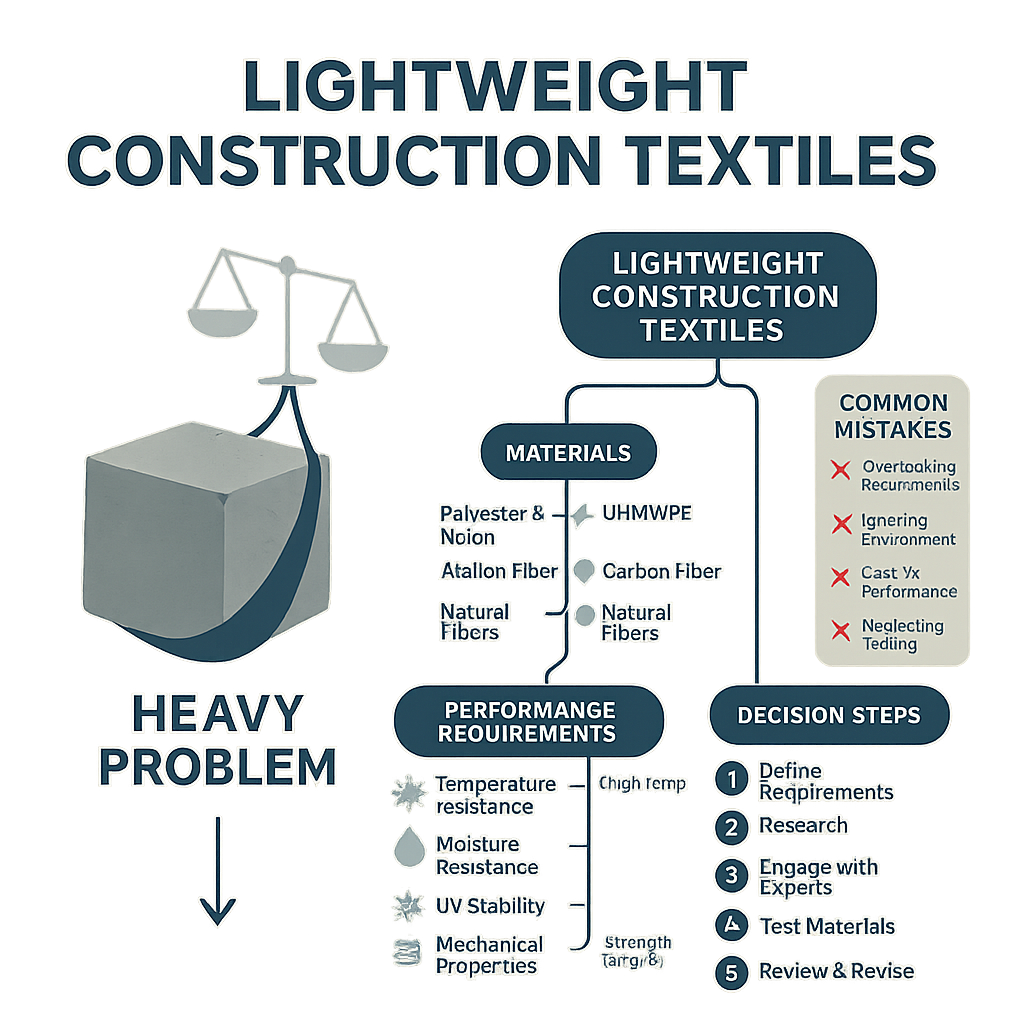
A Practical Way to Understand Lightweight Construction Textiles
In the evolving landscape of design and engineering, the demand for materials that combine strength with reduced weight has never been more critical. Lightweight construction textiles are emerging as a transformative solution, enabling designers and engineers to tackle heavy design problems with innovative approaches. These textiles not only enhance performance but also contribute to sustainability goals by reducing material usage and overall project weight.
This article delves into the intricacies of lightweight construction textiles, exploring their materials, performance requirements, and common pitfalls in selection. By understanding these elements, decision-makers can make informed choices that align with their project needs.
Materials and Construction Options
Lightweight construction textiles encompass a diverse range of materials, each offering unique properties suited for various applications. The selection of the right textile is crucial, as it can significantly impact both the functionality and durability of the final product.
Where Each Option Tends to Fit Best
- Polyester and Nylon: These synthetic fibers are commonly used in applications requiring flexibility and resistance to wear. They are ideal for outdoor gear, tents, and lightweight structures where durability is essential.
- UHMWPE (Ultra-High Molecular Weight Polyethylene): Known for its exceptional strength-to-weight ratio, UHMWPE is often utilized in high-performance applications such as ballistic vests and marine textiles. Its low friction properties make it suitable for applications involving sliding or moving parts.
- Carbon Fiber: This material offers unparalleled strength and stiffness while remaining lightweight. It is frequently used in aerospace and automotive applications where performance and weight savings are critical.
- Aramid Fibers (e.g., Kevlar): Renowned for their high tensile strength and thermal stability, aramid fibers are commonly employed in protective clothing and high-performance composites.
- Natural Fibers (e.g., Hemp, Flax): These materials are gaining traction due to their sustainability and biodegradability. They are often used in eco-friendly applications, such as furniture and automotive interiors.
Performance Requirements That Matter Most
When selecting lightweight construction textiles, understanding the performance requirements is essential. These requirements can vary significantly based on the intended application and environmental conditions.
How Environment and Use Conditions Change the Decision
- Temperature Resistance: In applications exposed to extreme temperatures, materials must maintain their integrity. For instance, carbon fiber composites can withstand high temperatures, making them suitable for aerospace applications.
- Moisture Resistance: Textiles used in outdoor applications must resist moisture to prevent degradation. UHMWPE and certain treated polyester fabrics excel in wet conditions.
- UV Stability: Prolonged exposure to sunlight can degrade many materials. Selecting textiles with UV resistance is crucial for outdoor applications.
- Mechanical Properties: Understanding tensile strength, elongation, and fatigue resistance is vital for ensuring that the selected textile can withstand the stresses it will encounter in use.
Common Mistakes in Selection or Sourcing
Despite the wealth of options available, many decision-makers fall into common traps when selecting lightweight construction textiles. Recognizing these pitfalls can lead to better outcomes.
- Overlooking Application-Specific Requirements: Failing to consider the specific demands of the application can lead to material failure. For example, using a textile that is too flexible for a load-bearing application can result in structural issues.
- Ignoring Environmental Factors: Not accounting for environmental conditions can compromise performance. For instance, using a textile that degrades in UV light for an outdoor application can lead to premature failure.
- Underestimating Cost vs. Performance Trade-offs: While it may be tempting to select the cheapest option, this can lead to higher costs in the long run due to maintenance or replacement needs. Evaluating the total cost of ownership is crucial.
- Neglecting Testing and Certification: Relying solely on manufacturer claims without independent testing can lead to poor material choices. Ensuring that materials meet industry standards is essential for performance assurance.
What Better Decisions Look Like in Practice
Making informed decisions about lightweight construction textiles involves a systematic approach that considers all relevant factors. Here are some practical steps to guide the decision-making process:
- Define Project Requirements: Clearly outline the performance criteria, environmental conditions, and specific application needs before beginning the material selection process.
- Conduct Thorough Research: Investigate various textile options, focusing on their properties, advantages, and limitations. Utilize industry resources, technical datasheets, and case studies to inform your choices.
- Engage with Experts: Collaborate with material scientists, engineers, and textile specialists to gain insights into the best materials for your specific application. Their expertise can help navigate complex decisions.
- Prioritize Testing: Whenever possible, conduct tests on selected materials to evaluate their performance in real-world conditions. This can provide valuable data to support your final decision.
- Review and Revise: After implementation, continuously monitor the performance of the selected textiles and be open to revising choices based on feedback and performance data.
Conclusion
Lightweight construction textiles present a compelling solution to heavy design challenges across various industries. By understanding the materials available, performance requirements, and common pitfalls in selection, decision-makers can make informed choices that enhance project outcomes. A systematic approach to material selection—considering application fit, environmental factors, and thorough testing—will lead to better performance and sustainability in design.
Ultimately, the right lightweight construction textile can not only solve immediate design problems but also contribute to long-term project success and innovation. As the industry continues to evolve, staying informed about material advancements and best practices will be key to leveraging the full potential of lightweight textiles.