
What does lead time planning properties mean in sewing thread applications?
In the realm of sewing, lead time planning properties refer to the essential factors that influence the timely selection and procurement of sewing threads. Understanding these properties is vital for manufacturers and sourcing teams to ensure that the right threads are available when needed, thereby optimizing production schedules and meeting delivery deadlines.
Basic definition
Lead time planning properties encompass the various aspects that affect the time it takes to acquire sewing threads, from initial selection to final delivery. This includes considerations such as production timelines, inventory levels, and the specific requirements of different sewing applications. By grasping these properties, businesses can make informed decisions that enhance operational efficiency.
Why it matters in sewing performance
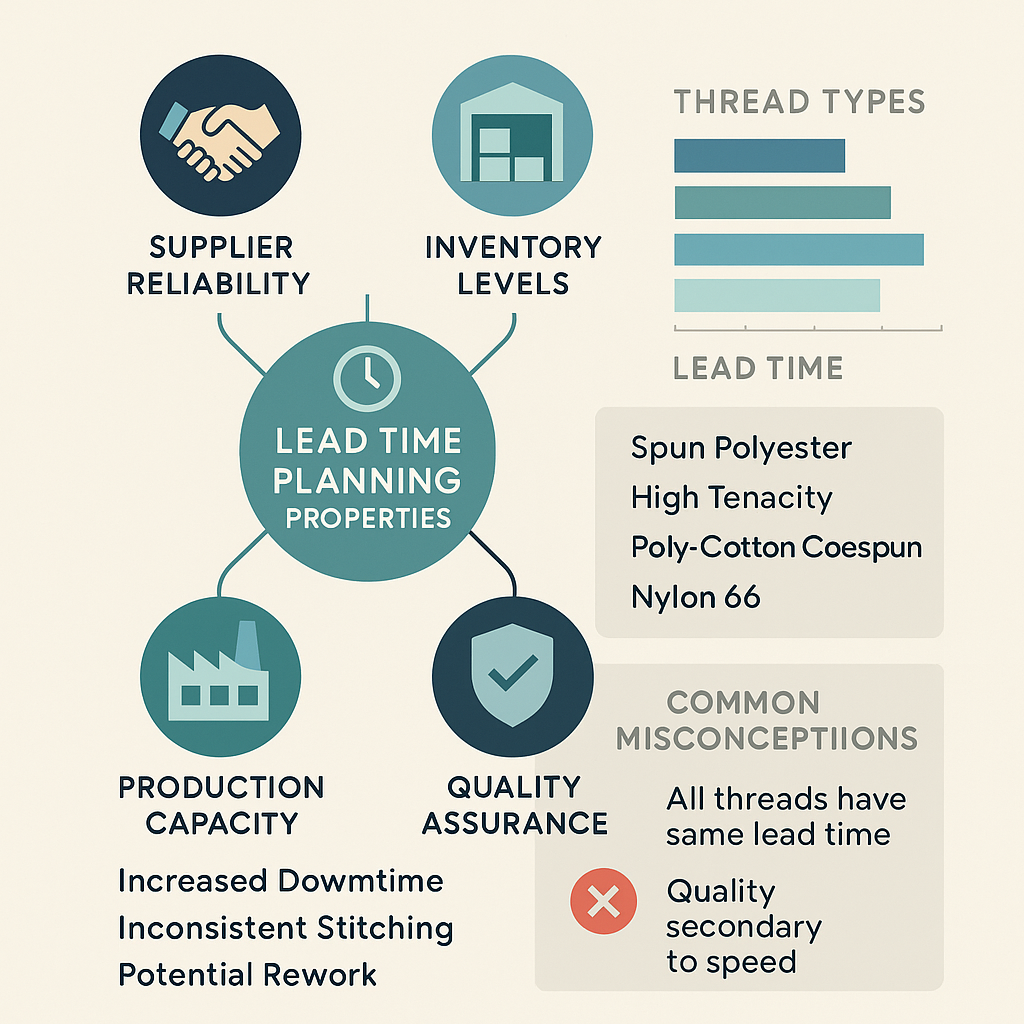
The impact of lead time planning properties on sewing performance cannot be overstated. Delays in thread procurement can lead to production bottlenecks, increased costs, and compromised product quality. When the right thread is not available at the right time, it can result in:
- Increased downtime for sewing machines.
- Inconsistent stitching quality.
- Potential rework or waste due to incorrect thread selection.
By understanding and effectively managing lead time planning properties, businesses can mitigate these risks and ensure smoother production processes.
Where is lead time planning properties used?
Lead time planning properties are applicable across various sectors within the sewing industry. Understanding where these properties come into play can help businesses tailor their sourcing strategies accordingly.
Common sewing thread products or applications
Different sewing applications require specific types of threads, each with unique lead time considerations. Some common products include:
- 100% Spun Staple Polyester Yarn: Ideal for general sewing applications, this thread type offers durability and versatility.
- High Tenacity Polyester Filament Yarn: Used in demanding applications where strength is paramount, such as outdoor gear and automotive textiles.
- Poly-Cotton Corespun Yarn: Combines the benefits of polyester and cotton, making it suitable for a range of apparel applications.
- Nylon 66 Inner Bonded Yarn: Known for its strength and resistance to abrasion, often used in heavy-duty sewing tasks.
What buyers usually check
When evaluating lead time planning properties, buyers typically consider the following factors:
- Supplier reliability: The track record of suppliers in meeting delivery timelines.
- Inventory levels: Availability of the required threads in stock.
- Production capacity: The ability of suppliers to meet large orders within specified timeframes.
- Quality assurance: Ensuring that the threads meet the necessary performance standards.
How to evaluate lead time planning properties
Evaluating lead time planning properties requires a systematic approach to ensure that all relevant factors are considered. Here are some key points to focus on:
Key points on a specification sheet
A well-structured specification sheet can provide valuable insights into lead time planning properties. Key elements to look for include:
- Production lead times: Estimated timeframes for thread production and delivery.
- Minimum order quantities: Understanding the smallest order size that can be placed without affecting lead times.
- Material specifications: Detailed descriptions of the thread materials and their properties.
- Testing certifications: Information on quality tests performed on the threads.
Common misunderstandings
Several misconceptions can cloud the understanding of lead time planning properties:
- All threads have the same lead time: Different thread types and suppliers can have vastly different lead times.
- Quality is secondary to speed: Rushing to meet lead times can compromise quality, leading to increased costs in the long run.
- Inventory levels are not important: Maintaining appropriate inventory levels can significantly reduce lead time issues.
Practical takeaway for sourcing teams
For sourcing teams, understanding lead time planning properties is crucial for effective decision-making. Here are some practical insights:
When to ask for samples
Requesting samples can be beneficial when:
- Evaluating new thread types for specific applications.
- Assessing the quality and performance of a supplier’s offerings.
- Determining compatibility with existing sewing processes.
When another thread type may fit better
In some cases, it may be advantageous to consider alternative thread types. This could be due to:
- Longer lead times for a specific thread type that could be mitigated by switching to a more readily available option.
- Performance requirements that may be better met by a different material.
- Cost considerations that could influence the choice of thread.
In conclusion, understanding lead time planning properties is essential for optimizing sewing thread selection. By evaluating these properties effectively, sourcing teams can make informed decisions that enhance production efficiency and product quality. The right thread, available at the right time, can significantly impact overall sewing performance and operational success.