
Why this industrial textiles classification matters in practical use
The classification of industrial textiles is not merely an academic exercise; it has profound implications for manufacturers, engineers, and decision-makers. Understanding how industrial textiles are categorized can significantly influence material selection, application suitability, and overall performance in various industrial settings. As industries evolve, so do the demands placed on textiles, necessitating a nuanced understanding of their classifications.
In practical terms, the classification of industrial textiles helps stakeholders identify the right materials for specific applications. For instance, high-end industrial textiles may be required in aerospace applications due to their superior strength-to-weight ratios, while other sectors may prioritize cost-effectiveness over performance. This article aims to provide a comprehensive overview of how industrial textiles are classified and the implications of these classifications in real-world applications.
How the industrial textiles is typically defined and where the boundaries really are
Industrial textiles can be broadly defined as textiles that are used for non-apparel applications, primarily in industrial settings. This definition encompasses a wide range of materials and applications, making it essential to understand the nuances involved in classification.
What people often oversimplify
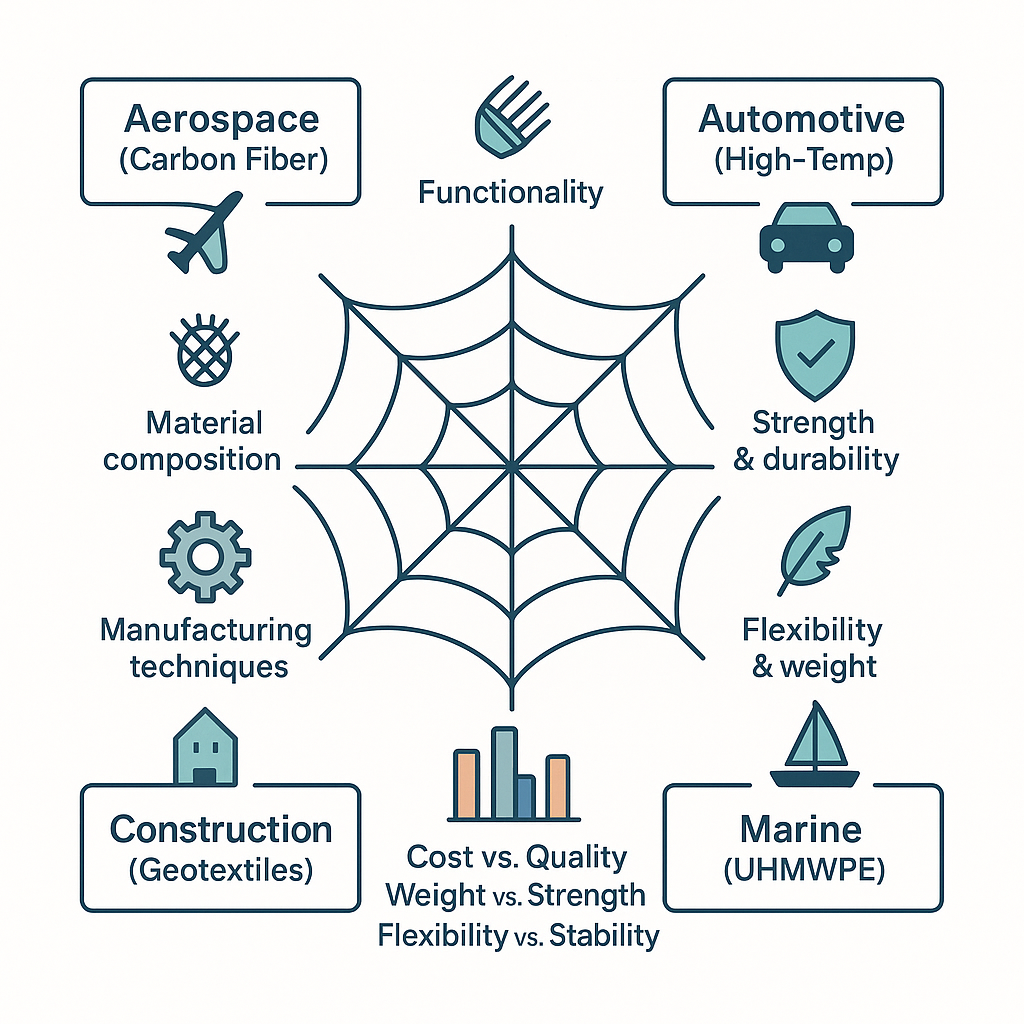
One common oversimplification is the belief that all industrial textiles serve the same purpose. In reality, the classification of industrial textiles is influenced by various factors, including:
- Functionality: Textiles can be classified based on their intended use, such as filtration, reinforcement, or insulation.
- Material Composition: Different fibers, such as polyester, nylon, or UHMWPE, impart distinct properties to the textiles.
- Manufacturing Techniques: The method of production—woven, non-woven, or knitted—affects the textile’s performance characteristics.
By oversimplifying these classifications, decision-makers risk selecting materials that may not meet the specific requirements of their applications.
Key materials, structures, or design choices that shape performance
The performance of industrial textiles is heavily influenced by the materials used, the structures formed, and the design choices made during manufacturing. Understanding these elements is crucial for making informed decisions.
What changes the most from one application to another
Different applications demand varying performance characteristics from industrial textiles. For example:
- Strength and Durability: In applications like construction or marine environments, textiles must withstand extreme conditions, requiring materials like UHMWPE or aramid fibers.
- Flexibility and Weight: Aerospace applications prioritize lightweight materials that maintain structural integrity, often utilizing advanced composites like carbon fiber.
- Thermal Resistance: In automotive applications, textiles may need to resist high temperatures, necessitating specialized coatings or materials.
Each application presents unique challenges, and understanding these nuances is vital for selecting the right textile solution.
Selection logic: what to evaluate before choosing a solution
When selecting industrial textiles, a systematic evaluation process is essential. The following factors should be considered:
- Performance Requirements: Identify the specific performance characteristics needed for the application, such as tensile strength, flexibility, or thermal resistance.
- Environmental Conditions: Consider the environmental factors the textile will be exposed to, including moisture, temperature fluctuations, and chemical exposure.
- Cost vs. Performance: Evaluate the trade-offs between cost and performance. High-end industrial textiles may offer superior performance but at a higher cost.
- Regulatory Compliance: Ensure that the selected textiles meet any industry-specific regulations or standards.
This structured approach helps ensure that the chosen textile solution aligns with the application’s specific needs.
Common trade-offs to keep in mind
In the process of selecting industrial textiles, several trade-offs often arise:
- Cost vs. Quality: Higher-quality materials often come with increased costs, necessitating a careful evaluation of budget constraints versus performance needs.
- Weight vs. Strength: Lightweight materials may sacrifice some strength, while heavier materials may offer enhanced durability but at the cost of ease of handling.
- Flexibility vs. Stability: Some applications may require flexible textiles, while others prioritize stability and rigidity, leading to different material choices.
Understanding these trade-offs can help decision-makers make more informed choices that align with their operational goals.
Application examples and practical takeaways
To illustrate the importance of industrial textiles classification, consider the following application examples:
- Aerospace: In aerospace applications, the use of advanced composites like carbon fiber is critical for achieving high strength-to-weight ratios. The classification of these materials as high-end industrial textiles reflects their specialized performance characteristics.
- Automotive: Automotive textiles often require materials that can withstand high temperatures and resist wear. Understanding the classification of these textiles helps manufacturers choose the right materials for safety and performance.
- Construction: In construction, textiles used for reinforcement or as geotextiles must be durable and resistant to environmental factors. The classification of these textiles is essential for ensuring they meet industry standards.
These examples highlight the practical implications of industrial textiles classification and underscore the need for a thorough understanding of material properties and application requirements.
Conclusion
In conclusion, the classification of industrial textiles is a complex but essential aspect of modern manufacturing. By understanding the various classifications, stakeholders can make informed decisions that align with their specific application needs. Evaluating performance requirements, environmental conditions, and potential trade-offs are crucial steps in the selection process.
As industries continue to evolve, the demand for high-performance industrial textiles will only increase. By keeping abreast of classification nuances and material properties, decision-makers can ensure they select the most suitable textile solutions for their applications, ultimately enhancing operational efficiency and product performance.
For those navigating the landscape of industrial textiles, a thoughtful approach to classification and selection can lead to significant advantages in both performance and cost-effectiveness.