
What This Industrial Textiles Really Covers
Industrial textiles encompass a broad range of materials designed for specific applications, often characterized by their durability, strength, and specialized performance properties. These high-end industrial textiles are utilized in various sectors, including automotive, aerospace, construction, and medical fields. Understanding the nuances of industrial textile product planning is crucial for engineers and decision-makers to ensure that the selected materials meet the intended performance criteria.
In this article, we will explore seven common mistakes in industrial textile product planning that can lead to suboptimal outcomes. By identifying these pitfalls and understanding the underlying principles of material selection and application fit, stakeholders can make more informed decisions that enhance product performance and longevity.
How Product Design Changes from One Use Case to Another
One of the most significant aspects of industrial textile product planning is recognizing that product design must adapt to the specific use case. Different applications demand varying properties from textiles, and failing to account for these differences can lead to performance issues.
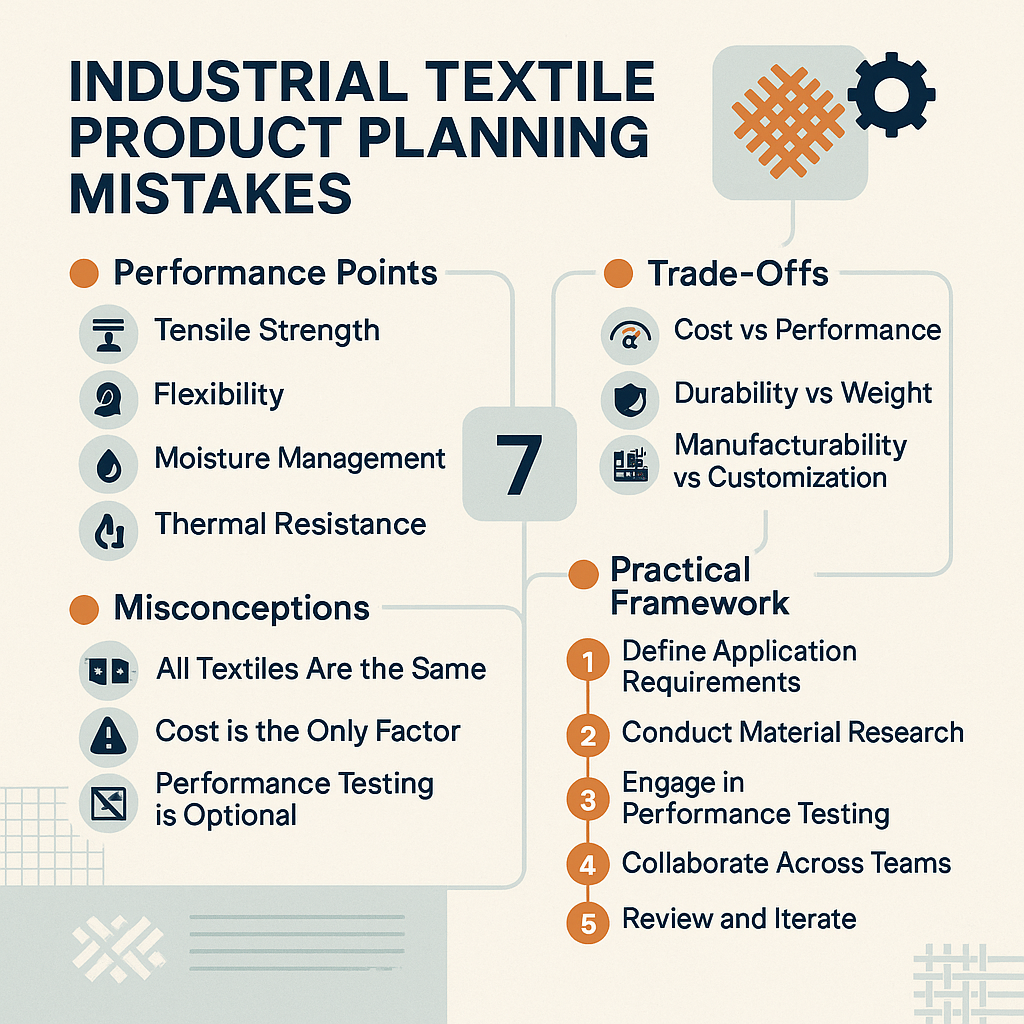
Performance Points That Deserve Closer Attention
- Tensile Strength: Essential for applications requiring high load-bearing capabilities, such as in construction or automotive industries.
- Flexibility: Important for textiles used in wearable technology or applications where movement is critical.
- Moisture Management: Crucial for textiles in medical applications or outdoor gear, where moisture control can impact performance and comfort.
- Thermal Resistance: Necessary for textiles used in environments with extreme temperatures, such as aerospace applications.
Each of these performance points can significantly influence the success of the final product. Therefore, a thorough understanding of how these properties interact with the intended application is vital.
How Buyers and Engineers Evaluate Trade-Offs
When selecting materials for industrial textiles, buyers and engineers often face trade-offs between various performance characteristics. Understanding these trade-offs is essential for making informed decisions that align with project goals.
- Cost vs. Performance: Higher-performing materials often come with increased costs. Evaluating whether the performance benefits justify the additional expense is crucial.
- Durability vs. Weight: In applications like aerospace, lightweight materials are preferred, but they must also maintain sufficient durability. Finding the right balance is key.
- Manufacturability vs. Customization: Custom solutions may offer tailored performance but can complicate manufacturing processes. Understanding the implications of customization is essential.
These trade-offs require careful consideration and often necessitate collaboration between engineers and procurement teams to ensure that the selected materials align with both technical specifications and budgetary constraints.
Misconceptions That Lead to Weak Decisions
Several misconceptions can cloud judgment during the industrial textile product planning process, leading to poor decisions. Addressing these misconceptions can help stakeholders make more informed choices.
- All Textiles Are the Same: This is a common misconception that overlooks the vast differences in material properties and performance capabilities among various textiles.
- Cost is the Only Factor: While cost is important, focusing solely on price can lead to selecting inferior materials that do not meet performance requirements.
- Performance Testing is Optional: Skipping performance testing can result in unforeseen issues during production or use, emphasizing the importance of thorough testing protocols.
By recognizing these misconceptions, decision-makers can approach industrial textile product planning with a more nuanced understanding of the complexities involved.
A More Practical Framework for Future Decisions
To avoid the common mistakes identified in this article, stakeholders can adopt a more structured framework for industrial textile product planning. This framework should include the following steps:
- Define Application Requirements: Clearly outline the specific performance criteria and environmental conditions the textile must meet.
- Conduct Material Research: Investigate various materials that meet the defined requirements, considering their properties and potential trade-offs.
- Engage in Performance Testing: Implement rigorous testing protocols to evaluate material performance under real-world conditions.
- Collaborate Across Teams: Foster communication between engineering, procurement, and production teams to ensure alignment on material selection and application goals.
- Review and Iterate: Continuously assess the performance of selected materials and be open to making adjustments based on feedback and testing results.
By following this framework, organizations can enhance their industrial textile product planning processes, leading to better performance outcomes and reduced risk of costly mistakes.
Conclusion
Understanding the common mistakes in industrial textile product planning is essential for making informed decisions that align with specific application needs. By recognizing the importance of performance characteristics, evaluating trade-offs, and addressing misconceptions, stakeholders can significantly improve their planning processes.
Ultimately, a structured approach to material selection and application fit will lead to more successful outcomes in the realm of high-end industrial textiles. By focusing on the nuances of material properties and their implications for performance, decision-makers can navigate the complexities of industrial textile product planning with greater confidence.