
What This Industrial Textiles Really Covers
The term “industrial textiles” encompasses a broad spectrum of materials designed for specialized applications. Unlike consumer textiles, which prioritize aesthetics and comfort, industrial textiles are engineered for performance, durability, and functionality. This category includes high-end industrial textiles, technical textiles, and advanced industrial textiles, each tailored to meet specific operational demands.
Understanding the nuances of these textiles is crucial for decision-makers. An effective industrial textile end use strategy goes beyond merely selecting materials based on fiber names; it requires a comprehensive understanding of how these materials perform in real-world applications. This article delves into the importance of end-use thinking in the selection and application of industrial textiles.
How Product Design Changes from One Use Case to Another
Product design in industrial textiles is not a one-size-fits-all approach. Different applications necessitate distinct design considerations, which can significantly influence material selection. For instance, the requirements for textiles used in aerospace applications differ vastly from those used in automotive or medical settings.
Performance Points That Deserve Closer Attention
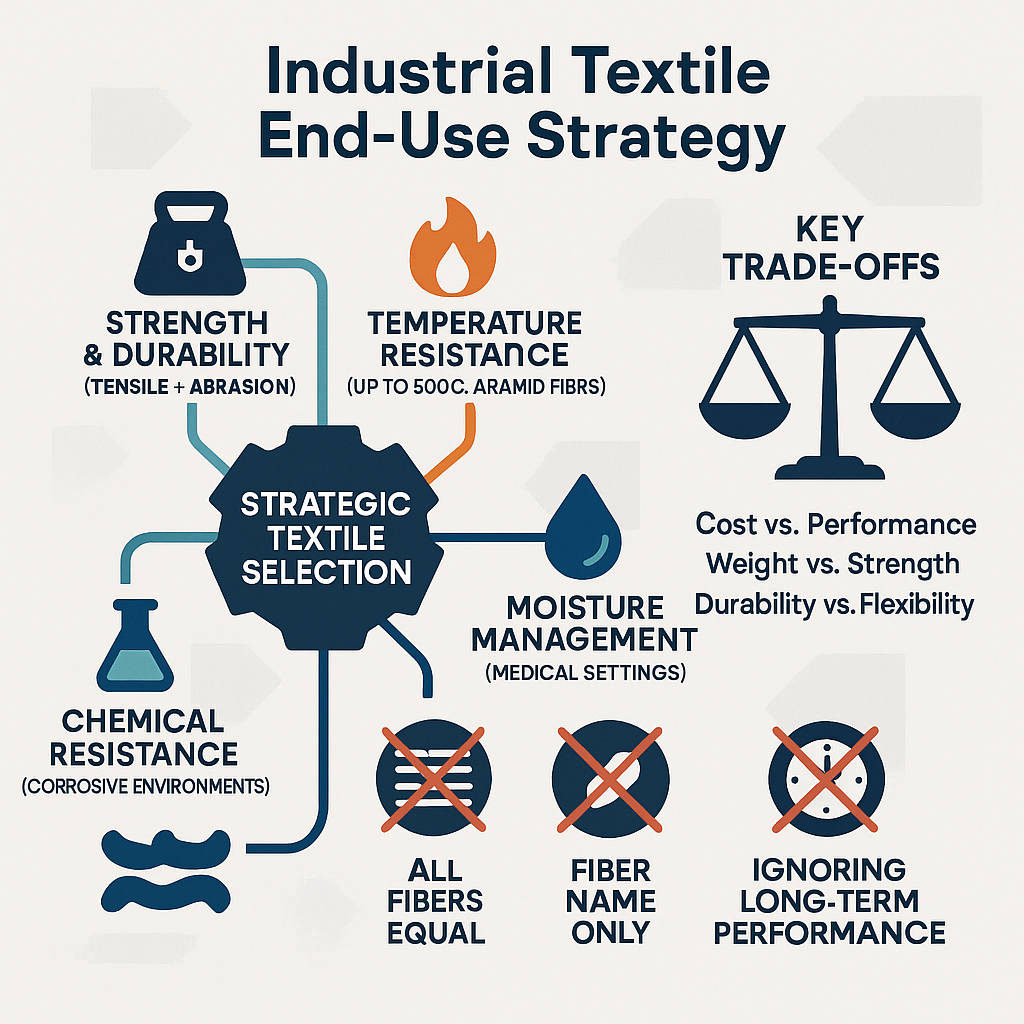
- Strength and Durability: In applications like construction or heavy machinery, the tensile strength and abrasion resistance of textiles are paramount. Materials such as UHMWPE (Ultra High Molecular Weight Polyethylene) are often favored for their exceptional strength-to-weight ratio.
- Temperature Resistance: In industries such as aerospace, textiles must withstand extreme temperatures. Materials like aramid fibers are engineered to perform under high heat, making them suitable for fire-resistant applications.
- Moisture Management: In medical textiles, moisture-wicking properties can be critical. Fabrics that manage moisture effectively can enhance comfort and hygiene, which is vital in healthcare settings.
- Chemical Resistance: For textiles used in chemical processing, resistance to corrosive substances is essential. Selecting materials that can withstand harsh chemicals can prevent premature failure and ensure safety.
Each of these performance points must be evaluated in the context of the intended application. A comprehensive understanding of how these properties interact with specific use cases can guide better material selection.
How Buyers and Engineers Evaluate Trade-offs
When selecting industrial textiles, buyers and engineers often face a series of trade-offs. Understanding these trade-offs is essential for making informed decisions that align with project goals.
- Cost vs. Performance: While high-performance materials may offer superior properties, they often come at a higher cost. Decision-makers must evaluate whether the performance benefits justify the additional expense.
- Weight vs. Strength: In applications like aerospace, reducing weight is critical for efficiency. However, this often requires selecting materials that may not provide the same level of strength as heavier alternatives.
- Durability vs. Flexibility: Certain applications may require a balance between durability and flexibility. For instance, textiles used in wearable technology must be both robust and adaptable to movement.
By carefully weighing these trade-offs, buyers and engineers can make more strategic decisions that enhance the overall performance of their products.
Misconceptions That Lead to Weak Decisions
Several misconceptions can hinder effective decision-making in the realm of industrial textiles. Addressing these misunderstandings is crucial for fostering a more informed approach to material selection.
- All Fibers Are Created Equal: A common misconception is that all fibers within a category (e.g., synthetic fibers) perform similarly. In reality, variations in fiber composition, structure, and treatment can lead to vastly different performance outcomes.
- Focus on Fiber Name Over Application: Relying solely on fiber names can lead to oversimplified decisions. It’s essential to consider how a material’s properties align with specific application requirements.
- Ignoring Long-Term Performance: Some decision-makers prioritize initial cost over long-term performance. This can result in higher costs down the line due to material failure or replacement.
By recognizing and addressing these misconceptions, stakeholders can make more informed choices that enhance the effectiveness and longevity of their industrial textile applications.
A More Practical Framework for Future Decisions
To navigate the complexities of industrial textile selection, a structured decision-making framework can be invaluable. Here are key steps to consider:
- Define Application Requirements: Clearly outline the specific needs of the application, including performance criteria, environmental conditions, and regulatory standards.
- Evaluate Material Properties: Assess the relevant properties of potential materials, considering how they align with the defined application requirements.
- Consider Trade-offs: Identify and evaluate the trade-offs associated with different materials, weighing factors such as cost, performance, and longevity.
- Consult Experts: Engage with material experts or industry consultants to gain insights into the latest developments and best practices in industrial textiles.
- Test and Validate: Whenever possible, conduct testing to validate material performance in real-world conditions before making final decisions.
This framework encourages a holistic approach to material selection, ensuring that decisions are grounded in a thorough understanding of both the materials and their intended applications.
Conclusion
In the evolving landscape of industrial textiles, adopting an industrial textile end use strategy is essential for making informed decisions. By focusing on application fit, performance considerations, and the trade-offs involved, buyers and engineers can enhance the effectiveness of their material selections. Understanding the nuances of high-end industrial textiles and technical textiles allows for better alignment with specific operational needs, ultimately leading to improved performance and longevity.
As the industry continues to advance, fostering a mindset that prioritizes end-use thinking will be crucial for navigating the complexities of material selection and application. By doing so, stakeholders can ensure that their choices are not only informed but also strategically aligned with their operational goals.