
A Practical Way to Understand Implantable Medical Textiles
The field of medical textiles has evolved significantly over the years, transitioning from basic surface contact applications to more complex internal uses, particularly in implantable devices. Understanding implantable medical textiles is crucial for professionals involved in medical device design, engineering, and procurement. These textiles are not merely fabrics; they are engineered materials that play a vital role in patient outcomes and device functionality.
This article aims to provide a comprehensive overview of implantable medical textiles, focusing on material selection, performance requirements, and common pitfalls in sourcing. By the end, readers will have a clearer understanding of how to make informed decisions regarding these specialized materials.
Materials and Construction Options
When it comes to implantable medical textiles, the choice of materials and construction methods is paramount. Various materials are used, each with distinct properties that influence performance and suitability for specific applications.
Where Each Option Tends to Fit Best
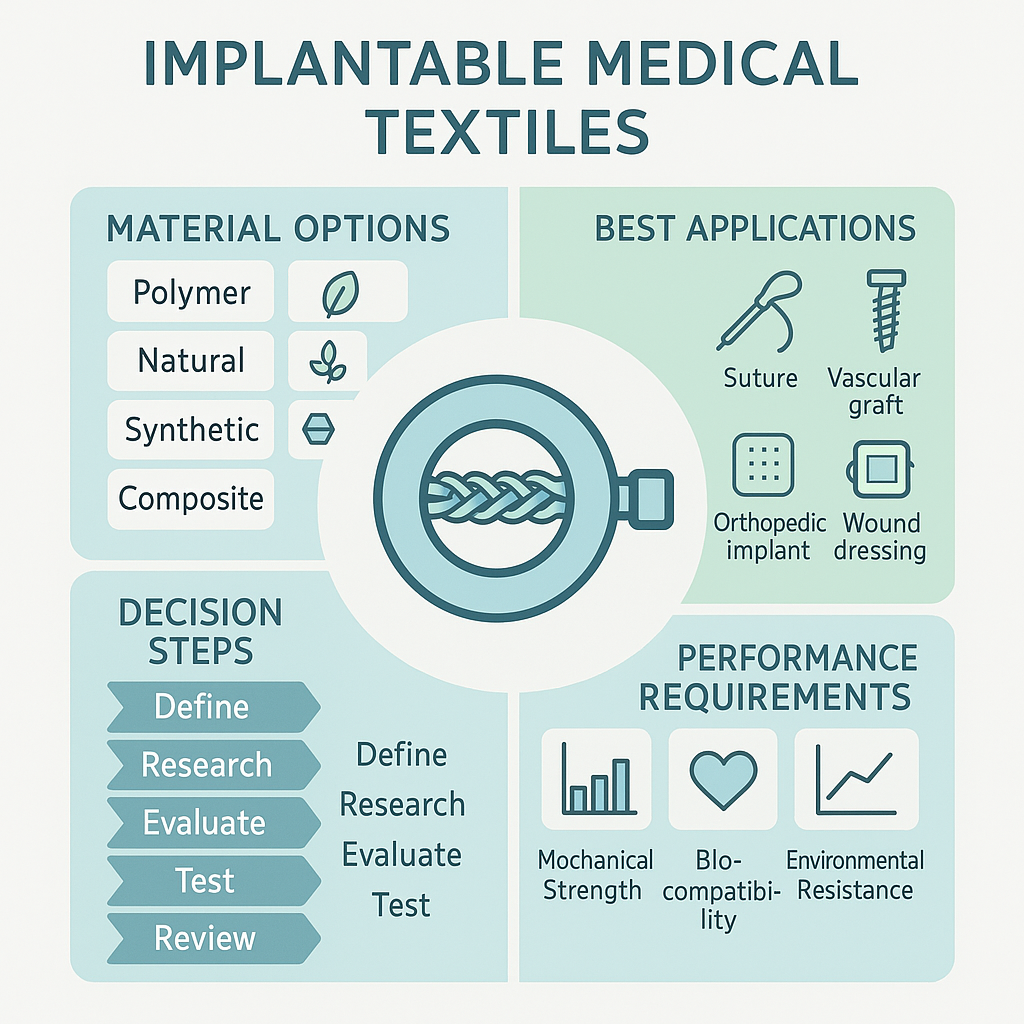
- Polymer-Based Textiles: Commonly used for their biocompatibility and versatility. Materials like polyethylene (PE), polypropylene (PP), and polyvinyl chloride (PVC) are often selected for applications such as sutures and wound dressings.
- Natural Fibers: Cotton and silk are examples of natural fibers that can be used in specific applications where biodegradability is a concern. However, their mechanical properties may limit their use in load-bearing applications.
- Synthetic Fibers: Materials like nylon and polyester offer high tensile strength and durability, making them suitable for applications such as vascular grafts and orthopedic implants.
- Composite Materials: Combining different materials can yield textiles with enhanced properties. For instance, carbon fiber composites can provide excellent strength-to-weight ratios, ideal for orthopedic implants.
Each material has its own set of advantages and limitations, and understanding these can help in selecting the right textile for specific medical applications.
Performance Requirements That Matter Most
The performance of implantable medical textiles is influenced by several critical factors. These include mechanical properties, biocompatibility, and the ability to withstand physiological conditions.
How Environment and Use Conditions Change the Decision
- Mechanical Properties: The tensile strength, elasticity, and fatigue resistance of the textile must align with the mechanical demands of the application. For example, a textile used in a load-bearing implant must exhibit high tensile strength to prevent failure.
- Biocompatibility: The material must not elicit an adverse reaction when implanted in the body. This includes considerations of inflammation, toxicity, and long-term degradation.
- Environmental Resistance: Textiles must be able to withstand various physiological conditions, such as exposure to bodily fluids, temperature variations, and mechanical stress. For instance, textiles used in cardiovascular applications must resist blood flow dynamics.
Understanding these performance requirements is essential for making informed decisions about material selection and design.
Common Mistakes in Selection or Sourcing
Despite the critical nature of implantable medical textiles, several common mistakes can occur during the selection or sourcing process. Awareness of these pitfalls can help mitigate risks and improve outcomes.
- Overlooking Biocompatibility Testing: Failing to conduct thorough biocompatibility assessments can lead to significant complications post-implantation.
- Ignoring Regulatory Requirements: Each application may have specific regulatory standards that must be met. Neglecting these can result in delays or rejections during the approval process.
- Focusing Solely on Cost: While budget considerations are important, prioritizing cost over quality can compromise patient safety and device efficacy.
- Neglecting Long-Term Performance: Some materials may perform well initially but degrade over time. It is crucial to consider the long-term implications of material selection.
By recognizing these common mistakes, decision-makers can take proactive steps to ensure a more effective selection process.
What Better Decisions Look Like in Practice
Making informed decisions regarding implantable medical textiles involves a systematic approach that considers various factors, including material properties, application requirements, and regulatory standards. Here are some practical steps to guide the decision-making process:
- Define Application Requirements: Clearly outline the specific requirements of the application, including mechanical loads, biocompatibility needs, and environmental conditions.
- Conduct Material Research: Investigate various materials and their properties to identify the best fit for the application. Consider consulting with material scientists or engineers for expert insights.
- Evaluate Suppliers: Assess potential suppliers based on their track record, material certifications, and compliance with regulatory standards.
- Prototype Testing: Before full-scale production, conduct prototype testing to evaluate the performance of the selected textile in real-world conditions.
- Review and Revise: Continuously monitor the performance of the implantable medical textiles and be open to revising material choices based on feedback and outcomes.
By following these steps, professionals can enhance their decision-making process and ultimately improve the efficacy and safety of implantable medical textiles.
Conclusion
The transition of medical textiles from surface contact to internal applications represents a significant advancement in medical technology. Understanding the nuances of implantable medical textiles, including material selection, performance requirements, and common pitfalls, is essential for professionals in the field. By adopting a systematic approach to decision-making, stakeholders can ensure that they choose the most appropriate materials for their specific applications, ultimately leading to better patient outcomes.
In summary, the journey of selecting implantable medical textiles is complex but manageable with the right knowledge and resources. By focusing on the critical factors outlined in this article, decision-makers can navigate the landscape of medical textiles with greater confidence and precision.