
What is Hybrid Fabric?
Core Definition and Material Structure
Hybrid fabric is a composite material that combines two or more types of fibers, typically including high-performance fibers like aramid, carbon, or UHMWPE. This blend allows for tailored properties that can enhance strength, flexibility, and durability, making hybrid fabrics suitable for a variety of industrial applications.
Key Performance Characteristics
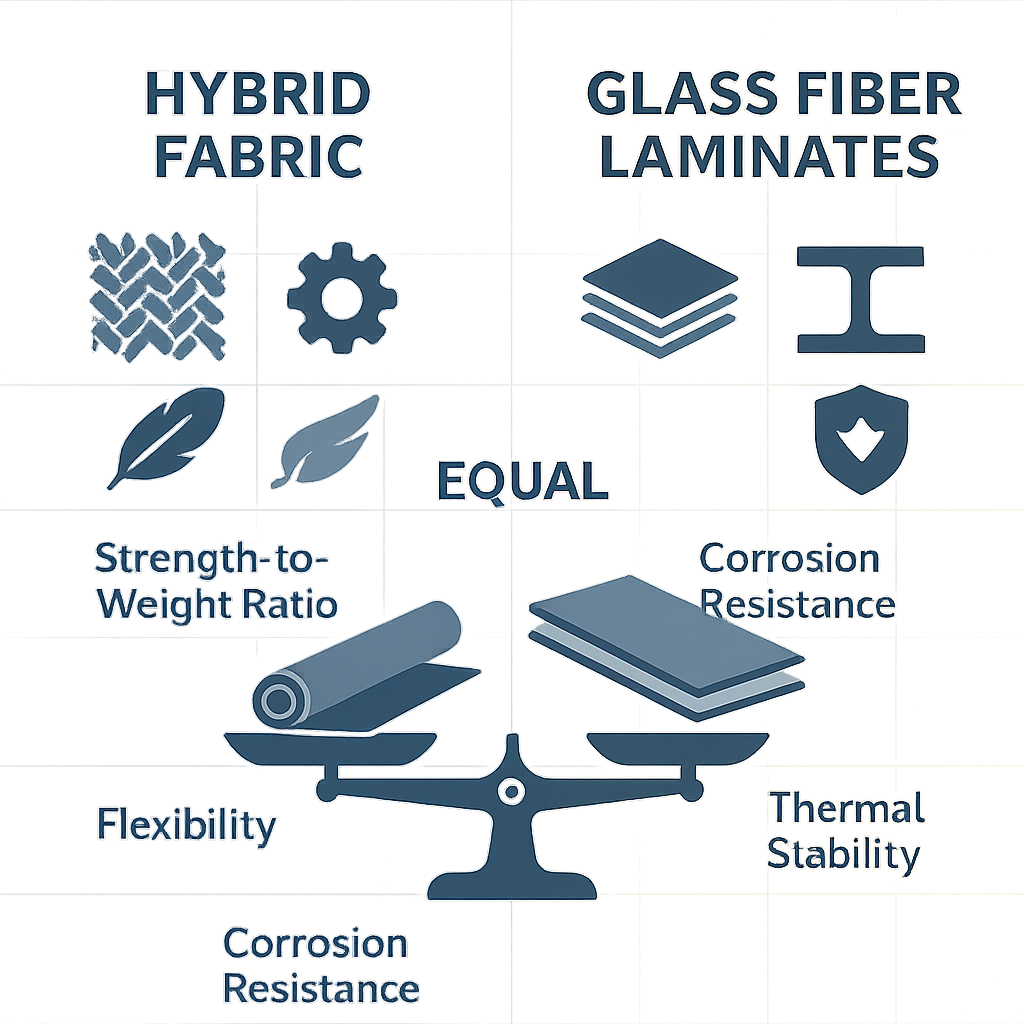
- Strength-to-Weight Ratio: Hybrid fabrics often exhibit an excellent strength-to-weight ratio, making them ideal for applications where weight savings are crucial.
- Flexibility: The combination of fibers can provide enhanced flexibility, allowing for easier handling and application.
- Resistance to Environmental Factors: Many hybrid fabrics are designed to resist moisture, UV light, and chemicals, contributing to their longevity in harsh environments.
Typical Industrial Forms and Specifications
Hybrid fabrics are available in various forms, including woven, knitted, and non-woven structures. Specifications can vary widely based on the intended application, with options for different fiber ratios, thicknesses, and finishes.
What is Glass Fiber Laminates?
Core Definition and Material Structure
Glass fiber laminates are composite materials made from layers of glass fiber embedded in a resin matrix. This structure provides a strong, lightweight material commonly used in applications requiring high strength and durability.
Key Performance Characteristics
- High Tensile Strength: Glass fiber laminates are known for their high tensile strength, making them suitable for structural applications.
- Corrosion Resistance: The resin matrix protects the glass fibers from environmental degradation, enhancing the material’s lifespan.
- Thermal Stability: Glass fiber laminates can withstand a wide range of temperatures, making them versatile for various industrial environments.
Typical Industrial Forms and Specifications
Glass fiber laminates are typically available in sheets or panels, with specifications that can include varying thicknesses and fiber orientations to optimize performance for specific applications.
Strength, Weight, and Durability Comparison
Tensile Strength and Weight Differences
When comparing hybrid fabric vs glass fiber laminates, tensile strength and weight are critical factors. Hybrid fabrics may offer a superior strength-to-weight ratio, while glass fiber laminates provide robust tensile strength, making them suitable for load-bearing applications.
Wear, Impact, and Environmental Resistance
Hybrid fabrics often excel in wear and impact resistance due to their composite nature, while glass fiber laminates are typically more resistant to environmental factors like moisture and chemicals. The choice between the two will depend on the specific environmental conditions of the application.
Application Suitability by End Use
Hybrid fabrics are often favored in applications requiring flexibility and lightweight properties, such as in automotive and aerospace industries. Glass fiber laminates are commonly used in construction and marine applications due to their structural integrity and durability.
Processing and Fabrication Differences
Common Processing Methods
Hybrid fabrics can be processed through various methods, including weaving, knitting, and lamination. Glass fiber laminates are typically fabricated using techniques such as hand lay-up, vacuum infusion, or resin transfer molding.
Design and Fabrication Limitations
While hybrid fabrics offer design flexibility, they may have limitations in terms of maximum thickness and the complexity of shapes. Glass fiber laminates, on the other hand, can be molded into intricate shapes but may require more precise fabrication techniques.
Implications for Sourcing and Customization
Understanding the processing methods and limitations of each material is crucial for sourcing. Customization options may vary significantly, affecting lead times and costs.
Cost, Lead Time, and Sourcing Considerations
What Affects Pricing
Pricing for hybrid fabrics and glass fiber laminates can vary based on factors such as material composition, manufacturing processes, and market demand. Hybrid fabrics may be more expensive due to the complexity of combining different fibers.
MOQ, Sample, and Lead Time Considerations
Minimum order quantities (MOQ) and lead times can differ significantly between the two materials. Buyers should inquire about these factors when sourcing to ensure timely delivery and adequate supply.
What Buyers Should Confirm Before RFQ
Before requesting a quote (RFQ), buyers should confirm the specific material requirements, including performance characteristics, application conditions, and any customization needs. This will help ensure that the selected material meets the intended application criteria.
Which Material Fits Industrial Applications?
Typical Industries Using This Material
Hybrid fabrics are commonly used in industries such as automotive, aerospace, and sports equipment, where lightweight and high-performance materials are essential. Glass fiber laminates are prevalent in construction, marine, and electrical applications due to their strength and durability.
Why Engineers and Buyers Choose It
Engineers and buyers often choose hybrid fabrics for their versatility and performance in dynamic applications, while glass fiber laminates are selected for their structural integrity and reliability in demanding environments.
When Another Material May Be Better
In some cases, alternative materials may be more suitable. For instance, if cost is a primary concern, traditional materials like aluminum or steel may be more economical than either hybrid fabrics or glass fiber laminates.
How to Choose the Right Specification
Key Specification Checklist
- Define application requirements (load, environment, etc.).
- Assess performance characteristics (strength, flexibility, etc.).
- Consider processing and fabrication needs.
- Evaluate cost and sourcing options.
Matching Material to Application Conditions
It’s essential to match the chosen material to the specific conditions it will face in application. Factors such as temperature, exposure to chemicals, and mechanical loads should guide the decision-making process.
Common Mistakes Before Sampling or Bulk Order
Common mistakes include failing to thoroughly assess application requirements, overlooking material specifications, and not considering long-term performance factors. A careful evaluation can prevent costly errors down the line.
Conclusion
In the debate of hybrid fabric vs glass fiber laminates, the choice ultimately depends on the specific requirements of the application. Understanding the strengths, weaknesses, and processing characteristics of each material will empower engineers and buyers to make informed decisions. By carefully evaluating the specifications and application conditions, you can select the most suitable material for your industrial needs.