
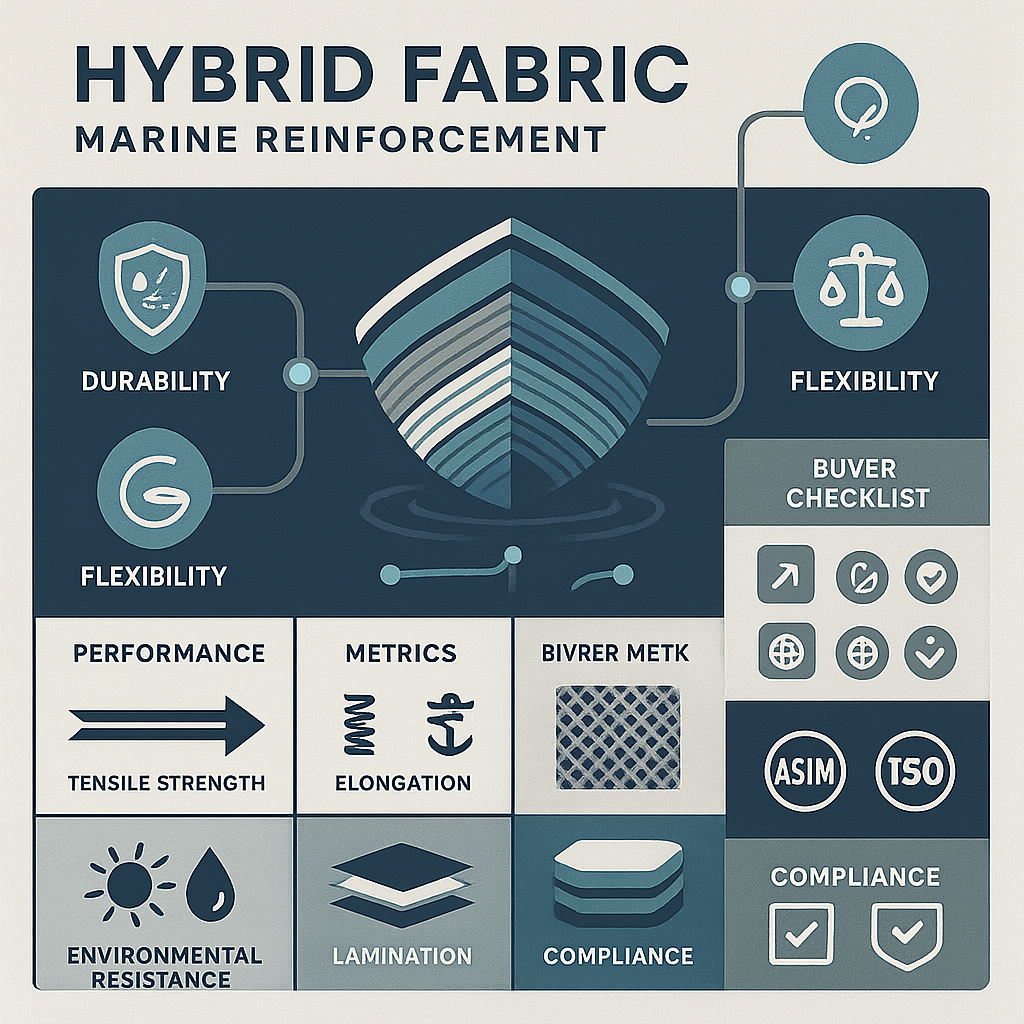
Why Hybrid Fabric is used in marine reinforcement
Hybrid fabric for marine reinforcement has gained traction in various marine applications due to its unique blend of materials and performance characteristics. As the marine industry continues to evolve, the demand for materials that offer both strength and flexibility has increased. Hybrid fabrics combine different fibers, such as aramid, carbon, and glass, to create a composite material that meets the rigorous demands of marine environments.
Key technical points
- Durability: Hybrid fabrics are designed to withstand harsh marine conditions, including saltwater exposure, UV radiation, and extreme temperatures.
- Weight-to-strength ratio: The combination of fibers allows for a lightweight material that does not compromise on strength, making it ideal for applications where weight is a critical factor.
- Flexibility: The hybrid nature of these fabrics provides enhanced flexibility, allowing for easier handling and application in complex shapes.
Application and sourcing considerations
When considering hybrid fabric for marine reinforcement, it’s essential to evaluate the specific application requirements. Different marine applications, such as boat hulls, sails, and protective covers, may necessitate varying properties from the fabric. Sourcing partners should be selected based on their ability to provide materials that meet these specific needs.
Buyer checklist before sampling
- Identify the specific marine application and its requirements.
- Assess the environmental conditions the fabric will face.
- Evaluate the supplier’s ability to provide consistent quality and performance.
Key performance requirements
Understanding the performance requirements of hybrid fabric for marine reinforcement is crucial for making informed decisions. Key performance metrics include tensile strength, elongation, and resistance to environmental factors.
Key technical points
- Tensile strength: This measures the fabric’s ability to withstand pulling forces without breaking.
- Elongation: The ability of the fabric to stretch without losing its structural integrity is vital in marine applications.
- Environmental resistance: Resistance to water absorption, UV degradation, and chemical exposure is critical for longevity.
Application and sourcing considerations
Different applications may require different performance characteristics. For instance, a sail may prioritize lightweight and flexibility, while a boat hull may require maximum tensile strength and durability. Understanding these nuances can guide sourcing decisions.
Buyer checklist before sampling
- Determine the required performance metrics for your specific application.
- Consider the trade-offs between weight and strength.
- Verify the supplier’s ability to meet these performance requirements consistently.
Material construction and specification options
Hybrid fabrics can be constructed using various combinations of fibers, each offering distinct advantages. Understanding these options is essential for selecting the right material for your marine reinforcement needs.
Key technical points
- Fiber combinations: Common combinations include aramid and carbon for high strength, or glass and polyester for cost-effective solutions.
- Weave patterns: Different weaving techniques can affect the fabric’s flexibility and strength, impacting its suitability for specific applications.
Application and sourcing considerations
When selecting a hybrid fabric, consider the specific requirements of your application. For example, a fabric designed for a high-performance sail may differ significantly from one intended for a protective cover.
Buyer checklist before sampling
- Identify the required fiber combinations and weave patterns for your application.
- Assess the supplier’s range of material options.
- Evaluate the potential for customization based on your specific needs.
Processing, lamination, or fabrication considerations
The processing methods used for hybrid fabrics can significantly influence their performance and suitability for marine applications. Understanding these methods is key to making informed decisions.
Common processing methods
- Lamination: This process can enhance the fabric’s durability and water resistance.
- Coating: Applying a protective coating can improve UV resistance and overall longevity.
Design and fabrication limitations
While hybrid fabrics offer many advantages, there are limitations to consider. For example, certain processing methods may not be suitable for all fabric types, and design constraints may arise based on the specific application.
Implications for sourcing and customization
Understanding the processing methods and their implications can help buyers make better sourcing decisions. Customization options may be limited by the chosen processing method, so it’s essential to discuss these factors with potential suppliers.
Common standards, testing, or buyer concerns
Buyers often have specific concerns regarding the standards and testing of hybrid fabrics. Understanding these can help ensure compliance and performance.
Relevant test methods
- Tensile testing: Measures the strength and elongation of the fabric.
- UV resistance testing: Assesses the fabric’s ability to withstand UV exposure over time.
Standards buyers often ask about
Common standards include ASTM and ISO certifications, which provide guidelines for testing and performance metrics. Familiarity with these standards can help buyers evaluate potential suppliers.
How to verify compliance with suppliers
When sourcing hybrid fabrics, it’s essential to ask suppliers for documentation of compliance with relevant standards. This may include test reports and certifications that demonstrate the fabric’s performance characteristics.
How to evaluate samples before bulk order
Before committing to a bulk order, evaluating samples of hybrid fabric is crucial. This process can help ensure that the material meets the specific requirements of your application.
Key technical points
- Assess the fabric’s physical properties, such as weight, thickness, and flexibility.
- Conduct performance tests to verify tensile strength and elongation.
Application and sourcing considerations
Consider how the fabric performs in real-world conditions similar to those it will face in its intended application. This can provide valuable insights into its suitability.
Buyer checklist before sampling
- Request samples from multiple suppliers for comparison.
- Conduct performance tests on samples to verify claims.
- Evaluate the supplier’s responsiveness and support during the sampling process.
In conclusion, hybrid fabric for marine reinforcement offers a range of benefits that can enhance the performance and durability of marine applications. By understanding the technical points, performance requirements, and sourcing considerations, buyers can make informed decisions that align with their specific needs. Evaluating samples thoroughly before placing bulk orders can further ensure that the chosen material will meet the demands of its intended application.