
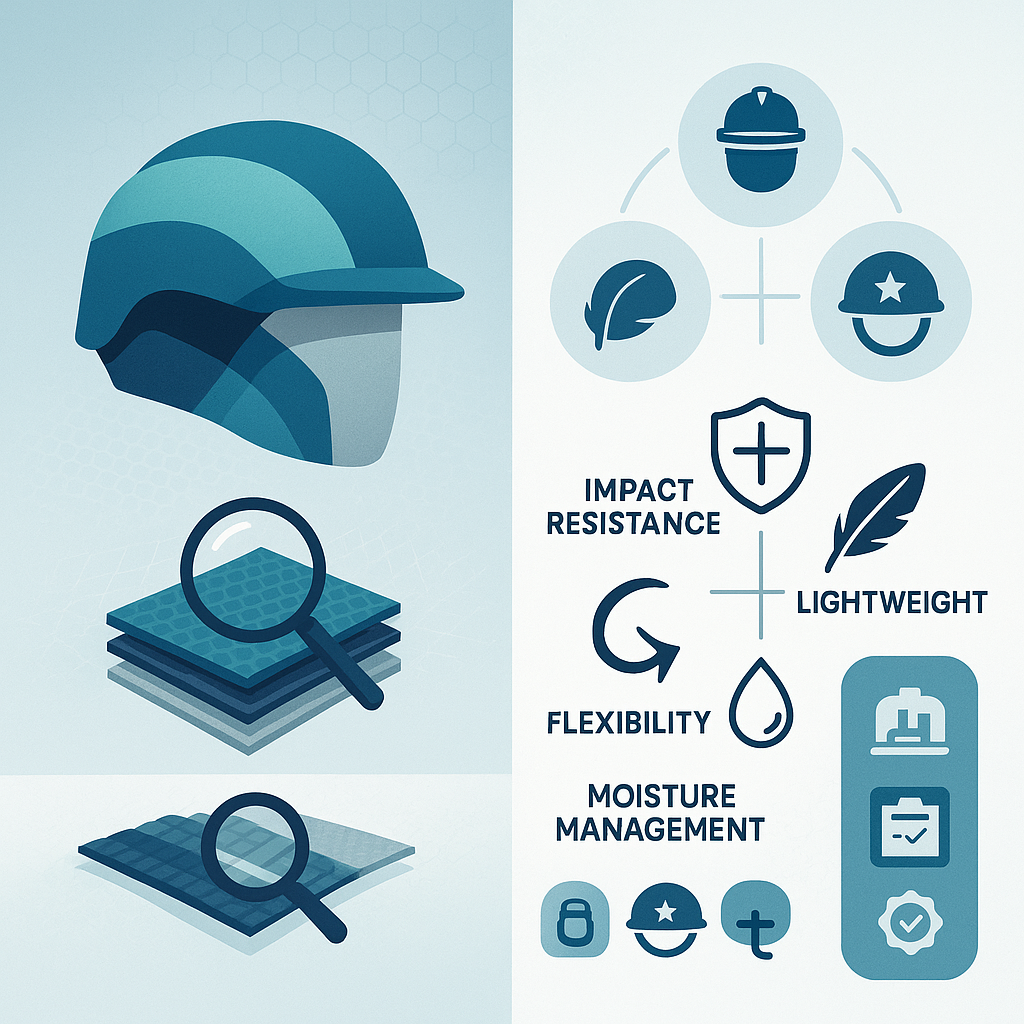
Why Hybrid Fabric is used in helmets
In the world of protective gear, the choice of materials is crucial for ensuring safety, comfort, and performance. Hybrid fabric for helmets has gained traction in recent years due to its unique blend of properties that enhance the overall functionality of head protection. Understanding why hybrid fabrics are used in helmets can help manufacturers and buyers make informed decisions about material selection and application.
Key technical points
Hybrid fabrics typically combine two or more types of fibers, such as aramid, carbon, or UHMWPE (Ultra-High Molecular Weight Polyethylene). This combination allows for:
- Enhanced strength: The integration of different fibers can improve tensile strength and impact resistance.
- Weight reduction: Hybrid fabrics can be lighter than traditional materials while maintaining protective qualities.
- Flexibility: The blend of materials can offer better flexibility, allowing for a more comfortable fit.
- Moisture management: Some hybrid fabrics are designed to wick moisture away, enhancing user comfort during extended wear.
Application and sourcing considerations
When sourcing hybrid fabric for helmets, it’s essential to consider the specific application. Different industries may have varying requirements for helmet performance:
- Industrial safety: Helmets used in construction or manufacturing may need to meet specific impact resistance standards.
- Sports helmets: Helmets designed for sports may prioritize lightweight materials for agility and comfort.
- Military applications: Hybrid fabrics may be tailored for ballistic resistance and durability in combat situations.
Understanding these applications will guide sourcing decisions and ensure that the selected materials meet the necessary performance criteria.
Buyer checklist before sampling
- Define the intended use of the helmet.
- Identify relevant performance standards for the specific application.
- Assess the comfort and fit requirements for end-users.
- Evaluate the supplier’s ability to provide consistent quality and compliance.
Key performance requirements
Key technical points
Performance requirements for hybrid fabric in helmets can vary widely based on the intended use. Key factors to consider include:
- Impact resistance: The fabric must withstand significant forces without compromising integrity.
- Durability: Resistance to wear and tear is critical, especially in demanding environments.
- Thermal stability: The material should perform well under varying temperature conditions.
- Breathability: Adequate airflow can prevent overheating during use.
Application and sourcing considerations
When evaluating performance requirements, consider the following:
- Consult industry standards to ensure compliance.
- Engage with end-users to understand their needs and preferences.
- Assess the environmental conditions where the helmets will be used.
Buyer checklist before sampling
- Review performance specifications relevant to the application.
- Identify potential trade-offs between weight and protection.
- Consider the lifecycle of the helmet and material degradation over time.
- Verify the supplier’s testing protocols and certifications.
Material construction and specification options
Key technical points
Hybrid fabrics can be constructed in various ways, influencing their performance characteristics:
- Weave patterns: Different weaving techniques can enhance flexibility or rigidity.
- Layering: Multiple layers can provide additional protection and insulation.
- Coatings: Specialized coatings can improve water resistance or UV protection.
Application and sourcing considerations
When selecting material construction, consider how these factors align with the intended use:
- Assess the trade-offs between comfort and protection.
- Evaluate how different constructions affect weight and bulk.
- Consider the ease of maintenance and cleaning of the fabric.
Buyer checklist before sampling
- Identify the most critical performance attributes for your application.
- Review the supplier’s material specifications and construction details.
- Request samples to evaluate the feel and performance characteristics.
Processing, lamination, or fabrication considerations
Common processing methods
Hybrid fabrics can undergo various processing methods that impact their final performance:
- Lamination: This can enhance durability and moisture resistance.
- Coating: Adding a protective layer can improve resistance to environmental factors.
- Cutting and sewing: Precision in these processes is crucial for maintaining the integrity of the fabric.
Design and fabrication limitations
While hybrid fabrics offer numerous advantages, there are limitations to consider:
- Complex designs may require specialized fabrication techniques.
- Some materials may not bond well with certain adhesives or coatings.
- Weight distribution can affect comfort and usability.
Implications for sourcing and customization
Understanding processing limitations can guide sourcing decisions:
- Collaborate with suppliers who have experience in processing hybrid fabrics.
- Discuss customization options early in the design phase.
- Consider the lead times associated with specialized processing methods.
Common standards, testing, or buyer concerns
Relevant test methods
Testing is essential to ensure that hybrid fabrics meet industry standards. Common test methods include:
- Impact tests: Assess the fabric’s ability to withstand sudden forces.
- Abrasion tests: Evaluate durability against wear.
- Thermal tests: Determine performance under extreme temperatures.
Standards buyers often ask about
Buyers frequently inquire about compliance with specific standards, such as:
- ANSI/ISEA standards for industrial helmets.
- ASTM standards for protective headgear.
- ISO certifications for material quality.
How to verify compliance with suppliers
To ensure compliance, buyers should:
- Request documentation of test results and certifications.
- Engage in discussions about the supplier’s quality assurance processes.
- Consider third-party audits for additional verification.
How to evaluate samples before bulk order
Key technical points
Evaluating samples is a critical step before placing bulk orders. Key aspects to assess include:
- Physical properties: Check for flexibility, weight, and comfort.
- Performance under stress: Conduct tests to simulate real-world conditions.
- Durability: Assess how the fabric holds up over time and under various conditions.
Application and sourcing considerations
When evaluating samples, consider how they align with your specific application:
- Engage end-users in the evaluation process to gather feedback.
- Compare samples from different suppliers to assess quality and performance.
- Document findings to aid in decision-making.
Buyer checklist before sampling
- Define evaluation criteria based on application needs.
- Involve relevant stakeholders in the sampling process.
- Prepare to conduct comparative tests for a thorough assessment.
In conclusion, hybrid fabric for helmets presents a compelling option for enhancing safety and comfort in various applications. By understanding the key performance requirements, material construction options, and processing considerations, buyers can make informed decisions that align with their specific needs. Evaluating samples thoroughly will further ensure that the selected materials meet the necessary standards and expectations for performance.