
What is UHMWPE for Lifting Sling?
Ultra-High Molecular Weight Polyethylene (UHMWPE) is a high-performance thermoplastic known for its exceptional strength-to-weight ratio, making it an ideal material for lifting slings. Its unique molecular structure provides a combination of toughness, chemical resistance, and low friction, which are crucial for applications involving heavy loads and dynamic movements.
Core Definition and Material Structure
UHMWPE is characterized by long chains of polyethylene, which contribute to its high molecular weight. This structure results in a material that is not only lightweight but also exhibits superior impact resistance and wear properties. The fibers used in lifting slings are often braided or woven to enhance their strength and flexibility, allowing for efficient load distribution.
Key Performance Characteristics
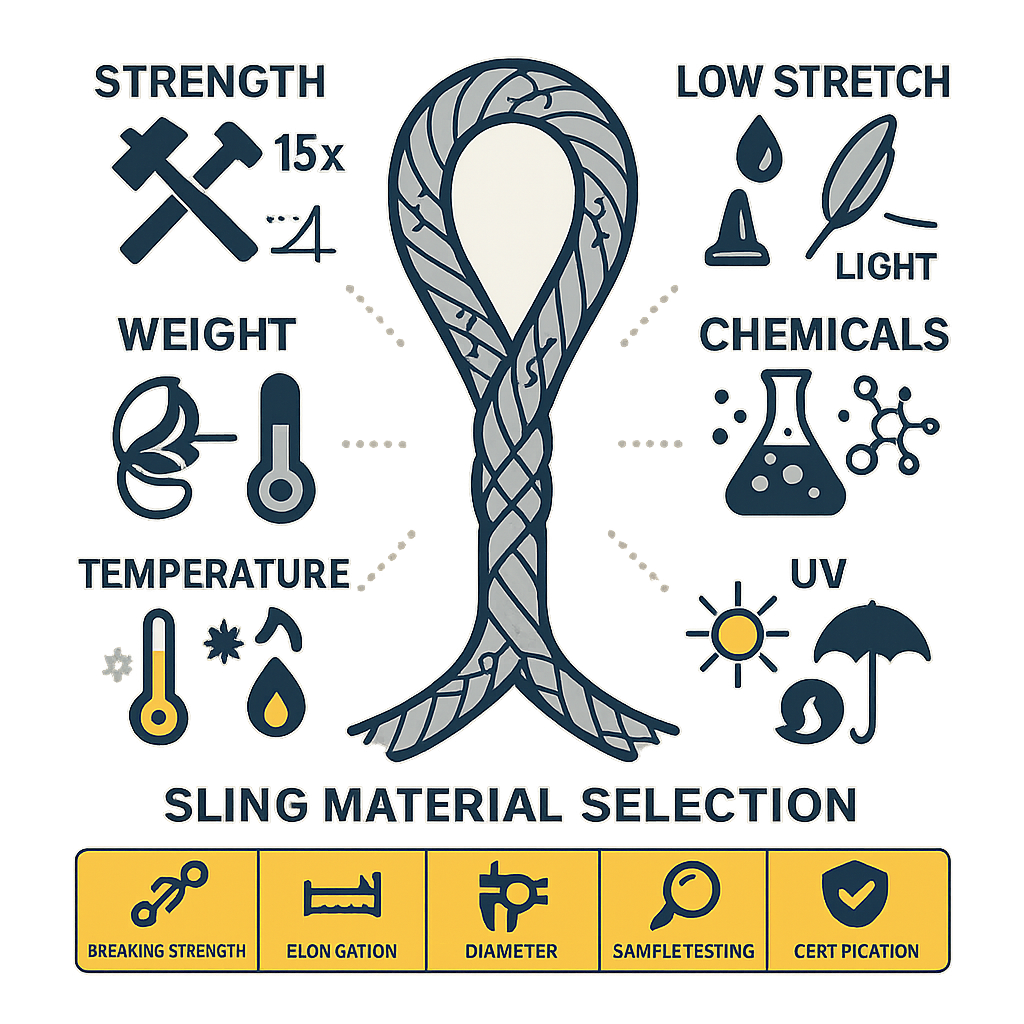
- Strength: UHMWPE has a tensile strength that can exceed that of steel, making it suitable for heavy lifting applications.
- Low Stretch: The material exhibits minimal elongation under load, ensuring precise control during lifting operations.
- Chemical Resistance: UHMWPE is resistant to a wide range of chemicals, making it suitable for various industrial environments.
- Lightweight: Its low density allows for easier handling and transportation.
- UV Stability: When treated, UHMWPE can withstand prolonged exposure to UV radiation, which is essential for outdoor applications.
Typical Industrial Forms and Specifications
UHMWPE is available in various forms, including sheets, rods, and fibers. For lifting slings, the fibers are typically processed into high-strength ropes or webbing. Specifications may include diameter, breaking strength, and elongation at break, which are critical for ensuring the sling meets the required safety standards.
Key Specifications to Confirm Before Ordering
Key Technical Points
Before placing an order for UHMWPE lifting slings, it is essential to confirm several technical specifications:
- Breaking Strength: Ensure that the sling can handle the maximum load it will encounter.
- Elongation: Understand how much the sling will stretch under load, as this affects lifting precision.
- Diameter: The thickness of the sling can influence both strength and handling characteristics.
Application and Sourcing Considerations
Consider the specific application for which the lifting sling will be used. Factors such as environmental conditions, load types, and frequency of use can influence the choice of UHMWPE specifications. Additionally, sourcing from reputable suppliers ensures that the material meets industry standards.
Buyer Checklist Before Sampling
- Confirm the required specifications based on application needs.
- Evaluate supplier certifications and quality assurance processes.
- Request samples to assess material performance in real-world conditions.
Performance Factors That Affect End Use
Key Technical Points
Understanding the performance factors of UHMWPE is crucial for ensuring its suitability for lifting slings. Key considerations include:
- Temperature Resistance: UHMWPE can perform well in a range of temperatures, but extreme conditions may affect its properties.
- Moisture Absorption: While UHMWPE is resistant to moisture, prolonged exposure can affect its performance.
Application and Sourcing Considerations
Different applications may require specific performance characteristics. For example, slings used in marine environments may need enhanced UV resistance, while those in chemical processing may require additional chemical resistance. Assessing these factors during sourcing can lead to better performance outcomes.
Buyer Checklist Before Sampling
- Identify the environmental conditions the sling will face.
- Assess the load dynamics and potential impact forces.
- Consider the longevity and durability requirements for the application.
How to Choose for Lifting Sling
Key Specification Checklist
When selecting UHMWPE for lifting slings, a detailed checklist can guide your decision:
- Determine the required breaking strength based on load calculations.
- Evaluate the elongation properties to ensure precision in lifting.
- Consider the diameter and construction type for handling ease.
Matching Material to Application Conditions
Each application may have unique demands. For example, slings used in construction may require higher abrasion resistance, while those in the aerospace industry may prioritize weight savings. Matching the material properties to these conditions is essential for optimal performance.
Common Mistakes Before Sampling or Bulk Order
- Overlooking environmental factors that could affect sling performance.
- Neglecting to verify supplier certifications and material quality.
- Failing to conduct thorough testing with samples before bulk ordering.
MOQ, Sampling, Customization, and Lead Time
What Affects Pricing
Pricing for UHMWPE lifting slings can vary based on several factors, including:
- Material quality and specifications.
- Order volume and customization requirements.
- Market demand and availability of raw materials.
MOQ, Sample, and Lead Time Considerations
Minimum Order Quantities (MOQ) can vary by supplier and may influence your sourcing strategy. Understanding lead times for production and delivery is also crucial, especially for time-sensitive projects. Always confirm these details before finalizing your order.
What Buyers Should Confirm Before RFQ
- Clarify specifications and performance requirements.
- Confirm lead times and MOQs with suppliers.
- Request detailed pricing based on your specific needs.
Common Mistakes Buyers Should Avoid
Key Technical Points
Buyers often make critical errors that can impact the effectiveness of their lifting slings:
- Failing to conduct adequate research on material properties.
- Ignoring the importance of supplier reputation and reliability.
- Overlooking the need for thorough testing of samples.
Application and Sourcing Considerations
Understanding the specific application is vital. Buyers should avoid generic selections that do not account for unique operational demands, leading to potential failures in the field.
Buyer Checklist Before Sampling
- Review application requirements thoroughly.
- Assess potential risks associated with material selection.
- Ensure alignment between specifications and supplier capabilities.
Inquiry Checklist for Suppliers and Trading Companies
Key Technical Points
When reaching out to suppliers, having a structured inquiry checklist can streamline the process:
- Request detailed specifications and certifications for UHMWPE.
- Inquire about testing methods and quality assurance practices.
- Confirm lead times and customization options.
Application and Sourcing Considerations
Understanding the supplier’s experience in your specific industry can provide insights into their ability to meet your needs. Ask about past projects and client references to gauge their reliability.
Buyer Checklist Before Sampling
- Compile a list of critical specifications and performance requirements.
- Evaluate potential suppliers based on their track record and capabilities.
- Prepare questions to clarify any uncertainties regarding the product.
Conclusion
Selecting UHMWPE for lifting slings requires a thorough understanding of material properties, application requirements, and sourcing considerations. By following a structured approach and avoiding common pitfalls, buyers can ensure they make informed decisions that lead to successful outcomes in their lifting operations. A detailed checklist can serve as a valuable tool in this process, guiding you through the complexities of material selection and supplier evaluation.