
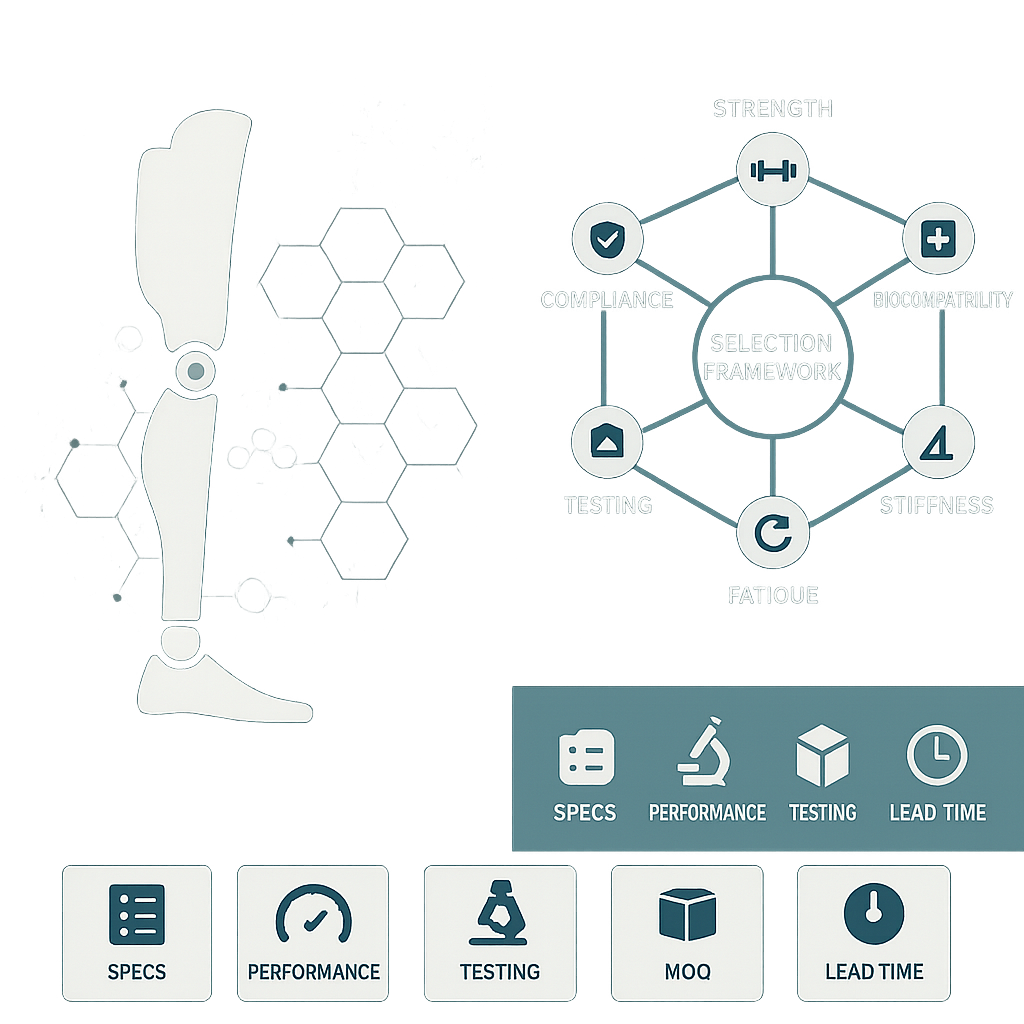
What is Carbon Fiber for Medical Devices?
Carbon fiber is a high-performance material known for its strength-to-weight ratio, making it an ideal choice for various applications, including medical devices. Understanding how to choose carbon fiber for medical devices is crucial for engineers and decision-makers aiming to enhance product performance while ensuring safety and compliance.
Core Definition and Material Structure
Carbon fiber consists of thin strands of carbon atoms bonded together in a crystalline structure. This unique arrangement gives carbon fiber its remarkable mechanical properties, including high tensile strength and stiffness. Typically, carbon fibers are combined with a resin matrix to form composite materials, which can be tailored for specific applications in the medical field.
Key Performance Characteristics
- High Strength-to-Weight Ratio: Carbon fiber is significantly lighter than metals while providing comparable or superior strength.
- Corrosion Resistance: Unlike metals, carbon fiber does not corrode, making it suitable for long-term use in medical environments.
- Biocompatibility: Certain carbon fiber composites can be engineered to meet biocompatibility standards, essential for medical applications.
- Thermal Stability: Carbon fiber maintains its properties over a wide range of temperatures, ensuring reliability in various medical settings.
Typical Industrial Forms and Specifications
Carbon fiber is available in various forms, including sheets, rods, and woven fabrics. The specifications can vary based on the intended application, including fiber diameter, tensile strength, and modulus of elasticity. Understanding these specifications is vital for selecting the right type of carbon fiber for specific medical device applications.
Key Specifications to Confirm Before Ordering
Key Technical Points
Before placing an order for carbon fiber, it is essential to confirm several technical specifications:
- Tensile Strength: Ensure the tensile strength meets the requirements of the intended application.
- Modulus of Elasticity: This property affects the stiffness of the material and its ability to withstand deformation.
- Fiber Orientation: The orientation of the fibers can significantly impact the mechanical properties of the composite.
Application and Sourcing Considerations
When sourcing carbon fiber for medical devices, consider the specific application requirements, such as regulatory compliance and environmental factors. Collaborating with a knowledgeable sourcing partner can help navigate these complexities.
Buyer Checklist Before Sampling
- Define the application requirements clearly.
- Confirm the specifications of the carbon fiber.
- Assess the supplier’s ability to meet regulatory standards.
- Request samples to evaluate performance in real-world conditions.
Performance Factors That Affect End Use
Key Technical Points
Understanding the performance factors that affect the end use of carbon fiber in medical devices is critical. These include:
- Load-Bearing Capacity: The ability of the material to support weight without failure.
- Fatigue Resistance: The material’s ability to withstand repeated loading cycles.
- Impact Resistance: The capacity to absorb energy during sudden impacts, crucial for certain medical applications.
Application and Sourcing Considerations
Different medical applications may require specific performance characteristics. For example, surgical instruments may prioritize stiffness and strength, while prosthetic devices may require lightweight and flexibility. Understanding these nuances can guide sourcing decisions.
Buyer Checklist Before Sampling
- Evaluate the performance characteristics required for your application.
- Consider the environmental conditions the device will face.
- Ensure the carbon fiber meets relevant industry standards.
How to Choose for Medical Devices
Key Specification Checklist
When selecting carbon fiber for medical devices, use the following checklist to ensure you cover all critical aspects:
- Confirm tensile strength and modulus of elasticity.
- Check for biocompatibility certifications.
- Assess the manufacturing process and quality control measures.
Matching Material to Application Conditions
Different medical applications will impose varying demands on the material. For instance, devices used in high-stress environments may require higher tensile strength, while those in low-stress applications may prioritize weight reduction. Matching the material properties to the application conditions is essential for optimal performance.
Common Mistakes Before Sampling or Bulk Order
- Overlooking the importance of biocompatibility.
- Neglecting to test samples under real-world conditions.
- Failing to consider the long-term performance of the material.
MOQ, Sampling, Customization, and Lead Time
What Affects Pricing
The pricing of carbon fiber can be influenced by various factors, including the type of fiber, the complexity of the manufacturing process, and the volume of the order. Understanding these factors can help in budgeting and planning.
MOQ, Sample, and Lead Time Considerations
Minimum Order Quantities (MOQs) can vary significantly based on the supplier and the specific type of carbon fiber. It is essential to discuss these details upfront to avoid any surprises later in the procurement process.
What Buyers Should Confirm Before RFQ
- Clarify the specifications and requirements for the carbon fiber.
- Confirm the supplier’s ability to meet lead times.
- Discuss customization options if needed.
Common Mistakes Buyers Should Avoid
Key Technical Points
Buyers often make mistakes that can lead to suboptimal material selection. Key points to consider include:
- Ignoring the importance of testing and validation.
- Assuming all carbon fibers are interchangeable.
- Overlooking the supplier’s experience in the medical industry.
Application and Sourcing Considerations
Understanding the specific requirements of the application is crucial. Failing to do so can result in selecting a material that does not meet performance expectations.
Buyer Checklist Before Sampling
- Review the application requirements thoroughly.
- Engage with suppliers who have experience in medical applications.
- Ensure that all specifications are clearly communicated.
Inquiry Checklist for Suppliers and Trading Companies
Key Technical Points
When inquiring about carbon fiber, ensure to ask the following:
- What are the specific mechanical properties of the carbon fiber?
- Can the supplier provide documentation for biocompatibility?
- What quality control measures are in place during production?
Application and Sourcing Considerations
Engaging with suppliers who understand the nuances of medical applications can provide valuable insights into material selection and sourcing strategies.
Buyer Checklist Before Sampling
- Prepare a list of specific questions regarding the material.
- Request samples to evaluate performance.
- Confirm lead times and customization options.
Conclusion
Choosing the right carbon fiber for medical devices is a complex process that requires careful consideration of specifications, performance factors, and application requirements. By following a structured approach and utilizing checklists, buyers can make informed decisions that lead to successful outcomes in their projects. Understanding the nuances of material selection will not only enhance product performance but also ensure compliance with industry standards.