
What is Carbon Fiber for Automotive Parts?
Carbon fiber has become a pivotal material in the automotive industry, known for its lightweight yet robust characteristics. Understanding how to choose carbon fiber for automotive parts is essential for engineers and decision-makers aiming to enhance performance while maintaining safety standards.
Core Definition and Material Structure
Carbon fiber is a polymer that consists of thin strands of carbon atoms. These strands are woven together to form a composite material that exhibits exceptional strength-to-weight ratios. The structure of carbon fiber allows it to be molded into various shapes, making it versatile for different automotive applications.
Key Performance Characteristics
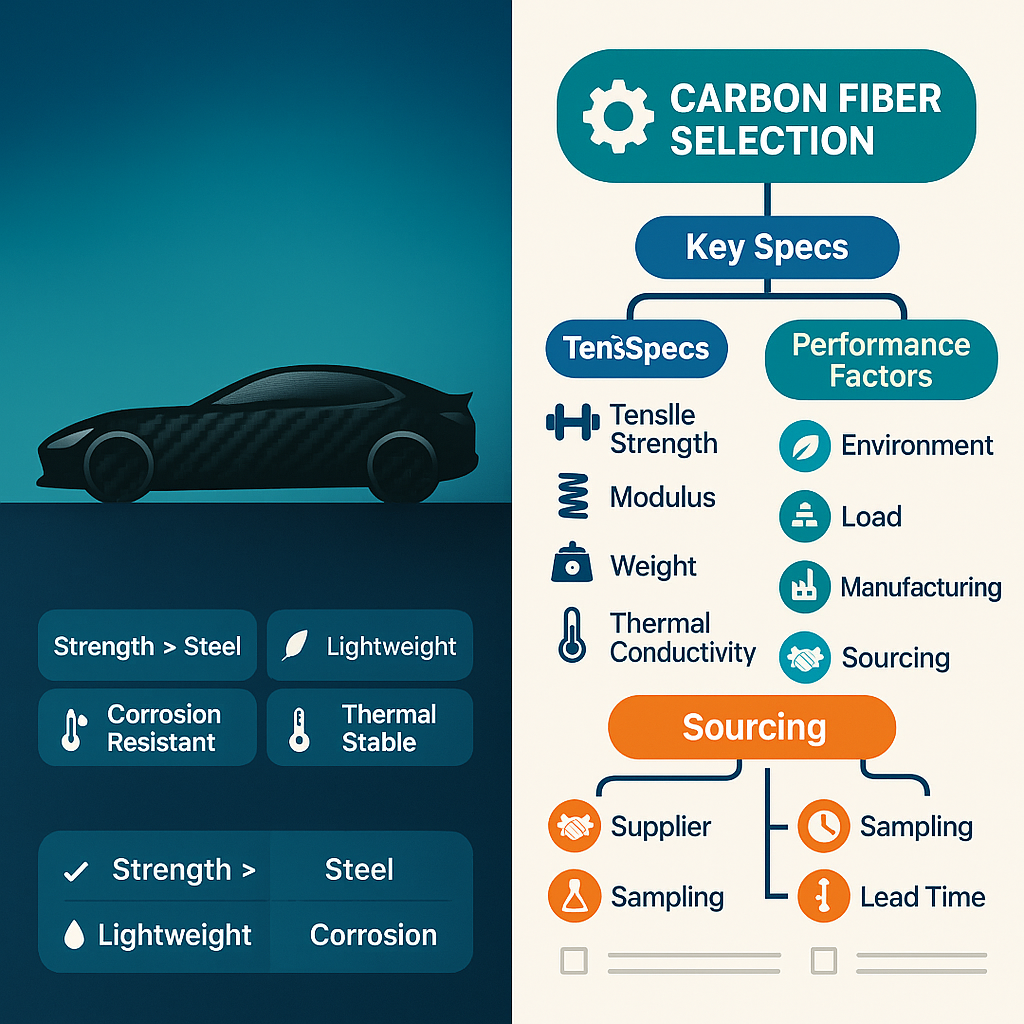
- Lightweight: Carbon fiber is significantly lighter than metals like steel and aluminum, which contributes to improved fuel efficiency.
- High Strength: It boasts a tensile strength that can exceed that of steel, making it ideal for high-stress applications.
- Corrosion Resistance: Carbon fiber is resistant to environmental degradation, enhancing the longevity of automotive components.
- Thermal Stability: It maintains structural integrity under varying temperature conditions, crucial for automotive applications.
Typical Industrial Forms and Specifications
Carbon fiber is available in various forms, including prepregs, woven fabrics, and unidirectional tapes. Each form has specific applications and performance characteristics, making it essential to choose the right type based on the intended use.
Key Specifications to Confirm Before Ordering
Key Technical Points
Before selecting carbon fiber for automotive parts, several technical specifications should be confirmed:
- Tensile Strength: Measure the material’s ability to withstand tension without breaking.
- Modulus of Elasticity: This indicates how much the material will deform under stress.
- Weight: Assess the overall weight to ensure compliance with performance goals.
- Thermal Conductivity: Evaluate how well the material can dissipate heat.
Application and Sourcing Considerations
Understanding the specific application is crucial. For instance, parts exposed to extreme conditions may require specialized carbon fiber grades. Additionally, sourcing from reputable suppliers ensures quality and compliance with industry standards.
Buyer Checklist Before Sampling
- Confirm the intended application and performance requirements.
- Request material data sheets for detailed specifications.
- Evaluate potential suppliers based on their industry reputation.
- Consider the availability of technical support during the selection process.
Performance Factors that Affect End Use
Key Technical Points
Performance factors such as environmental conditions, load requirements, and manufacturing processes can significantly influence the effectiveness of carbon fiber in automotive applications. Understanding these factors is essential for making informed decisions.
Application and Sourcing Considerations
Different automotive parts may have varying performance requirements. For example, components like chassis parts may prioritize strength, while interior panels may focus more on aesthetics and weight. Sourcing the right type of carbon fiber tailored to these needs is critical.
Buyer Checklist Before Sampling
- Identify the specific performance requirements for each part.
- Assess the compatibility of the carbon fiber with other materials used in the assembly.
- Evaluate the manufacturing processes involved in producing the final part.
How to Choose for Automotive Parts
Key Specification Checklist
When determining how to choose carbon fiber for automotive parts, consider the following checklist:
- Define the mechanical properties required for the application.
- Assess environmental factors that may affect performance.
- Evaluate the cost versus performance trade-offs.
Matching Material to Application Conditions
Different automotive applications may require different grades of carbon fiber. For example, high-performance sports cars may benefit from ultra-lightweight carbon fiber, while standard vehicles may opt for a more cost-effective option that still meets safety standards.
Common Mistakes Before Sampling or Bulk Order
- Overlooking the importance of detailed specifications.
- Failing to consider the end-use environment.
- Neglecting to evaluate supplier reliability.
MOQ, Sampling, Customization, and Lead Time
What Affects Pricing
Pricing for carbon fiber can vary based on several factors, including the type of fiber, the complexity of the manufacturing process, and the volume of the order. Understanding these elements can help in budgeting and planning.
MOQ, Sample, and Lead Time Considerations
Minimum order quantities (MOQ) can influence purchasing decisions. Buyers should clarify these requirements with suppliers to avoid unexpected costs. Additionally, lead times for custom orders can vary, so it’s advisable to plan accordingly.
What Buyers Should Confirm Before RFQ
- Clarify the specifications and performance requirements.
- Confirm lead times and MOQ with potential suppliers.
- Request samples to evaluate material performance.
Common Mistakes Buyers Should Avoid
Key Technical Points
Understanding the technical aspects of carbon fiber is crucial. Common mistakes include misjudging the required specifications or overlooking the importance of sourcing quality materials.
Application and Sourcing Considerations
Buyers often underestimate the importance of matching the carbon fiber type to the specific application. This oversight can lead to performance issues down the line.
Buyer Checklist Before Sampling
- Ensure a thorough understanding of the application requirements.
- Evaluate potential suppliers based on their technical expertise.
- Consider the long-term implications of material selection.
Inquiry Checklist for Suppliers and Trading Companies
Key Technical Points
When engaging with suppliers, it’s essential to ask the right questions to ensure that the carbon fiber meets your specific needs.
Application and Sourcing Considerations
Inquire about the supplier’s experience with automotive applications and their ability to provide technical support throughout the sourcing process.
Buyer Checklist Before Sampling
- Request detailed material specifications and certifications.
- Ask about the supplier’s quality control processes.
- Confirm the availability of technical assistance during the selection process.
Conclusion
Choosing the right carbon fiber for automotive parts is a multifaceted process that requires careful consideration of specifications, performance factors, and potential pitfalls. By following a structured approach and utilizing the provided checklists, decision-makers can make informed choices that enhance the performance and safety of automotive applications. Understanding the nuances of carbon fiber will ultimately lead to better material selection and improved outcomes in automotive design and manufacturing.