
What is Carbon Fiber for Aerospace Interiors?
Carbon fiber is a high-performance material that has gained significant traction in the aerospace industry, particularly for interior applications. Its unique properties make it an ideal choice for components that require a combination of lightweight characteristics and exceptional strength. Understanding how to choose carbon fiber for aerospace interiors is essential for engineers and procurement professionals aiming to enhance performance while ensuring safety and compliance with industry standards.
Core Definition and Material Structure
Carbon fiber is composed of thin strands of carbon atoms bonded together in a crystalline structure. This arrangement results in a material that is not only lightweight but also possesses remarkable tensile strength and rigidity. Typically, carbon fibers are woven into fabrics or combined with resins to create composite materials that can be molded into various shapes and forms, making them suitable for a wide range of aerospace applications.
Key Performance Characteristics
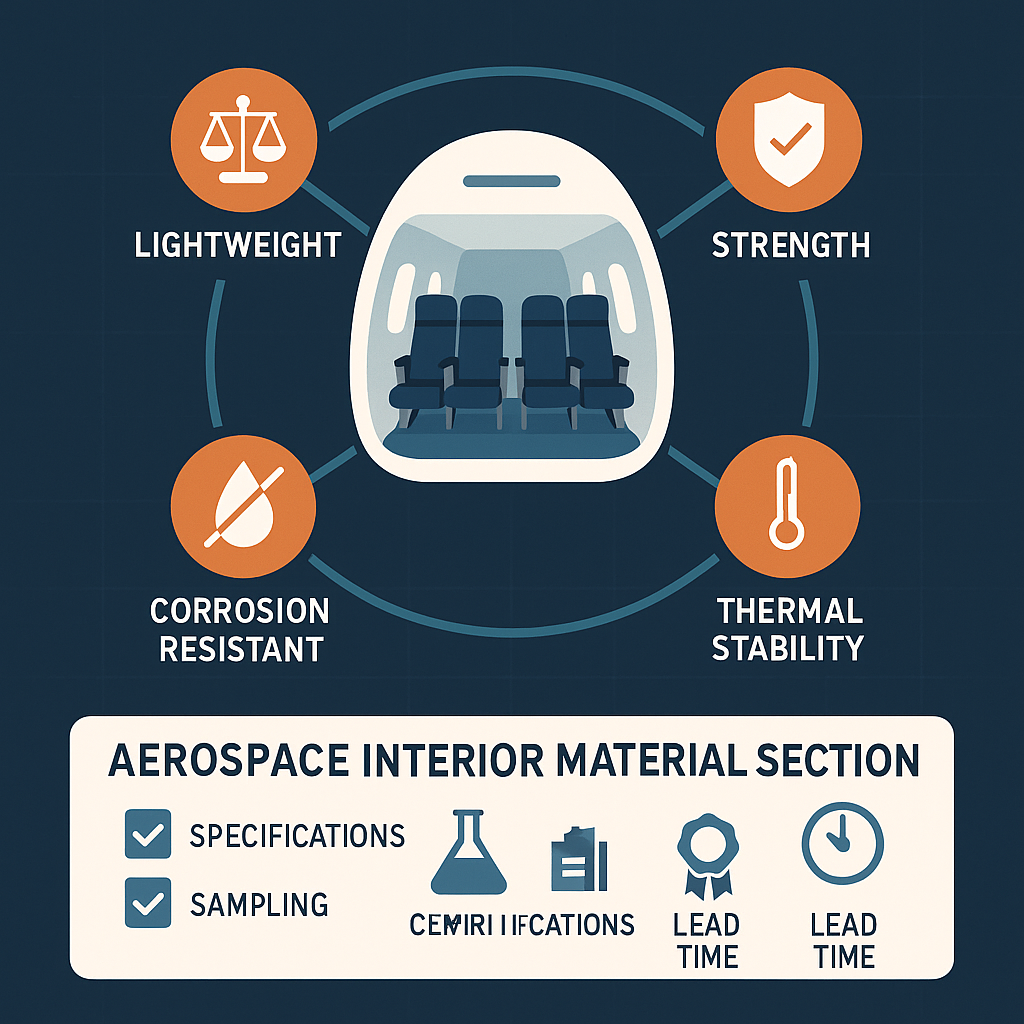
- Lightweight: Carbon fiber is significantly lighter than metals, which contributes to overall weight reduction in aircraft.
- High Strength-to-Weight Ratio: This property allows for the design of components that can withstand high stress while minimizing weight.
- Corrosion Resistance: Unlike metals, carbon fiber does not corrode, which is crucial for longevity in harsh environments.
- Thermal Stability: Carbon fiber maintains its properties across a wide range of temperatures, making it suitable for various aerospace conditions.
Typical Industrial Forms and Specifications
In aerospace interiors, carbon fiber typically comes in the form of sheets, rolls, or pre-impregnated materials (prepregs). Specifications may vary based on the intended application, including fiber type, weave pattern, and resin system. Understanding these specifications is vital for ensuring that the selected material meets both performance and regulatory requirements.
Key Specifications to Confirm Before Ordering
Key Technical Points
Before placing an order for carbon fiber, it is crucial to confirm several key specifications:
- Tensile Strength: Ensure the material meets the required strength for the specific application.
- Modulus of Elasticity: This property affects how the material will behave under load.
- Weight per Unit Area: Important for maintaining overall aircraft weight limits.
- Thermal and Chemical Resistance: Confirm that the material can withstand the environmental conditions it will face.
Application and Sourcing Considerations
When selecting carbon fiber for aerospace interiors, consider the specific application requirements, such as fire resistance, acoustic properties, and aesthetic finishes. Additionally, sourcing from reputable suppliers who can provide detailed material data sheets and certifications is essential for compliance with aerospace standards.
Buyer Checklist Before Sampling
- Confirm technical specifications against application requirements.
- Request samples to evaluate material properties in real-world conditions.
- Check supplier certifications and quality assurance processes.
Performance Factors That Affect End Use
Key Technical Points
Understanding the performance factors that affect the end use of carbon fiber is critical. These include:
- Load Conditions: Assess the types of loads the material will experience during operation.
- Environmental Factors: Consider exposure to moisture, temperature fluctuations, and UV radiation.
- Manufacturing Processes: Different fabrication methods can influence the final properties of the carbon fiber composite.
Application and Sourcing Considerations
Different applications may require specific grades or types of carbon fiber. For example, interior panels may prioritize aesthetic qualities, while structural components may focus on strength and durability. Understanding these nuances will help in making informed sourcing decisions.
Buyer Checklist Before Sampling
- Evaluate the performance requirements based on application.
- Consider the manufacturing processes that will be used.
- Ensure compatibility with other materials in the assembly.
How to Choose for Aerospace Interiors
Key Specification Checklist
When determining how to choose carbon fiber for aerospace interiors, keep the following checklist in mind:
- Confirm tensile strength and modulus of elasticity.
- Assess weight and thickness requirements.
- Evaluate fire and smoke performance ratings.
- Check for compliance with aerospace industry standards.
Matching Material to Application Conditions
Each aerospace interior application may have unique requirements. For instance, seating components may need to prioritize comfort and aesthetics, while structural elements must focus on strength and durability. Matching the carbon fiber properties to these specific conditions is essential for optimal performance.
Common Mistakes Before Sampling or Bulk Order
- Overlooking detailed specifications that are critical for performance.
- Failing to consider the manufacturing processes that may alter material properties.
- Neglecting to request samples for real-world testing.
MOQ, Sampling, Customization, and Lead Time
What Affects Pricing
Pricing for carbon fiber can vary significantly based on several factors, including:
- Type and grade of carbon fiber.
- Volume of order (MOQ).
- Customization requirements.
- Supplier’s production capabilities and lead times.
MOQ, Sample, and Lead Time Considerations
Minimum order quantities (MOQ) can vary by supplier and may affect your sourcing strategy. Additionally, understanding lead times for production and delivery is crucial for project planning. Always confirm these details before proceeding with an order.
What Buyers Should Confirm Before RFQ
- Clarify technical specifications and performance requirements.
- Confirm lead times and MOQ with potential suppliers.
- Request detailed pricing based on specific needs.
Common Mistakes Buyers Should Avoid
Key Technical Points
Buyers often make several common mistakes when selecting carbon fiber for aerospace interiors:
- Assuming all carbon fibers are the same without considering specific properties.
- Neglecting to conduct thorough testing of samples before bulk orders.
- Overlooking the importance of supplier certifications and quality assurance.
Application and Sourcing Considerations
Understanding the specific application requirements is essential. Buyers should avoid generic sourcing strategies and instead focus on tailored solutions that meet their unique needs.
Buyer Checklist Before Sampling
- Review application-specific requirements and specifications.
- Engage with suppliers to understand their quality assurance processes.
- Request samples for comprehensive evaluation.
Inquiry Checklist for Suppliers and Trading Companies
Key Technical Points
When reaching out to suppliers, it’s important to have a clear inquiry checklist to ensure all necessary information is gathered:
- Request detailed material specifications and data sheets.
- Inquire about certifications and compliance with aerospace standards.
- Ask about customization options and lead times.
Application and Sourcing Considerations
Understanding the supplier’s capabilities and experience in the aerospace sector is crucial. This knowledge can help ensure that the materials sourced will meet the rigorous demands of aerospace applications.
Buyer Checklist Before Sampling
- Confirm the supplier’s track record in aerospace material supply.
- Ensure that they can provide the necessary certifications.
- Request samples to evaluate performance in application-specific conditions.
Conclusion
Choosing the right carbon fiber for aerospace interiors requires a thorough understanding of material properties, application requirements, and sourcing considerations. By following a structured approach that includes confirming specifications, evaluating performance factors, and avoiding common mistakes, decision-makers can ensure they select the most suitable carbon fiber for their needs. This guide serves as a valuable resource for professionals navigating the complexities of material selection in the aerospace industry.