
What This Agricultural Textiles Really Covers
In the realm of agricultural textiles, understanding the distinctions between ground covers, shade nets, and mulch fabrics is crucial for effective material selection. Each of these textile types serves unique purposes and offers different benefits, making it essential for buyers and engineers to grasp their specific applications and performance characteristics.
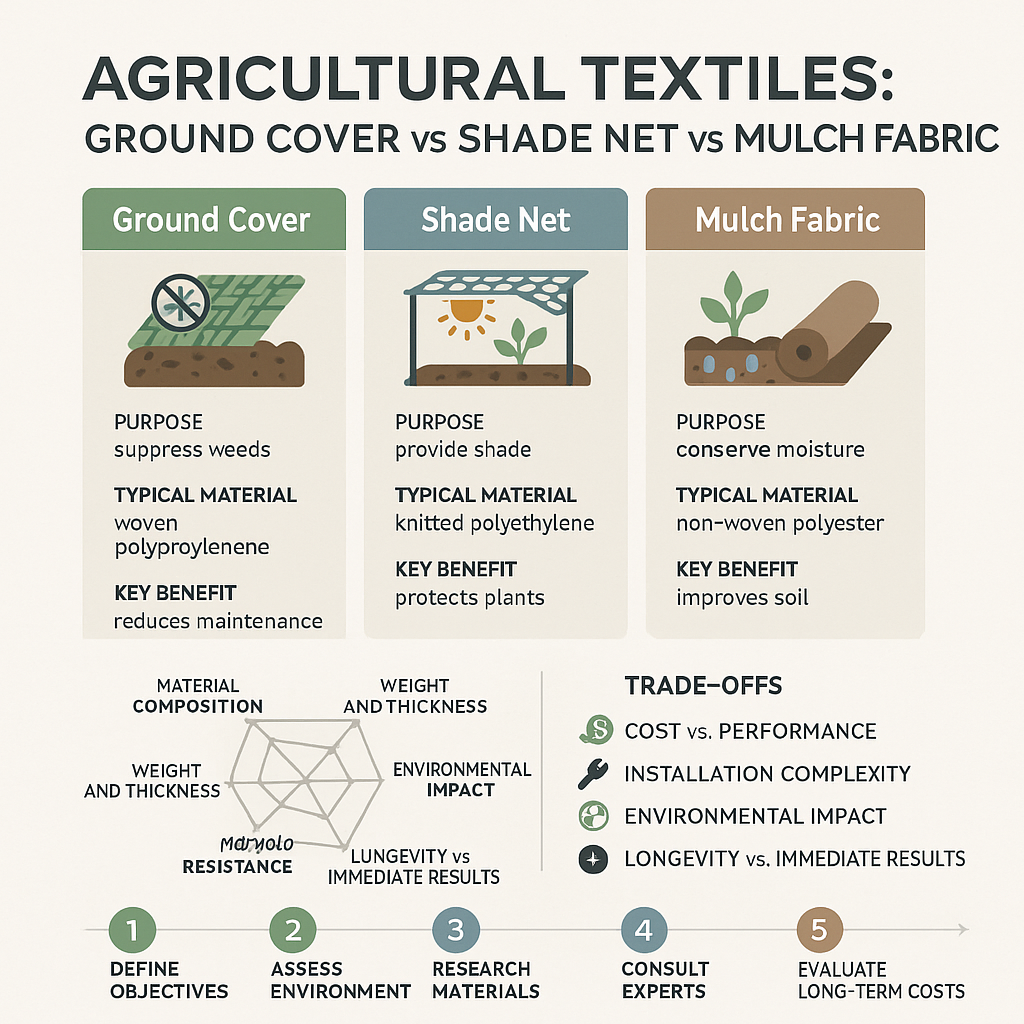
Ground covers are primarily designed to suppress weed growth, enhance soil moisture retention, and improve soil health. Shade nets, on the other hand, provide protection against excessive sunlight, helping to regulate temperature and reduce stress on plants. Mulch fabrics serve as a barrier to prevent weed growth while also aiding in moisture retention and soil temperature regulation.
This article will explore the nuances of these agricultural textiles, providing insights into their design, performance, and the trade-offs involved in selecting the right material for specific applications.
How Product Design Changes from One Use Case to Another
The design of agricultural textiles varies significantly based on their intended use. Understanding these differences is key to making informed decisions.
Performance Points That Deserve Closer Attention
- Material Composition: Ground covers are often made from woven or non-woven polypropylene, while shade nets typically use high-density polyethylene (HDPE). Mulch fabrics can be made from similar materials but are often treated for UV resistance.
- Weight and Thickness: The weight and thickness of these textiles can influence their durability and effectiveness. For instance, heavier ground covers may provide better weed suppression but can be more challenging to install.
- Porosity and Water Permeability: Shade nets are designed with varying degrees of porosity to allow for light diffusion, whereas mulch fabrics need to balance water retention with drainage capabilities.
- UV Resistance: Given their outdoor applications, UV resistance is a critical factor. Shade nets often have higher UV stabilization to withstand prolonged exposure to sunlight.
How Buyers and Engineers Evaluate Trade-offs
When selecting between ground covers, shade nets, and mulch fabrics, buyers and engineers must evaluate several trade-offs:
- Cost vs. Performance: While cheaper options may be tempting, they often compromise on durability and effectiveness. Investing in higher-quality materials can lead to better long-term performance.
- Installation Complexity: Some materials may require specialized installation techniques, which can add to labor costs. Understanding the installation requirements is crucial for project planning.
- Environmental Impact: Consideration of the environmental footprint of materials is becoming increasingly important. Biodegradable options may be available but could come with performance trade-offs.
- Longevity vs. Immediate Results: Some textiles may provide immediate benefits but may not last as long as others. Evaluating the lifecycle of the material is essential for long-term planning.
Misconceptions That Lead to Weak Decisions
Several misconceptions can cloud the decision-making process when it comes to agricultural textiles:
- All Ground Covers Are the Same: Many assume that all ground covers offer the same level of weed suppression and durability. In reality, material composition and design can lead to significant performance differences.
- Shade Nets Are Only for Hot Climates: While shade nets are commonly used in hot regions, they can also be beneficial in cooler climates to protect sensitive plants from frost.
- Mulch Fabrics Are Only for Aesthetic Purposes: While they can enhance the appearance of gardens, mulch fabrics play a critical role in soil health and moisture retention.
A More Practical Framework for Future Decisions
To navigate the complexities of selecting agricultural textiles, consider the following framework:
- Define Your Objectives: Clearly outline what you aim to achieve with the textile—whether it’s weed suppression, temperature regulation, or moisture retention.
- Assess Environmental Conditions: Evaluate the specific environmental factors at play, including climate, soil type, and plant species.
- Research Material Properties: Familiarize yourself with the properties of different materials and how they align with your objectives.
- Consult with Experts: Engage with industry experts or suppliers who can provide insights based on your specific needs.
- Evaluate Long-term Costs: Consider not just the initial investment but also the long-term costs associated with maintenance and replacement.
By following this framework, buyers and engineers can make more informed decisions that align with their agricultural goals.
Conclusion
Understanding the differences between ground covers, shade nets, and mulch fabrics is essential for making informed decisions in agricultural textiles. Each material offers unique benefits and trade-offs that must be carefully evaluated based on specific applications and environmental conditions. By considering the performance characteristics, installation requirements, and long-term implications, stakeholders can select the most appropriate textile solutions for their needs.
As the agricultural landscape continues to evolve, staying informed about the latest advancements in agricultural textiles will empower decision-makers to optimize their material selections for better outcomes.