
A Practical Way to Understand the Medical Textiles
In the healthcare sector, the choice between disposable vs reusable medical textiles is a critical decision that impacts both operational efficiency and patient care. Medical textiles encompass a wide range of materials used in various applications, from surgical drapes to gowns and wound dressings. Understanding the nuances between disposable and reusable options is essential for healthcare professionals, procurement specialists, and decision-makers.
This article aims to provide a comprehensive guide to medical textiles, focusing on their materials, performance requirements, and common pitfalls in selection. By the end, readers will have a clearer framework for evaluating these textiles based on their specific needs and contexts.
Materials and Construction Options
The foundation of any medical textile lies in its materials and construction. Both disposable and reusable medical textiles can be made from a variety of fibers, each offering distinct properties that influence their performance and suitability for specific applications.
Where Each Option Tends to Fit Best
- Disposable Medical Textiles: Typically made from non-woven fabrics such as polypropylene or polyester, disposable textiles are designed for single-use applications. Their primary advantage lies in their convenience and lower risk of cross-contamination, making them ideal for environments where sterility is paramount, such as operating rooms and emergency departments.
- Reusable Medical Textiles: Often constructed from woven fabrics like cotton or polyester blends, reusable textiles are designed for multiple uses. They are generally more durable and can withstand repeated washing and sterilization processes. This makes them suitable for applications such as patient gowns, bed linens, and surgical drapes in settings where cost-effectiveness and sustainability are prioritized.
When selecting materials, it is essential to consider the specific application and the required properties, such as breathability, fluid resistance, and comfort.
Performance Requirements That Matter Most
The performance of medical textiles is influenced by several factors, including the intended use, regulatory standards, and environmental conditions. Understanding these requirements is crucial for making informed decisions.
How Environment and Use Conditions Change the Decision
Different environments and use conditions necessitate varying performance characteristics:
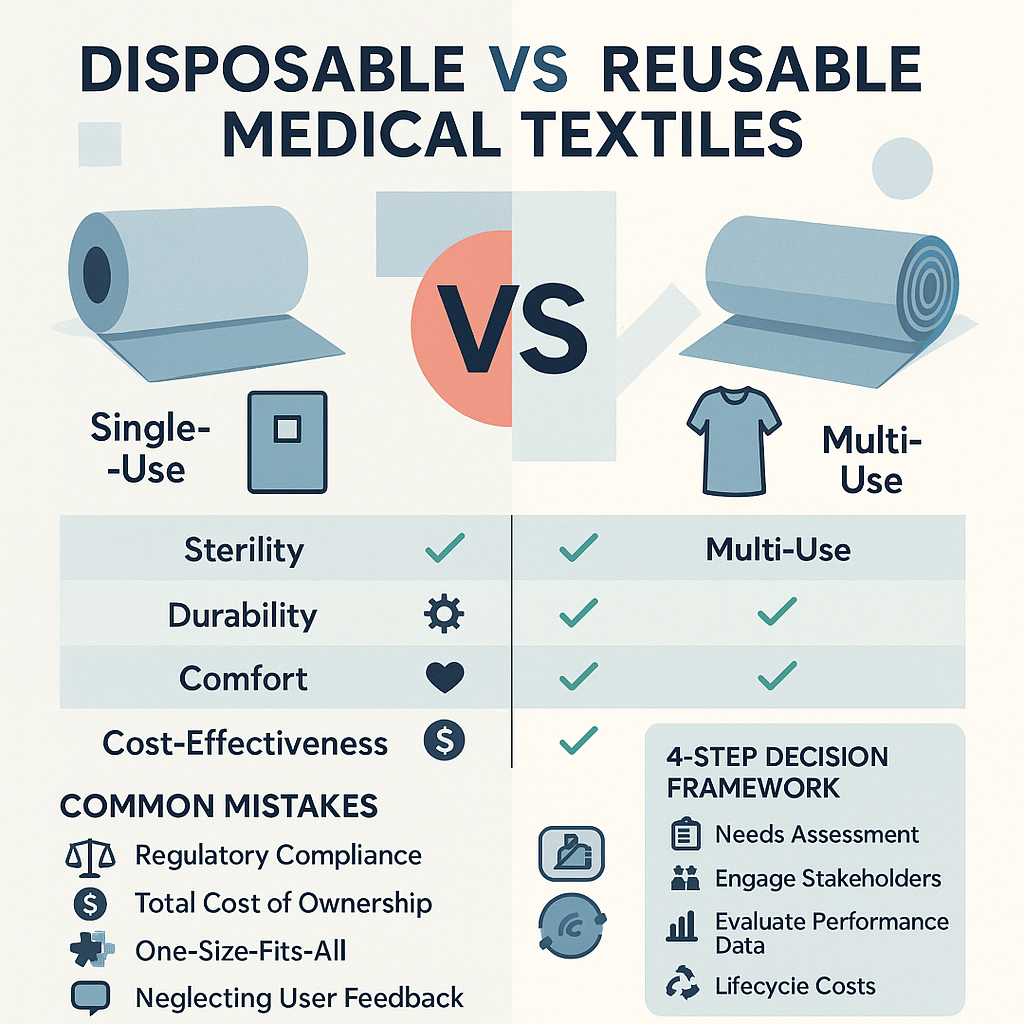
- Sterility: In surgical settings, the sterility of disposable textiles is a significant advantage. They are pre-packaged and designed for single use, minimizing the risk of infection.
- Durability: Reusable textiles must withstand multiple cycles of washing and sterilization. Their construction should be robust enough to maintain integrity and performance over time.
- Comfort: In patient care settings, comfort is paramount. Reusable textiles often provide better comfort due to their softer materials, while disposable options may lack this feature.
- Cost-Effectiveness: While disposable textiles may seem cheaper initially, the cumulative costs of single-use items can surpass the investment in reusable textiles over time.
Decision-makers should evaluate these performance requirements in the context of their specific healthcare environment to determine the most suitable option.
Common Mistakes in Selection or Sourcing
Choosing between disposable and reusable medical textiles is not without its challenges. Several common mistakes can lead to suboptimal decisions:
- Overlooking Regulatory Compliance: Failing to consider the regulatory standards applicable to medical textiles can result in non-compliance, which can have serious implications for patient safety and legal liability.
- Ignoring Total Cost of Ownership: Many decision-makers focus solely on the initial purchase price, neglecting the long-term costs associated with maintenance, cleaning, and disposal.
- Assuming One-Size-Fits-All: Each application has unique requirements. Assuming that one type of textile will suffice across all applications can lead to performance issues and increased risk.
- Neglecting User Feedback: Input from healthcare professionals who use these textiles daily is invaluable. Ignoring their feedback can result in poor material choices that affect usability and patient care.
Awareness of these pitfalls can help healthcare organizations make more informed choices that align with their operational goals and patient care standards.
What Better Decisions Look Like in Practice
Making informed decisions about disposable vs reusable medical textiles involves a systematic approach that considers various factors:
- Conducting a Needs Assessment: Evaluate the specific needs of your healthcare facility, including the types of procedures performed, patient demographics, and infection control protocols.
- Engaging Stakeholders: Involve healthcare professionals, procurement teams, and infection control specialists in the decision-making process to ensure all perspectives are considered.
- Evaluating Performance Data: Review performance data and clinical studies related to the textiles under consideration. This can provide insights into their effectiveness and reliability.
- Considering Lifecycle Costs: Analyze the total cost of ownership for both disposable and reusable options, factoring in purchase, maintenance, and disposal costs.
- Testing and Feedback: Implement a pilot program to test selected textiles in real-world settings, gathering feedback from users to refine choices.
By following these steps, healthcare organizations can make more strategic decisions that enhance patient care while optimizing resource utilization.
Conclusion
Understanding the differences between disposable and reusable medical textiles is essential for making informed decisions that impact patient care and operational efficiency. By considering material properties, performance requirements, and common pitfalls, healthcare professionals can navigate the complexities of medical textiles more effectively.
Ultimately, the choice between disposable and reusable options should align with the specific needs of the healthcare environment, balancing factors such as cost, performance, and patient safety. A thoughtful approach to material selection can lead to better outcomes for both healthcare providers and patients alike.