
A Practical Way to Understand Construction Textiles
In the realm of construction, the importance of textiles often goes unnoticed. However, construction textiles play a pivotal role in repair, strengthening, and retrofit projects. These materials are engineered to enhance the structural integrity of existing constructions, providing solutions that are both innovative and effective. Understanding how these textiles work and their applications can significantly impact project outcomes.
Materials and Construction Options
Construction textiles encompass a variety of materials, each with unique properties and applications. The choice of material can influence the performance, durability, and overall effectiveness of the solution. Here are some common types of construction textiles:
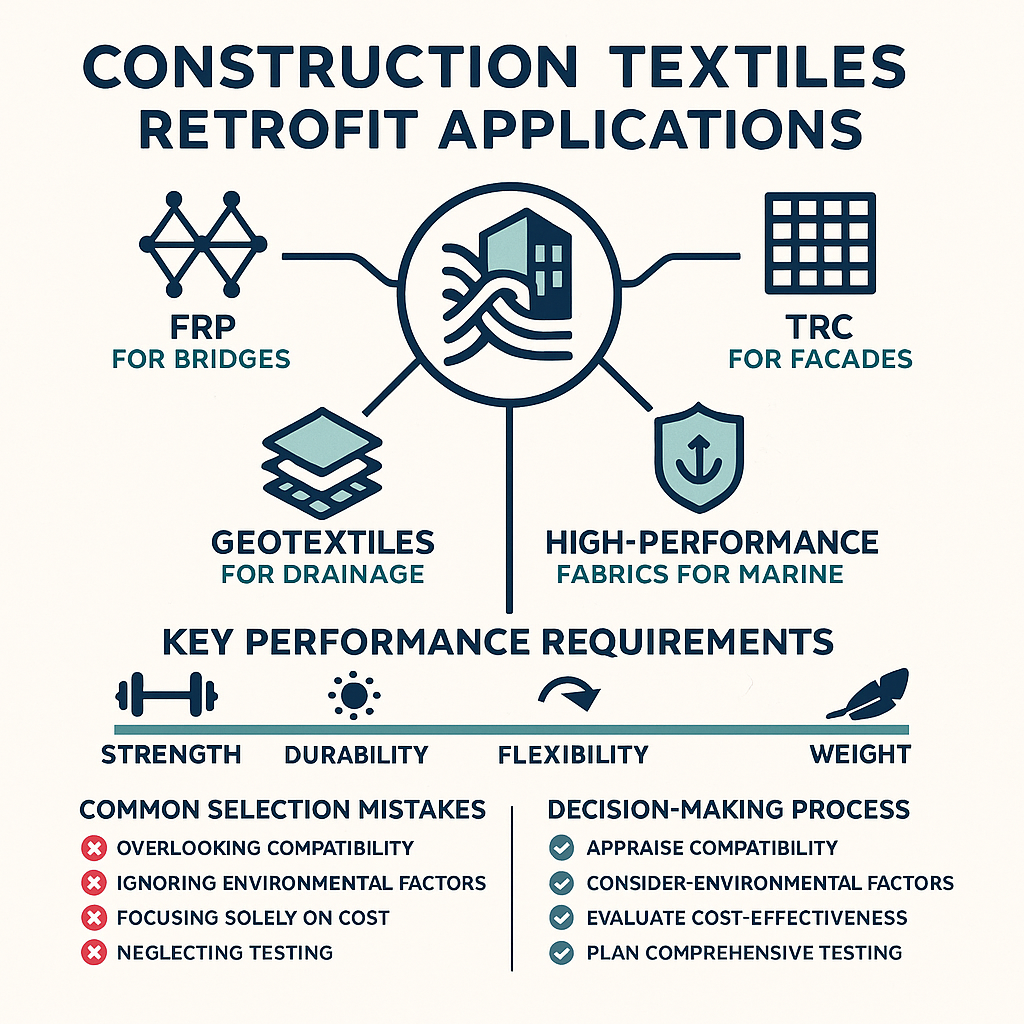
- Fiber-Reinforced Polymers (FRP): These composites are made from a polymer matrix reinforced with fibers such as glass, carbon, or aramid. They are known for their high strength-to-weight ratio and corrosion resistance.
- Geotextiles: Used primarily in civil engineering, geotextiles are permeable fabrics that provide separation, filtration, and drainage. They are often employed in soil stabilization and erosion control.
- Textile Reinforced Concrete (TRC): This innovative approach incorporates textiles into concrete to improve tensile strength and ductility, allowing for thinner, lighter structures.
- High-Performance Fabrics: Materials such as UHMWPE (Ultra-High Molecular Weight Polyethylene) and aramid fibers are used for their exceptional strength and durability in demanding environments.
Where Each Option Tends to Fit Best
Understanding where each type of construction textile fits best is crucial for effective application. Here’s a breakdown:
- FRP: Ideal for retrofitting bridges and buildings where weight reduction is essential without compromising strength.
- Geotextiles: Best suited for projects involving soil stabilization, drainage systems, and road construction.
- TRC: Effective in applications requiring lightweight structures, such as facades and architectural elements.
- High-Performance Fabrics: Suitable for protective applications in harsh environments, such as marine or industrial settings.
Performance Requirements That Matter Most
When selecting construction textiles for retrofit applications, several performance requirements must be considered. These include:
- Strength: The tensile and compressive strength of the material is crucial for ensuring that it can withstand the loads it will encounter.
- Durability: Resistance to environmental factors such as moisture, UV radiation, and chemical exposure is essential for long-term performance.
- Flexibility: The ability of the textile to conform to different shapes and surfaces can significantly affect its application.
- Weight: Lightweight materials can reduce the overall load on existing structures, making them ideal for retrofit projects.
How Environment and Use Conditions Change the Decision
The environment and specific use conditions of a project can dramatically influence material selection. For instance:
- In coastal areas, materials must be resistant to saltwater corrosion.
- In seismic zones, textiles with high flexibility and energy absorption properties are preferred.
- In industrial settings, textiles must withstand exposure to chemicals and high temperatures.
Understanding these nuances can guide decision-makers in selecting the most appropriate materials for their specific applications.
Common Mistakes in Selection or Sourcing
Even experienced professionals can make mistakes when selecting construction textiles. Here are some common pitfalls to avoid:
- Overlooking Compatibility: Not all textiles are compatible with every substrate or existing material. Ensure compatibility to avoid failures.
- Ignoring Environmental Factors: Failing to consider environmental conditions can lead to premature material degradation.
- Focusing Solely on Cost: While budget is important, prioritizing cost over performance can result in higher long-term expenses due to failures or repairs.
- Neglecting Testing: Skipping material testing can lead to unforeseen issues. Always validate materials under expected conditions.
What Better Decisions Look Like in Practice
Making informed decisions in the selection and sourcing of construction textiles involves a systematic approach. Here are some steps to consider:
- Define Project Requirements: Clearly outline the performance, environmental, and aesthetic requirements of the project.
- Conduct Material Research: Investigate various materials and their properties, focusing on how they align with project needs.
- Consult with Experts: Engage with material specialists or engineers who can provide insights into the best options available.
- Evaluate Case Studies: Review past projects that utilized similar materials to understand potential challenges and successes.
- Prioritize Testing: Implement a testing phase to validate material performance under actual project conditions.
By following these steps, decision-makers can enhance their material selection process, leading to more successful retrofit projects.
Conclusion
Construction textiles play a vital role in repair, strengthening, and retrofit applications. Understanding the various materials, their performance requirements, and common pitfalls can significantly improve project outcomes. By adopting a systematic approach to material selection and sourcing, professionals can ensure that they make informed decisions that align with their project goals. Ultimately, the right choice of construction textiles can lead to enhanced durability, performance, and cost-effectiveness in construction projects.