
The Bigger Picture Behind Construction Textiles
Construction textiles have evolved significantly over the years, transcending their traditional role as mere fabric roofs. Today, they encompass a wide range of applications that are crucial in various sectors, including architecture, civil engineering, and environmental management. Understanding the broader implications of construction textiles is essential for decision-makers who seek to leverage these materials effectively.
In essence, construction textiles serve as a bridge between functionality and aesthetics. They not only provide structural support but also contribute to energy efficiency, environmental sustainability, and innovative design. As the construction industry increasingly prioritizes sustainability and resilience, the role of textiles becomes even more pronounced.
How Materials, Structure, and Processing Affect Results
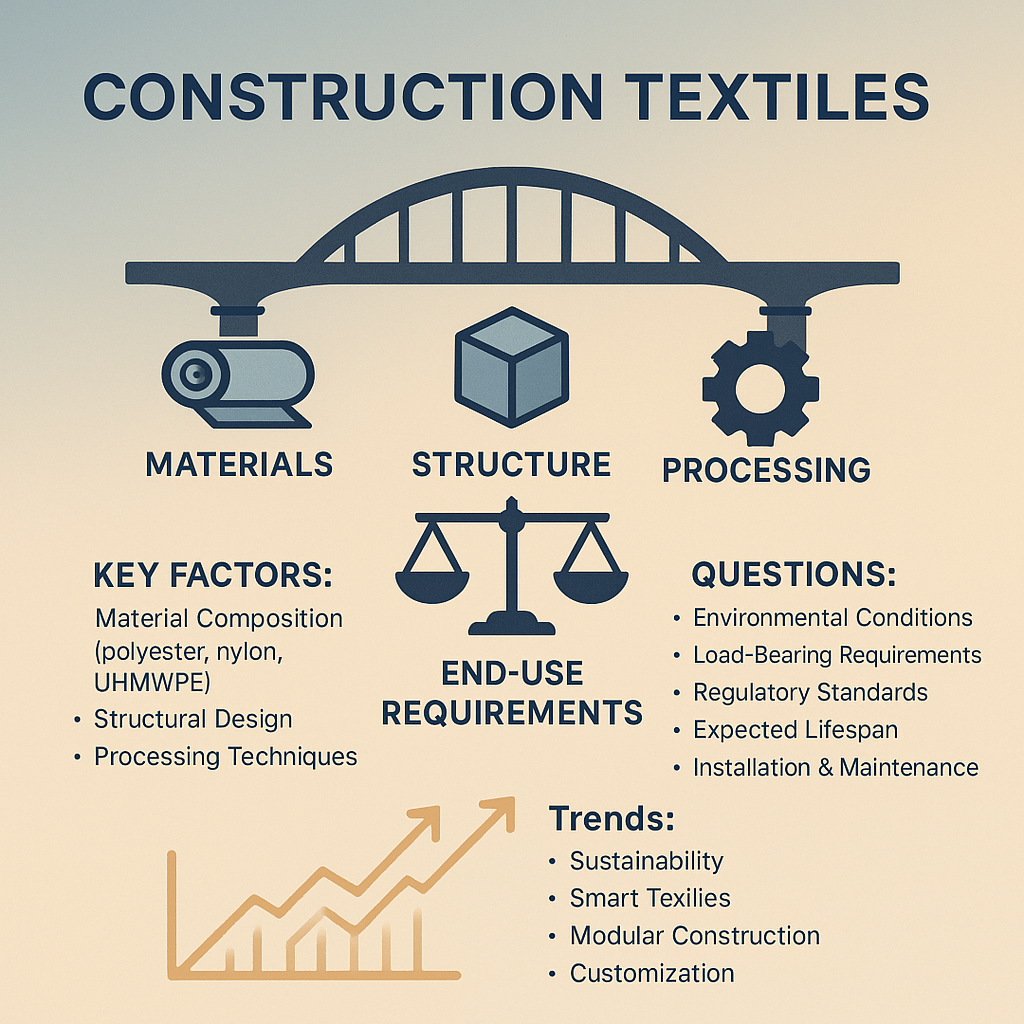
The performance of construction textiles is heavily influenced by the materials used, the structural design, and the processing techniques employed. Each of these factors plays a critical role in determining the overall effectiveness and suitability of textiles for specific applications.
Why One Specification Never Tells the Full Story
When evaluating construction textiles, it is tempting to rely on a single specification, such as tensile strength or UV resistance. However, this approach can be misleading. For instance, while a textile may exhibit high tensile strength, it may lack flexibility or durability under specific environmental conditions. Therefore, a holistic understanding of material properties is essential.
- Material Composition: Different fibers (e.g., polyester, nylon, UHMWPE) offer varying levels of strength, weight, and resistance to environmental factors.
- Structural Design: The way textiles are woven or knitted can impact their load-bearing capacity and flexibility.
- Processing Techniques: Treatments like coating or laminating can enhance performance characteristics, such as water resistance or fire retardancy.
How to Compare Options by End-Use Requirements
Choosing the right construction textile requires a careful assessment of end-use requirements. This involves understanding the specific demands of the project and how different textiles can meet those needs.
Questions Worth Asking Before Sourcing
Before making a sourcing decision, consider the following questions:
- What are the environmental conditions? Understanding factors like temperature fluctuations, humidity, and exposure to UV rays can guide material selection.
- What load-bearing requirements exist? Assess the structural demands of the application to ensure the chosen textile can handle the necessary loads.
- Are there specific regulatory standards to meet? Different regions may have varying regulations regarding fire safety, environmental impact, and material sourcing.
- What is the expected lifespan of the textile? Consider how long the textile needs to perform effectively before replacement or maintenance is required.
- How will the textile be installed and maintained? Understanding installation methods and maintenance requirements can influence material choice.
Examples, Trends, and What to Watch Next
As the construction industry continues to evolve, several trends are emerging in the realm of construction textiles:
- Sustainability: There is a growing emphasis on eco-friendly materials and processes, leading to innovations in biodegradable textiles and recycling methods.
- Smart Textiles: The integration of technology into textiles, such as sensors for monitoring structural integrity, is gaining traction.
- Modular Construction: Textiles are increasingly being used in modular construction methods, allowing for quicker assembly and disassembly.
- Customization: Advances in manufacturing techniques are enabling more tailored solutions that meet specific project needs.
Staying informed about these trends can help decision-makers anticipate future needs and make strategic sourcing choices.
Conclusion
Understanding the applications of construction textiles requires a nuanced approach that considers material properties, structural design, and processing techniques. By asking the right questions and evaluating options based on end-use requirements, stakeholders can make informed decisions that enhance project outcomes.
As the industry continues to innovate, keeping an eye on emerging trends will be essential for leveraging the full potential of construction textiles. This guide serves as a foundation for navigating the complexities of material selection and application fit, empowering professionals to make choices that align with both performance and sustainability goals.