
What does filament thread uses mean in sewing thread applications?
Understanding filament thread uses is crucial for anyone involved in the sewing industry. Filament threads, known for their strength and durability, play a significant role in various sewing applications. This article will delve into the definition, importance, and practical applications of filament threads, providing valuable insights for sourcing teams and technical buyers.
Basic definition
Filament thread is made from long continuous strands of fiber, typically polyester or nylon, which are twisted together to form a strong and smooth sewing thread. Unlike spun threads, which are made from shorter fibers twisted together, filament threads offer a more uniform structure, resulting in enhanced performance characteristics. Common filament threads include high-tenacity polyester and nylon threads, which are widely used in industrial sewing applications.
Why it matters in sewing performance
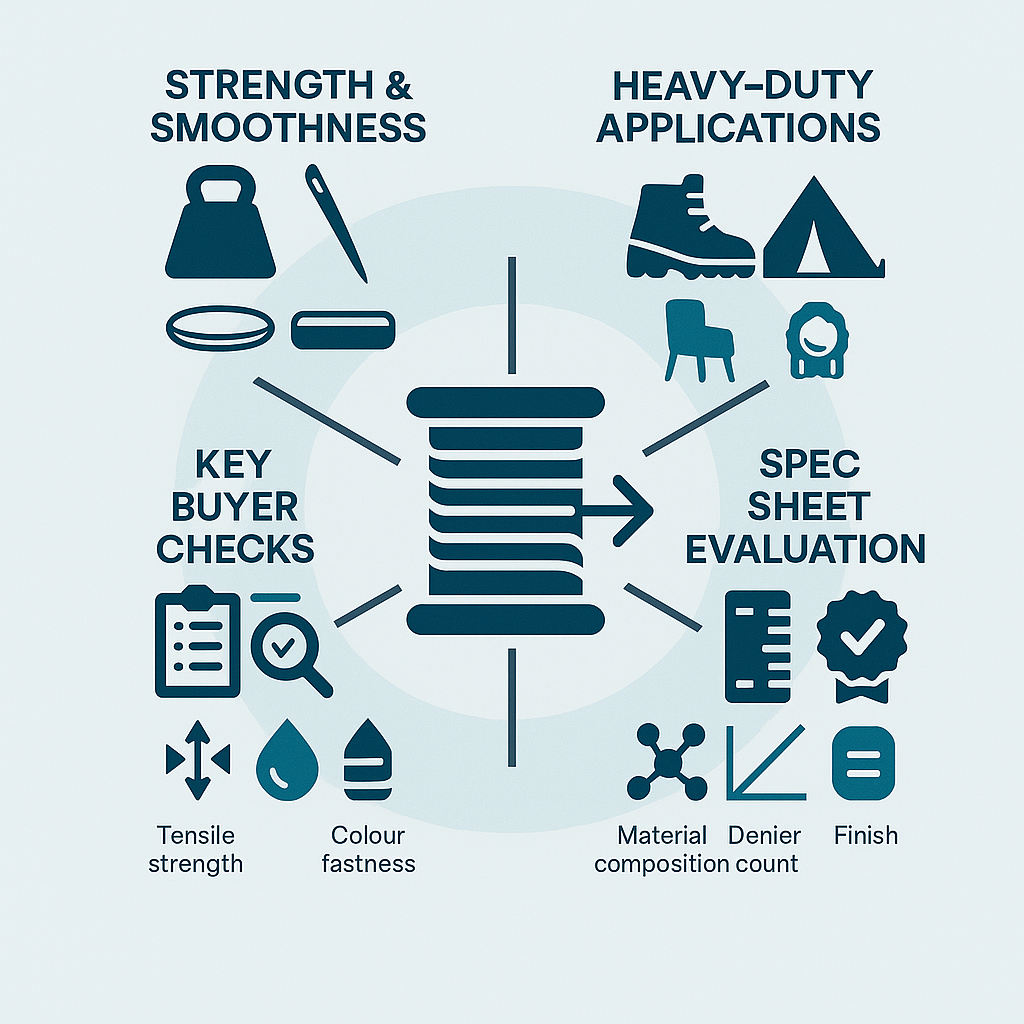
The choice of filament thread can significantly impact the overall performance of a sewing project. Key benefits include:
- Strength: Filament threads generally exhibit higher tensile strength, making them suitable for heavy-duty applications.
- Smoothness: Their smooth surface reduces friction during sewing, leading to less wear on sewing machines and improved stitch quality.
- Durability: Filament threads are resistant to abrasion and environmental factors, ensuring longevity in finished products.
Understanding these characteristics helps buyers make informed decisions about which filament thread to use in specific applications.
Where is filament thread used?
Filament threads are versatile and can be found in a variety of sewing applications. Understanding where they are commonly used can help sourcing teams identify the right products for their needs.
Common sewing thread products or applications
Some of the common applications of filament threads include:
- Apparel Manufacturing: Used in garments requiring durability, such as sportswear and outdoor clothing.
- Upholstery: Ideal for furniture and automotive upholstery due to their strength and resistance to wear.
- Technical Textiles: Employed in products like tarps, tents, and industrial bags where high performance is critical.
- Footwear: Used in stitching shoes and boots, where flexibility and strength are essential.
These applications highlight the importance of selecting the right filament thread to meet specific performance requirements.
What buyers usually check
When sourcing filament threads, buyers typically consider several factors:
- Tensile Strength: Ensures the thread can withstand the stresses of the intended application.
- Elongation: Affects how much the thread can stretch without breaking, which is crucial for certain applications.
- Color Fastness: Important for aesthetic applications where color retention is necessary.
- Compatibility: Ensures the thread works well with specific fabrics and sewing machines.
By focusing on these criteria, buyers can make better-informed decisions regarding filament thread selection.
How to evaluate filament thread uses
Evaluating filament thread uses involves understanding the specifications and performance characteristics outlined in product documentation. This section will guide you through key points to consider.
Key points on a specification sheet
When reviewing a specification sheet for filament threads, pay attention to the following:
- Material Composition: Knowing whether the thread is made from polyester, nylon, or other materials helps in assessing its suitability.
- Denier or Tex Count: These measurements indicate the thickness of the thread, which can affect its strength and application fit.
- Finish: A thread’s finish can influence its performance, such as lubrication for smoother sewing.
- Certification: Look for any industry certifications that may indicate quality standards.
These elements are crucial for understanding how a filament thread will perform in specific applications.
Common misunderstandings
There are several misconceptions about filament threads that can lead to poor purchasing decisions:
- All filament threads are the same: Different materials and finishes can lead to significant performance differences.
- Higher strength always means better performance: The right balance between strength and flexibility is essential for optimal results.
- Filament threads are only for industrial use: While they excel in industrial applications, they are also suitable for high-quality consumer products.
Clarifying these misunderstandings can help buyers make more informed choices.
Practical takeaway for sourcing teams
For sourcing teams, understanding filament thread uses is vital for making effective purchasing decisions. Here are some practical takeaways:
When to ask for samples
Requesting samples is advisable when:
- You are considering a new supplier or product line.
- You need to test compatibility with specific fabrics or machines.
- You want to assess the thread’s performance in real-world applications.
Samples can provide valuable insights that specifications alone may not reveal.
When another thread type may fit better
While filament threads are versatile, there are scenarios where other thread types may be more appropriate:
- Spun Threads: For applications requiring a softer hand feel or more flexibility.
- Bonded Threads: In situations where additional abrasion resistance is necessary.
- Corespun Threads: When a combination of strength and softness is needed.
Understanding these alternatives can help sourcing teams select the most suitable thread for their specific needs.
In conclusion, filament thread uses are integral to various sewing applications, impacting performance and durability. By understanding the characteristics, applications, and evaluation criteria of filament threads, sourcing teams can make informed decisions that enhance their product offerings and meet customer demands effectively.