
What is Carbon Fiber?
Core Definition and Material Structure
Carbon fiber is a lightweight, high-strength material made from thin strands of carbon atoms. These strands are woven together to form a composite material that exhibits exceptional tensile strength and rigidity. Typically, carbon fiber is combined with a resin to create a composite that enhances its structural integrity and performance.
Key Performance Characteristics
- High Strength-to-Weight Ratio: Carbon fiber is significantly lighter than steel while offering comparable strength, making it ideal for applications where weight reduction is crucial.
- Corrosion Resistance: Unlike steel, carbon fiber does not rust, which enhances its longevity in harsh environments.
- Fatigue Resistance: Carbon fiber maintains its strength over repeated stress cycles, making it suitable for dynamic applications.
Typical Industrial Forms and Specifications
Carbon fiber is available in various forms, including sheets, rods, and tubes, and can be customized based on specific requirements. Common specifications include different fiber orientations and resin types, which can affect performance characteristics.
What is Steel?
Core Definition and Material Structure
Steel is an alloy primarily composed of iron and carbon, known for its high tensile strength and versatility. It is one of the most widely used materials in construction and manufacturing due to its durability and cost-effectiveness.
Key Performance Characteristics
- High Strength: Steel offers excellent tensile strength, making it suitable for heavy-duty applications.
- Versatility: Steel can be easily molded and fabricated into various shapes, allowing for a wide range of applications.
- Cost-Effectiveness: Generally, steel is more affordable than carbon fiber, making it a popular choice for budget-conscious projects.
Typical Industrial Forms and Specifications
Steel is available in numerous forms, including sheets, beams, and rods. It can be treated and alloyed to enhance specific properties, such as corrosion resistance or increased strength.
Strength, Weight, and Durability Comparison
Tensile Strength and Weight Differences
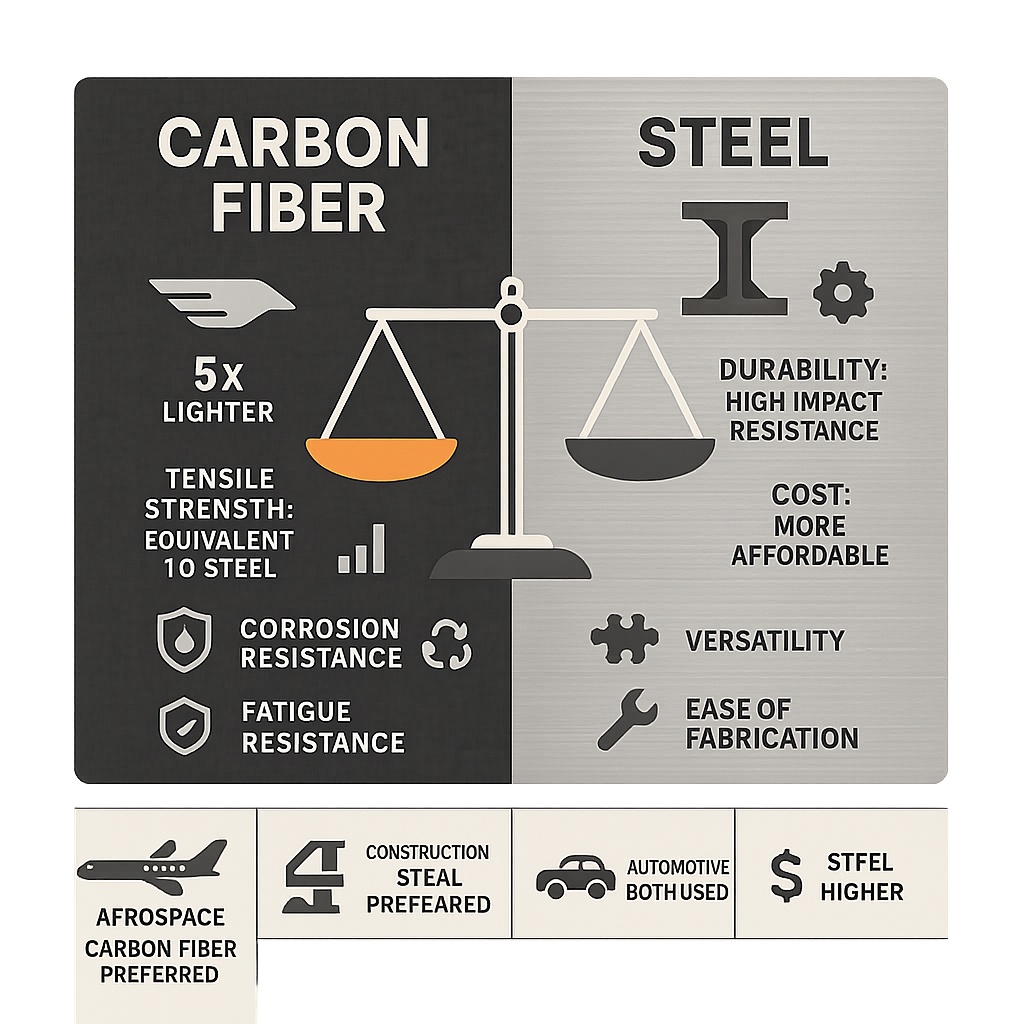
When comparing carbon fiber vs steel, the most notable difference is the strength-to-weight ratio. Carbon fiber is approximately five times lighter than steel while offering similar or even superior tensile strength. This makes carbon fiber an attractive option for applications where weight is a critical factor, such as in aerospace and automotive industries.
Wear, Impact, and Environmental Resistance
Carbon fiber excels in environments where corrosion and fatigue are concerns. It is resistant to chemicals and moisture, which can degrade steel over time. However, steel generally has better impact resistance, making it suitable for applications where heavy loads or impacts are expected.
Application Suitability by End Use
- Aerospace: Carbon fiber is preferred for aircraft components due to its lightweight and strong properties.
- Construction: Steel remains the material of choice for structural applications due to its durability and cost-effectiveness.
- Automotive: Both materials are used, with carbon fiber being favored in high-performance vehicles for weight reduction.
Processing and Fabrication Differences
Common Processing Methods
Carbon fiber is typically processed through methods such as layup, filament winding, and resin infusion. These techniques allow for precise control over the material’s properties. Steel, on the other hand, is often processed through welding, machining, and casting, which are well-established methods that allow for mass production.
Design and Fabrication Limitations
While carbon fiber offers design flexibility, it can be more challenging to work with than steel, particularly in terms of joining methods and repairability. Steel’s established fabrication techniques make it easier to implement in various designs, especially in large-scale projects.
Implications for Sourcing and Customization
When sourcing carbon fiber, buyers should consider the specific requirements of their application, including the type of resin and fiber orientation. Steel sourcing is generally more straightforward due to its widespread availability and established supply chains.
Cost, Lead Time, and Sourcing Considerations
What Affects Pricing
The cost of carbon fiber is typically higher than that of steel due to the complex manufacturing processes involved. Factors such as raw material prices, processing techniques, and market demand can influence pricing for both materials.
MOQ, Sample, and Lead Time Considerations
Minimum order quantities (MOQ) and lead times can vary significantly between carbon fiber and steel. Carbon fiber often requires longer lead times due to its specialized processing, while steel can be sourced more quickly in bulk.
What Buyers Should Confirm Before RFQ
Before requesting a quote (RFQ), buyers should confirm the specific material specifications, desired performance characteristics, and any customization needs. Understanding these factors can help ensure the right material is selected for the intended application.
Which Material Fits Industrial Applications?
Typical Industries Using This Material
- Aerospace: Carbon fiber is widely used for lightweight components.
- Construction: Steel is prevalent in structural applications.
- Automotive: Both materials are utilized, depending on performance requirements.
Why Engineers and Buyers Choose It
Engineers and buyers often choose carbon fiber for its lightweight and high-strength properties, especially in applications where performance is critical. Steel is chosen for its durability, cost-effectiveness, and ease of fabrication.
When Another Material May Be Better
In some cases, other materials such as aluminum or composites may be more suitable, particularly when specific performance characteristics or cost constraints are in play. Evaluating the entire material landscape is essential for making informed decisions.
How to Choose the Right Specification
Key Specification Checklist
- Define the performance requirements for your application.
- Consider environmental factors that may affect material performance.
- Evaluate the fabrication methods available for each material.
Matching Material to Application Conditions
Understanding the specific conditions under which the material will be used is crucial. For instance, if the application involves exposure to chemicals or moisture, carbon fiber may be the better choice. Conversely, for applications requiring high impact resistance, steel may be more appropriate.
Common Mistakes Before Sampling or Bulk Order
One common mistake is failing to thoroughly test material samples before committing to a bulk order. It is essential to evaluate how the material performs under actual working conditions to avoid costly errors later in the project.
Conclusion
In the debate of carbon fiber vs steel, the choice ultimately depends on the specific requirements of the application. Carbon fiber offers significant advantages in weight and corrosion resistance, while steel provides durability and cost-effectiveness. By understanding the properties, processing differences, and application suitability of each material, engineers and buyers can make informed decisions that align with their project goals.