
What is Carbon Fiber?
Core Definition and Material Structure
Carbon fiber is a high-strength, lightweight material made from thin strands of carbon atoms. These fibers are typically woven together to form a composite material, which is known for its exceptional tensile strength and rigidity. The unique structure of carbon fiber allows it to maintain its strength while being significantly lighter than traditional materials like steel.
Key Performance Characteristics
- Tensile Strength: Carbon fiber exhibits high tensile strength, making it ideal for applications requiring durability.
- Weight: Its lightweight nature contributes to improved performance in various applications, especially in aerospace and automotive sectors.
- Corrosion Resistance: Carbon fiber is resistant to many chemicals, enhancing its longevity in harsh environments.
Typical Industrial Forms and Specifications
Carbon fiber is available in various forms, including sheets, rods, and pre-preg composites. Specifications can vary widely based on the intended application, with different grades offering unique performance characteristics.
What is Aramid?
Core Definition and Material Structure
Aramid fibers, such as Kevlar and Twaron, are synthetic fibers known for their high strength and thermal stability. The molecular structure of aramid fibers includes long chains of aromatic polyamides, which contribute to their unique properties.
Key Performance Characteristics
- High Strength-to-Weight Ratio: Aramid fibers are lightweight yet extremely strong, making them suitable for a range of applications.
- Impact Resistance: Aramid is known for its excellent impact resistance, making it ideal for protective gear and armor.
- Thermal Stability: Aramid fibers can withstand high temperatures without degrading, making them suitable for applications in extreme environments.
Typical Industrial Forms and Specifications
Aramid fibers are commonly available in woven fabrics, non-woven mats, and composite forms. The specifications can vary based on the intended use, with different grades offering distinct performance benefits.
Strength, Weight, and Durability Comparison
Tensile Strength and Weight Differences
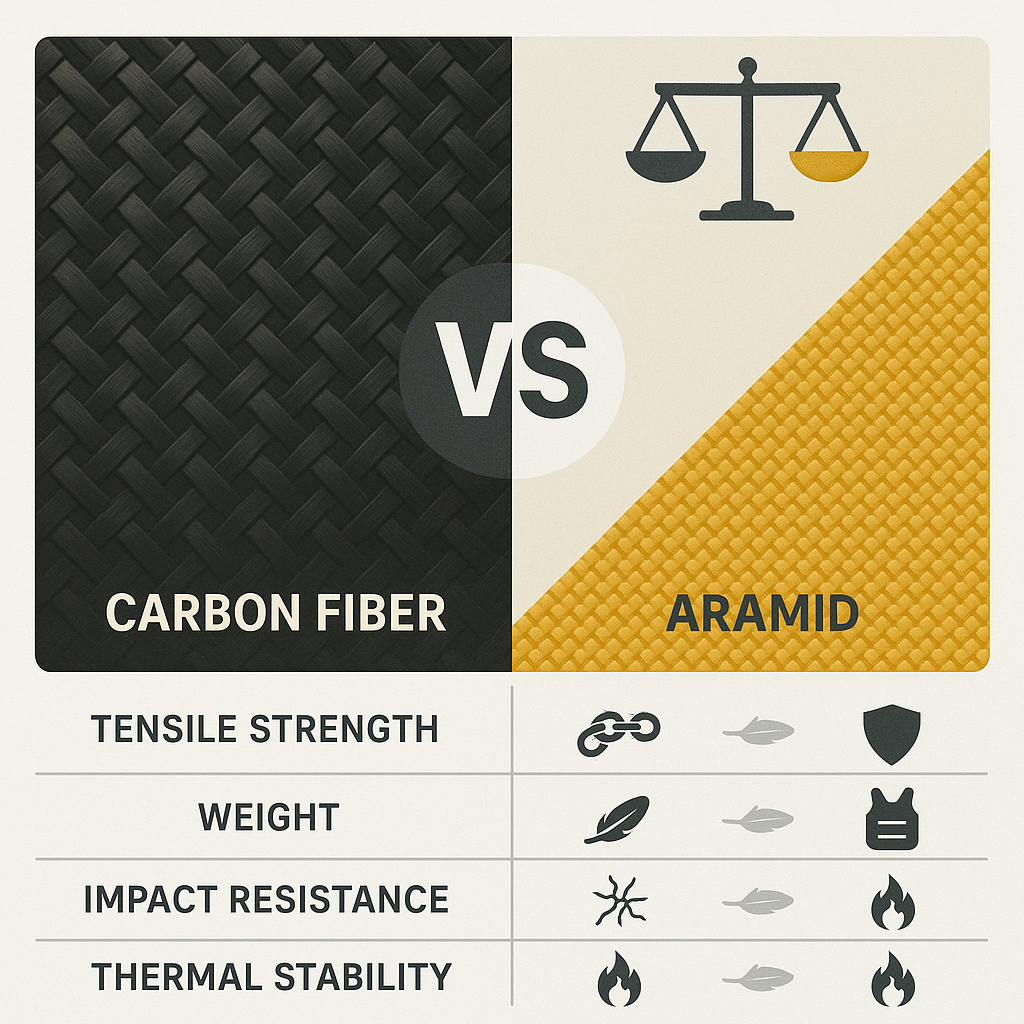
When comparing carbon fiber vs aramid, tensile strength is a critical factor. Carbon fiber generally has a higher tensile strength compared to aramid, making it preferable for applications where maximum strength is required. However, aramid’s strength-to-weight ratio is also impressive, offering a viable alternative in many scenarios.
Wear, Impact, and Environmental Resistance
In terms of wear resistance, carbon fiber excels in applications where abrasion is a concern. Conversely, aramid’s impact resistance makes it suitable for protective applications, such as body armor and helmets. Environmental resistance varies, with carbon fiber being more chemically resistant, while aramid performs better under high-temperature conditions.
Application Suitability by End Use
Both materials have their strengths in specific applications. Carbon fiber is often used in aerospace, automotive, and sporting goods, while aramid is favored in military, aerospace, and safety equipment. Understanding the specific requirements of each application is essential for making the right material choice.
Processing and Fabrication Differences
Common Processing Methods
Carbon fiber is typically processed through methods such as resin transfer molding (RTM) and filament winding, allowing for complex shapes and high-performance composites. Aramid fibers, on the other hand, are often processed through weaving and braiding techniques, which can influence the final product’s characteristics.
Design and Fabrication Limitations
While carbon fiber allows for intricate designs, it can be more challenging to work with due to its brittleness. Aramid, being more flexible, can be easier to manipulate but may not achieve the same level of rigidity as carbon fiber.
Implications for Sourcing and Customization
When sourcing these materials, it is crucial to consider the specific processing methods and design limitations. Customization options may vary, impacting the final product’s performance and suitability for the intended application.
Cost, Lead Time, and Sourcing Considerations
What Affects Pricing
The cost of carbon fiber vs aramid can vary significantly based on factors such as material grade, processing methods, and market demand. Generally, carbon fiber tends to be more expensive due to its complex manufacturing process.
MOQ, Sample, and Lead Time Considerations
Minimum order quantities (MOQ) and lead times can differ between suppliers and materials. Understanding these factors is essential for planning and budgeting in industrial applications.
What Buyers Should Confirm Before RFQ
Before requesting a quote (RFQ), buyers should confirm material specifications, processing capabilities, and lead times. This ensures that the sourced materials meet the necessary performance criteria for their applications.
Which Material Fits Industrial Applications?
Typical Industries Using This Material
Carbon fiber is commonly used in industries such as aerospace, automotive, and sports equipment, while aramid fibers are prevalent in military, safety, and automotive applications. Understanding the typical uses can guide material selection.
Why Engineers and Buyers Choose It
Engineers and buyers often choose carbon fiber for its superior strength and lightweight properties, while aramid is selected for its impact resistance and thermal stability. The choice often depends on the specific requirements of the application.
When Another Material May Be Better
In some cases, alternatives such as fiberglass or traditional metals may be more suitable, particularly when cost is a significant factor or when the application does not demand the unique properties of carbon fiber or aramid.
How to Choose the Right Specification
Key Specification Checklist
- Identify the performance requirements for your application.
- Consider environmental factors such as temperature and exposure to chemicals.
- Evaluate the processing methods available for each material.
Matching Material to Application Conditions
It’s essential to match the material’s properties to the specific conditions it will face in use. This includes considering factors like load-bearing requirements, exposure to elements, and potential for wear and tear.
Common Mistakes Before Sampling or Bulk Order
Common mistakes include not fully understanding the material specifications, overlooking processing limitations, and failing to consider long-term performance requirements. Thorough research and consultation can help mitigate these risks.
Conclusion
In the debate of carbon fiber vs aramid, both materials offer unique advantages and are suited for different industrial applications. Understanding their properties, processing methods, and suitability can help engineers and buyers make informed decisions. By carefully evaluating the specific requirements of each application, stakeholders can select the material that best fits their needs, ensuring optimal performance and longevity.