
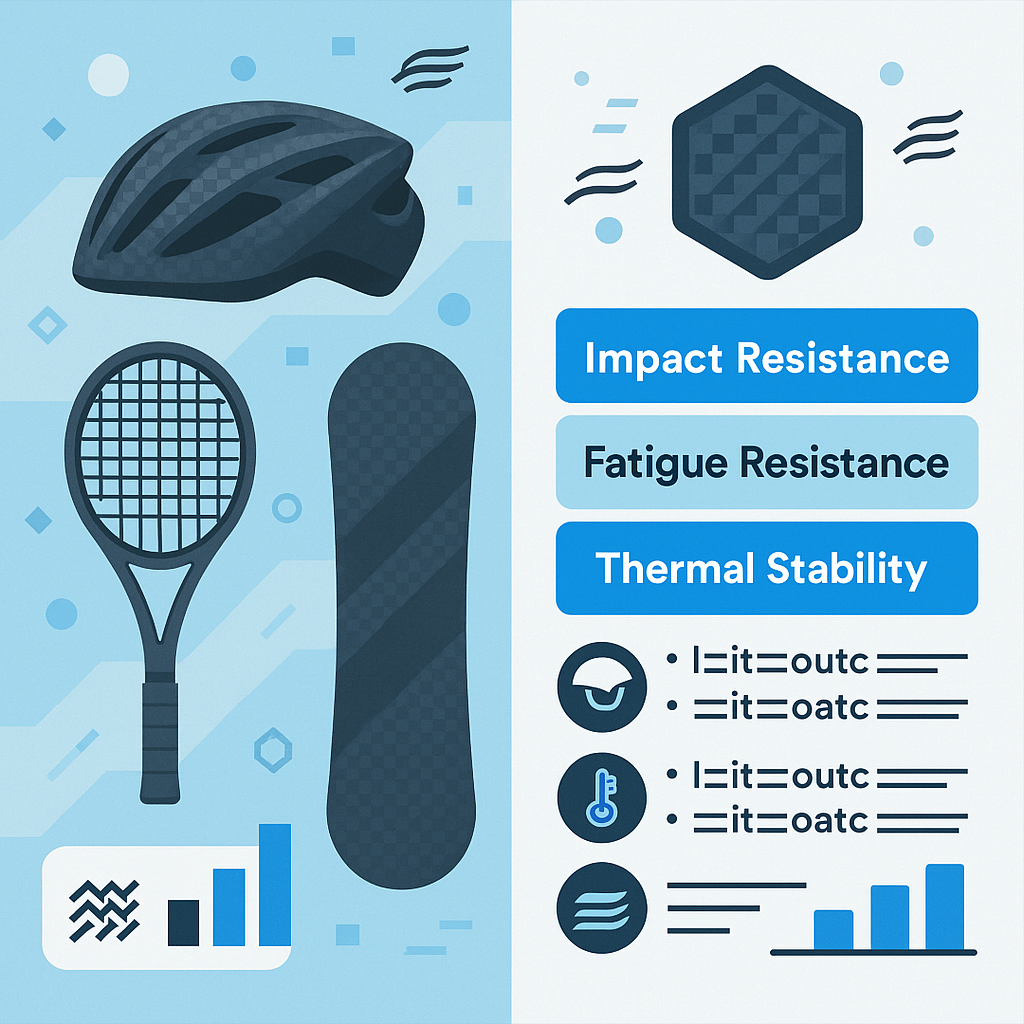
Why Carbon Fiber is Used in Sporting Goods
Carbon fiber has become a staple in the sporting goods industry, known for its exceptional strength-to-weight ratio and versatility. As athletes and manufacturers seek to enhance performance and durability, understanding the properties and applications of carbon fiber for sporting goods is essential. This article delves into the technical aspects, performance requirements, and sourcing considerations that make carbon fiber a preferred material in this sector.
Key Technical Points
- Lightweight: Carbon fiber is significantly lighter than traditional materials like steel or aluminum, allowing for more agile and faster equipment.
- High Strength: It offers remarkable tensile strength, making it ideal for high-impact applications.
- Stiffness: The rigidity of carbon fiber contributes to better energy transfer, enhancing performance in various sports.
Application and Sourcing Considerations
When considering carbon fiber for sporting goods, it’s crucial to evaluate the specific application. Different sports may require varying properties, such as flexibility or rigidity. Additionally, sourcing quality carbon fiber is essential. Look for suppliers with a proven track record in the industry, as the quality of the material can significantly impact performance.
Buyer Checklist Before Sampling
- Identify the specific performance requirements for your sporting goods.
- Research potential suppliers and their material certifications.
- Request samples to evaluate the material’s properties firsthand.
Key Performance Requirements
Key Technical Points
Understanding the performance requirements of carbon fiber is vital for its application in sporting goods. Key factors include:
- Impact Resistance: Essential for equipment that undergoes high stress, such as bicycles and helmets.
- Fatigue Resistance: Important for items that experience repeated stress, ensuring longevity and reliability.
- Thermal Stability: Necessary for applications exposed to varying temperatures, maintaining performance under different conditions.
Application and Sourcing Considerations
Different sporting goods will have unique performance needs. For example, a tennis racket may prioritize lightweight and stiffness, while a snowboard may require more flexibility. Sourcing carbon fiber that meets these specific requirements is crucial for optimal performance.
Buyer Checklist Before Sampling
- Assess the specific performance metrics required for your application.
- Evaluate the supplier’s ability to meet these metrics consistently.
- Consider the environmental conditions the product will face.
Material Construction and Specification Options
Key Technical Points
Carbon fiber can be constructed in various forms, including woven fabrics, unidirectional tapes, and pre-pregs. Each form has distinct properties that can affect the final product:
- Woven Fabrics: Provide flexibility and are often used in applications requiring complex shapes.
- Unidirectional Tapes: Offer maximum strength in one direction, ideal for components that experience linear loads.
- Pre-Pregs: Combine resin and fiber, allowing for precise control over material properties and performance.
Application and Sourcing Considerations
Choosing the right construction method is critical. For instance, a surfboard may benefit from a woven fabric for flexibility, while a racing bike frame may require unidirectional tapes for maximum strength. Understanding these nuances will aid in sourcing the appropriate material.
Buyer Checklist Before Sampling
- Determine the best construction method for your specific application.
- Review the supplier’s capabilities in producing the desired construction type.
- Request technical data sheets to understand the material specifications.
Processing, Lamination, or Fabrication Considerations
Common Processing Methods
Carbon fiber requires specific processing methods to achieve desired properties. Common techniques include:
- Lamination: Layers of carbon fiber are bonded together, enhancing strength and stiffness.
- Molding: Carbon fiber can be molded into complex shapes, suitable for custom sporting goods.
- Cutting and Trimming: Precision cutting is essential for ensuring the final product meets specifications.
Design and Fabrication Limitations
While carbon fiber offers many advantages, there are limitations to consider. For example, the material can be more expensive than alternatives, and its brittleness may pose challenges in certain applications. Understanding these limitations will help in making informed decisions.
Implications for Sourcing and Customization
When sourcing carbon fiber, consider the supplier’s ability to accommodate custom designs and fabrication methods. This flexibility can be crucial for developing innovative sporting goods that meet specific performance criteria.
Common Standards, Testing, or Buyer Concerns
Relevant Test Methods
To ensure quality and performance, various testing methods are employed for carbon fiber materials. Common tests include:
- Tensile Testing: Measures the strength and elasticity of the material.
- Impact Testing: Assesses the material’s resistance to sudden forces.
- Fatigue Testing: Evaluates how the material performs under repeated stress.
Standards Buyers Often Ask About
Buyers frequently inquire about industry standards for carbon fiber materials. Common standards include:
- ASTM D3039: Standard test method for tensile properties of polymer matrix composite materials.
- ISO 527: Standard for determining tensile properties of plastics.
- ASTM D790: Standard test method for flexural properties of unreinforced and reinforced plastics.
How to Verify Compliance with Suppliers
To ensure compliance with relevant standards, buyers should request documentation from suppliers. This may include:
- Certificates of compliance with industry standards.
- Test reports demonstrating material performance.
- Quality assurance processes in place at the manufacturing facility.
How to Evaluate Samples Before Bulk Order
Key Technical Points
Evaluating samples is a critical step before placing a bulk order. Key aspects to consider include:
- Visual Inspection: Check for any visible defects or inconsistencies.
- Performance Testing: Conduct tests to ensure the material meets the required specifications.
- Compatibility: Ensure the carbon fiber is compatible with other materials used in the final product.
Application and Sourcing Considerations
When evaluating samples, consider how the material will perform in the specific application. This includes assessing its behavior under stress and environmental conditions relevant to the sporting goods being produced.
Buyer Checklist Before Sampling
- Define the performance criteria for your application.
- Conduct thorough visual and performance inspections of samples.
- Engage with suppliers to discuss any concerns or questions regarding the material.
In conclusion, carbon fiber for sporting goods offers a range of benefits that can significantly enhance performance and durability. By understanding the material’s properties, performance requirements, and sourcing considerations, buyers can make informed decisions that align with their specific needs. Whether developing new products or improving existing ones, careful evaluation and selection of carbon fiber can lead to superior sporting goods that meet the demands of athletes and enthusiasts alike.