
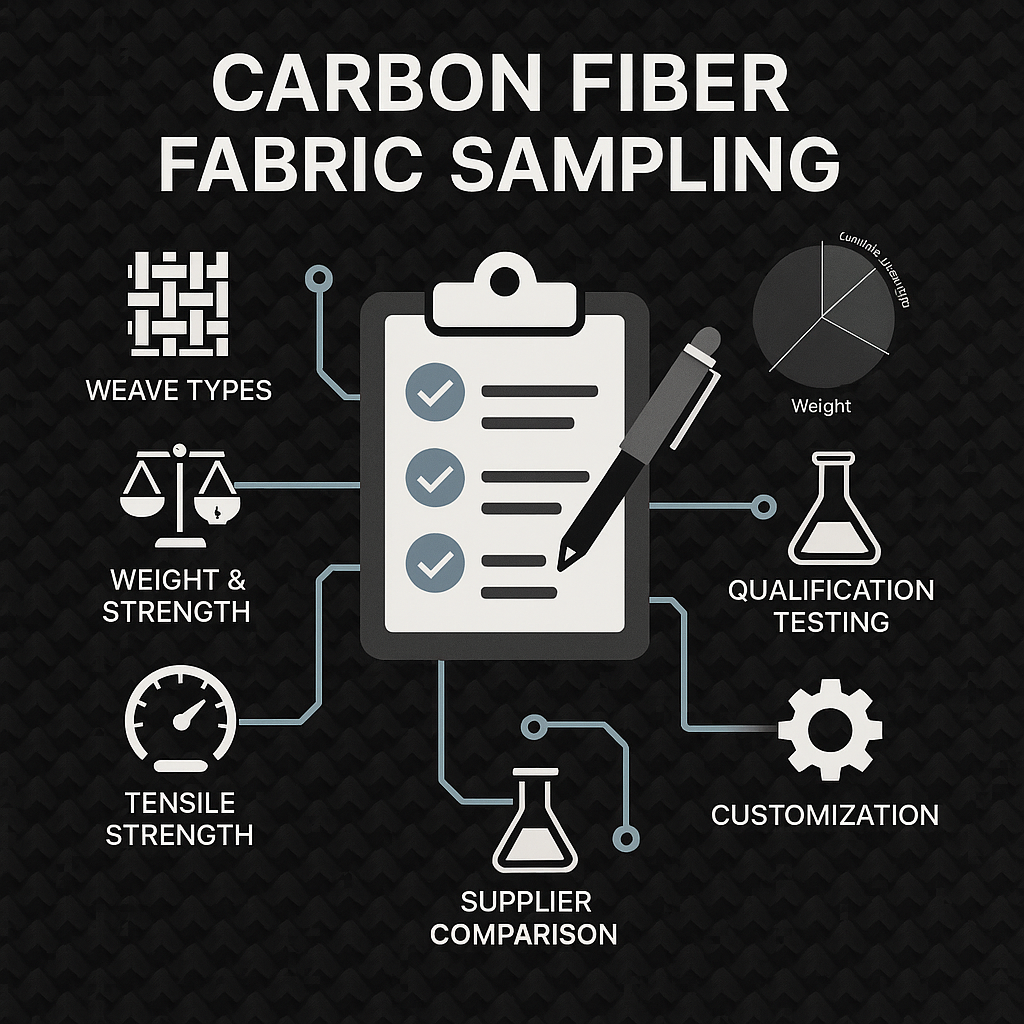
Product Structure and Available Forms
Understanding the structure and forms of carbon fiber fabric is essential for making informed decisions during the sampling process. Carbon fiber fabric is typically available in various weaves, weights, and finishes, each tailored for specific applications.
Key Technical Points
- Weave Types: Common weaves include plain, twill, and satin, each offering different mechanical properties and aesthetic qualities.
- Weight: Fabric weight can influence the strength-to-weight ratio, affecting performance in applications like aerospace and automotive.
- Finish: Surface treatments can enhance properties such as UV resistance, chemical resistance, and surface texture.
Application and Sourcing Considerations
When sourcing carbon fiber fabric, it’s vital to consider the intended application. Different industries may require specific properties, such as high tensile strength for aerospace or flexibility for sporting goods.
Buyer Checklist Before Sampling
- Define the application and performance requirements.
- Identify the necessary weave type and weight.
- Consider environmental factors that may affect material performance.
- Research potential carbon fiber fabric suppliers and their offerings.
Key Specifications and Test Items
Before sampling, understanding key specifications and test items is crucial for evaluating carbon fiber fabric. These specifications help ensure that the material meets the required performance standards.
Key Technical Points
- Tensile Strength: A critical measure of how much force the fabric can withstand before breaking.
- Modulus of Elasticity: Indicates how much the fabric will deform under stress, influencing its suitability for various applications.
- Weight and Thickness: Directly impact the overall performance and application fit.
Application and Sourcing Considerations
Different applications may prioritize different specifications. For instance, aerospace applications may require fabrics with higher tensile strength, while automotive applications might focus on weight reduction.
Buyer Checklist Before Sampling
- Review the specifications relevant to your application.
- Ensure the supplier provides test data and certifications.
- Consider the implications of each specification on your project.
Common End Uses and Industries
Carbon fiber fabric is utilized across various industries, each with unique requirements and applications. Understanding these can help buyers make informed decisions.
Typical Industries Using This Material
- Aerospace: For lightweight and high-strength components.
- Automotive: In performance vehicles for weight reduction and enhanced strength.
- Sports Equipment: For high-performance gear that requires durability and lightness.
Why Engineers and Buyers Choose It
Engineers and buyers often select carbon fiber fabric due to its superior strength-to-weight ratio, corrosion resistance, and versatility. These properties make it ideal for applications where performance is critical.
When Another Material May Be Better
While carbon fiber offers many advantages, it may not always be the best choice. For applications requiring high impact resistance or lower cost, alternatives like fiberglass or thermoplastics may be more suitable.
Customization Options
Customization can play a significant role in the performance of carbon fiber fabric. Understanding the options available can help buyers tailor materials to their specific needs.
Key Technical Points
- Custom Weaves: Tailoring the weave can enhance specific properties, such as flexibility or strength.
- Finishing Treatments: Custom finishes can improve resistance to environmental factors.
Application and Sourcing Considerations
Customization should align with the intended application. For instance, a custom weave may be necessary for a specific aerospace component, while a standard weave might suffice for automotive applications.
Buyer Checklist Before Sampling
- Identify the specific customization needs based on application.
- Discuss customization options with potential suppliers.
- Evaluate the cost implications of customization.
Sampling, Qualification, and Order Workflow
Understanding the workflow for sampling and qualification is essential for ensuring that the selected carbon fiber fabric meets project requirements.
Key Technical Points
- Sampling Process: Ensure that samples are representative of the final product.
- Qualification Testing: Conduct necessary tests to confirm that the fabric meets specifications.
Application and Sourcing Considerations
Different applications may require different testing protocols. For example, aerospace applications might necessitate rigorous testing, while other industries may have less stringent requirements.
Buyer Checklist Before Sampling
- Establish a clear sampling protocol.
- Define qualification criteria based on application needs.
- Communicate expectations with suppliers regarding sampling and testing.
How to Compare Offers from Different Suppliers
When evaluating offers from various carbon fiber fabric suppliers, a systematic approach can help ensure that you choose the best option for your needs.
Key Technical Points
- Specifications Comparison: Ensure that you are comparing similar specifications across offers.
- Supplier Reputation: Research the supplier’s history and customer feedback.
Application and Sourcing Considerations
Consider the specific needs of your application when comparing offers. Some suppliers may specialize in certain industries, which could influence their ability to meet your requirements.
Buyer Checklist Before Sampling
- Gather detailed quotes from multiple suppliers.
- Compare specifications and pricing carefully.
- Evaluate the overall value offered by each supplier, not just the cost.
Conclusion
Choosing the right carbon fiber fabric requires careful consideration of various factors, from material properties to supplier capabilities. By following the carbon fiber fabric sampling checklist outlined in this article, buyers can make informed decisions that align with their project requirements. Understanding the nuances of carbon fiber fabric will not only aid in selecting the right material but also enhance the overall success of your applications.