
What does bobbin thread uses mean in sewing thread applications?
Understanding bobbin thread uses is crucial for anyone involved in sewing, whether you are a manufacturer, distributor, or sourcing manager. Bobbin thread plays a vital role in the overall sewing process, influencing both the quality and durability of the final product. This article will delve into the definition, significance, and practical applications of bobbin thread in various sewing contexts.
Basic definition
Bobbin thread refers to the thread that is wound onto a bobbin, a small spool that sits beneath the needle in a sewing machine. It works in conjunction with the upper thread to create stitches. The type of bobbin thread used can significantly affect the sewing performance, stitch quality, and the overall appearance of the finished product.
Why it matters in sewing performance
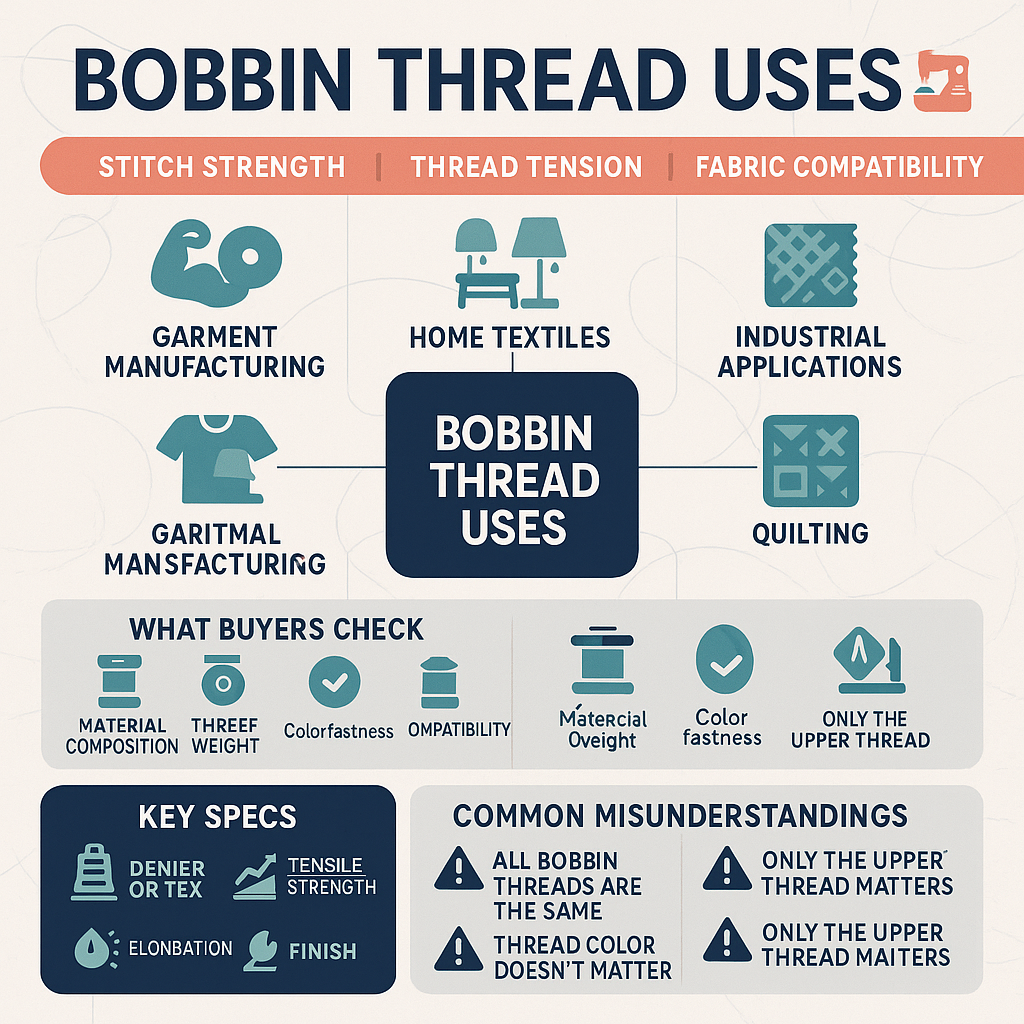
The choice of bobbin thread can impact several factors in sewing, including:
- Stitch Strength: A high-quality bobbin thread can enhance the strength of the stitch, ensuring durability in the final product.
- Thread Tension: Proper tension between the upper and bobbin threads is essential for achieving balanced stitches. An inappropriate bobbin thread can lead to puckering or uneven stitching.
- Fabric Compatibility: Different fabrics may require specific types of bobbin threads to achieve the best results, making material selection crucial.
Where is bobbin thread uses used?
Bobbin thread finds its application in a variety of sewing contexts, making it a versatile choice for many industries.
Common sewing thread products or applications
Some common applications of bobbin thread include:
- Garment Manufacturing: Used in the construction of clothing, where durability and appearance are essential.
- Home Textiles: Ideal for sewing curtains, upholstery, and other home decor items.
- Industrial Applications: Frequently employed in heavy-duty sewing tasks, such as automotive upholstery and outdoor gear.
- Quilting: Essential for quilting projects, where the quality of the stitching can affect the overall design and durability.
What buyers usually check
When sourcing bobbin thread, buyers typically consider several key factors:
- Material Composition: The type of fiber (e.g., polyester, cotton, nylon) can influence the thread’s performance and suitability for specific applications.
- Thread Weight: Heavier threads may be required for certain applications, while lighter threads are better suited for delicate fabrics.
- Colorfastness: Ensuring that the bobbin thread maintains its color over time is crucial, especially for consumer-facing products.
- Compatibility: Buyers often check if the bobbin thread is compatible with their sewing machines and the upper thread being used.
How to evaluate bobbin thread uses
Evaluating bobbin thread requires a careful examination of various specifications and performance indicators.
Key points on a specification sheet
When reviewing a specification sheet for bobbin thread, consider the following:
- Denier or Tex: These measurements indicate the thickness of the thread. A higher denier or tex number typically means a thicker thread.
- Tensile Strength: This indicates how much force the thread can withstand before breaking, which is critical for durability.
- Elongation: This measures how much the thread can stretch before breaking, affecting its performance in various applications.
- Finish: The type of finish applied to the thread can influence its friction, lubrication, and overall sewing behavior.
Common misunderstandings
Several misconceptions about bobbin thread can lead to poor choices:
- All Bobbin Threads are the Same: Different materials and specifications can lead to vastly different performance outcomes.
- Thread Color Doesn’t Matter: The color of the bobbin thread can affect the final appearance of the stitching, especially on lighter fabrics.
- Only the Upper Thread Matters: Both upper and bobbin threads are equally important for achieving quality stitching.
Practical takeaway for sourcing teams
For sourcing teams, understanding the nuances of bobbin thread uses can lead to better decision-making and improved product quality.
When to ask for samples
Requesting samples is advisable when:
- Testing new materials for compatibility with existing sewing machines.
- Evaluating the performance of different bobbin threads in specific applications.
- Assessing colorfastness and overall appearance in finished products.
When another thread type may fit better
There are scenarios where another type of thread may be more suitable:
- Specialized Applications: For specific tasks like embroidery or heavy-duty sewing, specialized threads may offer better performance.
- Fabric Type: Delicate fabrics may require finer threads, while heavy materials may need thicker options.
- Environmental Conditions: Threads designed for outdoor use may be more appropriate for products exposed to moisture or UV light.
In conclusion, understanding bobbin thread uses is essential for achieving optimal sewing performance. By considering the various applications, specifications, and potential misunderstandings, sourcing teams can make informed decisions that enhance the quality and durability of their sewn products. Always remember to evaluate the specific needs of your projects and be open to testing different thread types to find the best fit.