
Why Agricultural Textiles Matter in Practical Use
Agricultural textiles play a crucial role in modern farming practices, particularly in enhancing irrigation efficiency and water management. As water scarcity becomes an increasingly pressing issue globally, the need for efficient irrigation solutions has never been more critical. Agricultural textiles, such as mulch films, shade nets, and geotextiles, provide innovative ways to optimize water usage, improve crop yields, and reduce environmental impact.
Understanding the various applications and performance characteristics of these textiles is essential for farmers, agronomists, and decision-makers in the agricultural sector. By leveraging the right agricultural textiles, stakeholders can achieve significant improvements in water conservation, soil health, and overall agricultural productivity.
How Agricultural Textiles Are Typically Defined and Where the Boundaries Really Are
Agricultural textiles encompass a wide range of products designed for various applications in farming and horticulture. These materials are engineered to serve specific functions, such as moisture retention, weed suppression, and temperature regulation. However, the definition of agricultural textiles can sometimes be oversimplified, leading to misunderstandings about their capabilities and limitations.
What People Often Oversimplify
One common oversimplification is the assumption that all agricultural textiles are interchangeable. In reality, each type of textile is designed for specific conditions and applications. For instance, while some textiles may excel in moisture retention, they might not provide adequate UV protection or durability against environmental stressors. Understanding these nuances is crucial for effective irrigation management.
Key Materials, Structures, or Design Choices That Shape Performance
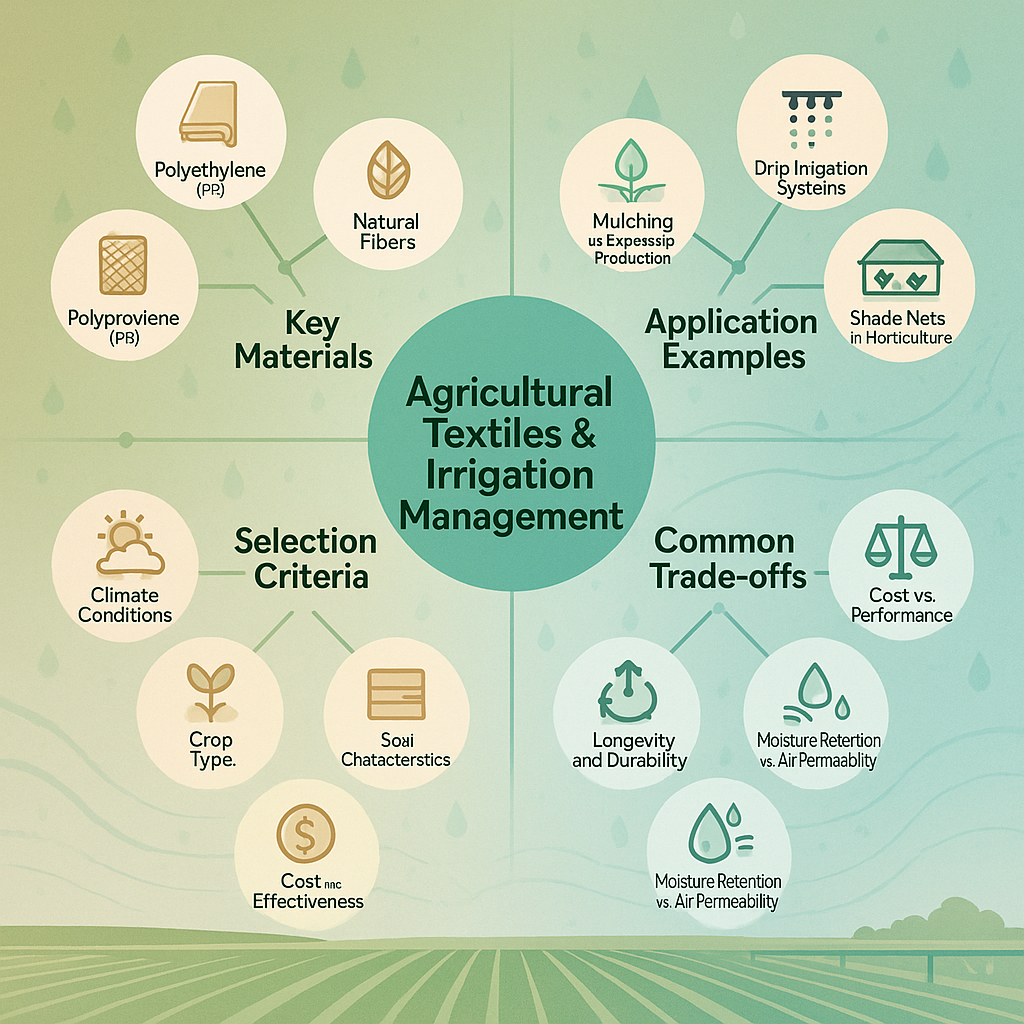
The performance of agricultural textiles is heavily influenced by the materials used, their structural design, and the specific applications they are intended for. Key materials include:
- Polyethylene (PE): Widely used in mulch films and covers, PE is lightweight, durable, and effective in moisture retention.
- Polypropylene (PP): Known for its strength and resistance to chemicals, PP is often used in geotextiles and ground covers.
- Natural fibers: Materials such as jute and coir are biodegradable and can be used for erosion control and soil improvement.
- Composite materials: Combining different fibers can enhance performance characteristics, such as UV resistance and tensile strength.
Design choices, such as permeability, thickness, and color, also significantly impact the effectiveness of agricultural textiles in irrigation management. For example, darker mulch films can absorb more heat, promoting soil warming, while lighter colors can reflect sunlight, reducing soil temperature in hot climates.
What Changes the Most from One Application to Another
The application of agricultural textiles varies widely, and the most significant changes often relate to the specific environmental conditions and crop requirements. For instance:
- Mulching: In vegetable production, the choice of mulch film can affect soil moisture retention and weed suppression.
- Shade nets: In fruit orchards, the type of shade net used can influence fruit quality and yield by regulating sunlight exposure.
- Geotextiles: In erosion control, the choice of geotextile material can determine the effectiveness of soil stabilization and water drainage.
Understanding these differences is vital for selecting the right textile for a specific agricultural application.
Selection Logic: What to Evaluate Before Choosing a Solution
When selecting agricultural textiles for irrigation management, several factors should be evaluated to ensure optimal performance and compatibility with specific agricultural practices:
- Climate conditions: Consider local weather patterns, including temperature fluctuations, rainfall, and sunlight exposure.
- Crop type: Different crops have varying needs for moisture, light, and temperature regulation.
- Soil characteristics: Soil type and structure can influence water retention and drainage, affecting textile performance.
- Longevity and durability: Assess the expected lifespan of the textile under specific environmental conditions.
- Cost-effectiveness: Evaluate the long-term benefits of using specific textiles against their initial costs.
Common Trade-offs to Keep in Mind
Choosing the right agricultural textile often involves trade-offs. For example:
- Cost vs. Performance: Higher-quality textiles may offer better performance but come at a higher price point.
- Durability vs. Environmental Impact: Some durable materials may not be biodegradable, raising concerns about environmental sustainability.
- Moisture Retention vs. Air Permeability: While some textiles excel in moisture retention, they may restrict airflow, potentially harming plant health.
Being aware of these trade-offs can help decision-makers make informed choices that align with their agricultural goals.
Application Examples and Practical Takeaways
Understanding how agricultural textiles are applied in real-world scenarios can provide valuable insights for effective irrigation management. Here are a few examples:
- Drip Irrigation Systems: The use of geotextiles in drip irrigation systems can help with soil stabilization and prevent sedimentation, ensuring efficient water delivery to plant roots.
- Mulching in Vegetable Production: Black polyethylene mulch can significantly reduce water evaporation and suppress weed growth, leading to higher yields and reduced water usage.
- Shade Nets in Horticulture: In regions with intense sunlight, shade nets can protect crops from sunburn while maintaining optimal growing conditions.
These examples illustrate the diverse applications of agricultural textiles and their impact on irrigation efficiency and water management.
Conclusion
Agricultural textiles are essential tools for enhancing irrigation efficiency and effective water management in modern agriculture. By understanding the materials, performance characteristics, and application-specific requirements, stakeholders can make informed decisions that align with their operational goals. As water scarcity continues to challenge agricultural practices, leveraging the right agricultural textiles can lead to sustainable solutions that benefit both farmers and the environment.
In summary, when considering agricultural textiles for irrigation management, evaluate the specific needs of your crops, the environmental conditions, and the trade-offs associated with different materials and designs. This thoughtful approach will help ensure that the selected textiles contribute positively to your agricultural practices.