
Why This Agricultural Textiles Matters in Practical Use
Agricultural textiles play a pivotal role in modern farming practices, influencing everything from crop yield to resource management. Understanding the agricultural textile performance requirements is essential for farmers, agronomists, and supply chain professionals. These textiles are not merely functional; they are integral to sustainable agricultural practices, enhancing efficiency and resilience against environmental challenges.
In practical terms, the effectiveness of agricultural textiles can determine the success of a farming operation. For instance, the right choice of material can lead to better moisture retention, pest control, and UV protection, all of which contribute to healthier crops and improved productivity. This article aims to provide a comprehensive guide to the performance requirements of agricultural textiles, helping stakeholders make informed decisions.
How the Agricultural Textiles is Typically Defined and Where the Boundaries Really Are
Agricultural textiles encompass a broad range of materials designed for various applications in farming. These can include crop covers, nets, mulch films, and geotextiles, among others. However, the definition often blurs at the edges, leading to confusion about what qualifies as an agricultural textile.
What People Often Oversimplify
Many stakeholders tend to oversimplify agricultural textiles as merely protective coverings. While this is a fundamental aspect, it overlooks the complexity involved in material selection, performance characteristics, and application-specific requirements. For example, a crop cover may need to balance light transmission with thermal insulation, which requires a nuanced understanding of material properties.
Furthermore, the environmental conditions—such as humidity, temperature fluctuations, and exposure to UV radiation—can significantly affect the performance of these textiles. Thus, a one-size-fits-all approach is rarely effective.
Key Materials, Structures, or Design Choices That Shape Performance
The performance of agricultural textiles is significantly influenced by the choice of materials, structural design, and the specific application for which they are intended. Understanding these factors is crucial for optimizing performance in real-world conditions.
What Changes the Most from One Application to Another
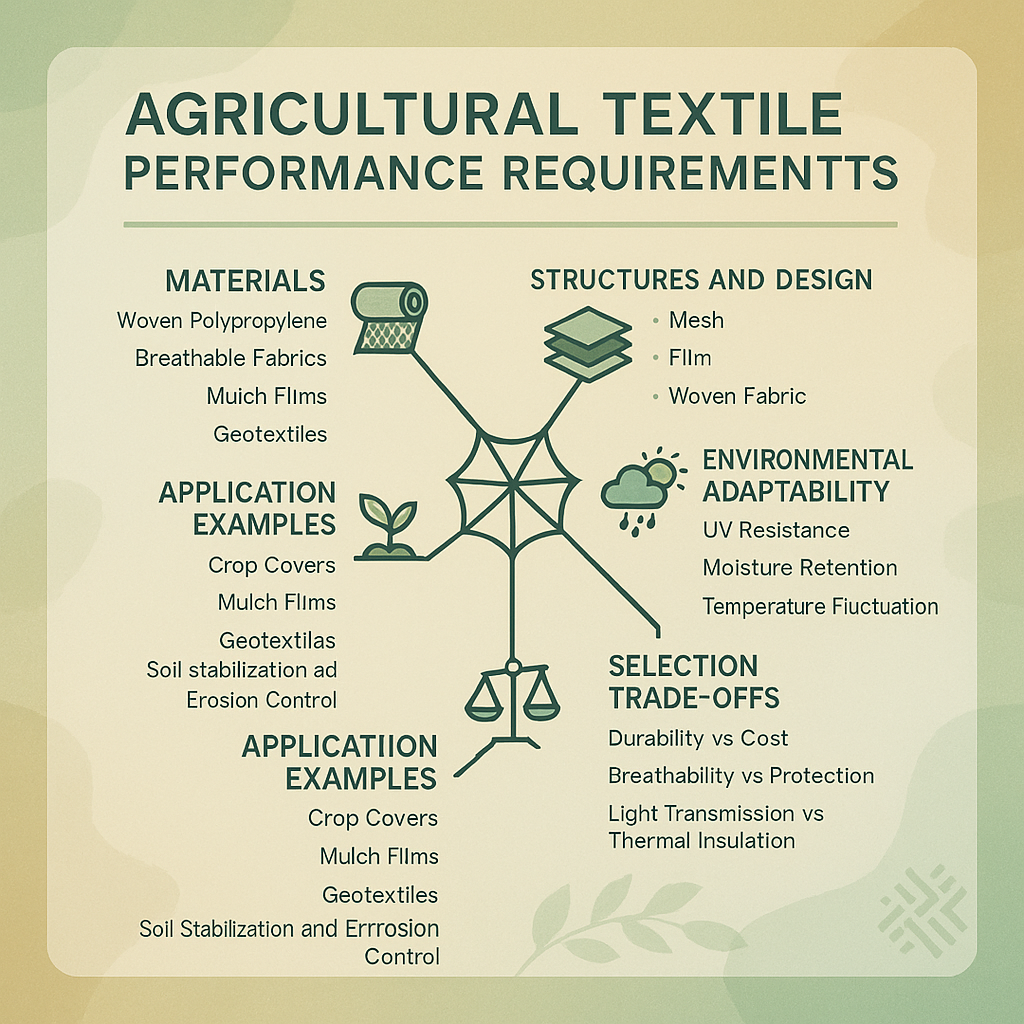
- Material Composition: Different applications may require distinct materials. For instance, woven polypropylene is commonly used for weed control, while breathable fabrics are preferred for crop protection.
- Structural Design: The design of the textile—whether it is a mesh, film, or fabric—affects its performance characteristics, such as permeability and durability.
- Environmental Adaptability: Textiles must be tailored to withstand specific environmental conditions, such as high UV exposure in arid regions or moisture retention in humid climates.
These variations highlight the importance of a tailored approach to textile selection based on the specific agricultural application.
Selection Logic: What to Evaluate Before Choosing a Solution
When selecting agricultural textiles, decision-makers must evaluate a range of factors to ensure optimal performance. This involves a systematic approach to understanding the specific requirements of the application.
Common Trade-offs to Keep in Mind
- Durability vs. Cost: While more durable materials may offer better long-term performance, they often come at a higher initial cost. Evaluating the total cost of ownership is crucial.
- Breathability vs. Protection: Some applications may require a balance between allowing air circulation and providing adequate protection against pests and weather.
- Light Transmission vs. Thermal Insulation: In crop covers, the need for light transmission must be weighed against the necessity for thermal insulation, especially in varying climates.
Understanding these trade-offs will help stakeholders make more informed decisions based on their specific agricultural needs.
Application Examples and Practical Takeaways
To further illustrate the importance of understanding agricultural textile performance requirements, consider the following examples:
- Crop Covers: These textiles are designed to protect crops from harsh weather while allowing light and moisture to penetrate. Selecting the right material can significantly impact crop health and yield.
- Mulch Films: Used to suppress weeds and retain soil moisture, the choice of biodegradable versus non-biodegradable materials can affect both environmental impact and agricultural efficiency.
- Geotextiles: Employed in soil stabilization and erosion control, the material’s permeability and tensile strength are critical for effective performance.
Each application presents unique challenges and opportunities, underscoring the need for careful consideration of performance requirements.
Conclusion
Understanding agricultural textile performance requirements is essential for optimizing their use in real-world agricultural applications. By considering material properties, application-specific needs, and the inherent trade-offs, stakeholders can make informed decisions that enhance productivity and sustainability.
As the agricultural landscape continues to evolve, staying informed about the latest advancements in agricultural textiles will be crucial for maintaining competitive advantage. A thoughtful approach to material selection and application fit can lead to significant improvements in both crop yield and resource management.
In summary, evaluating the right agricultural textiles involves a comprehensive understanding of performance requirements, material characteristics, and application contexts. This knowledge not only aids in making better choices but also contributes to the overall success of agricultural operations.