
A Practical Way to Understand Agricultural Textile Innovation
Agricultural textile innovation is a critical area of development in the agricultural sector, influencing everything from crop yields to sustainability practices. As the industry faces challenges such as climate change, resource scarcity, and the need for increased efficiency, the role of advanced textiles becomes ever more significant. This article aims to provide a comprehensive overview of agricultural textiles, focusing on innovative materials, their applications, and the performance requirements that matter most.
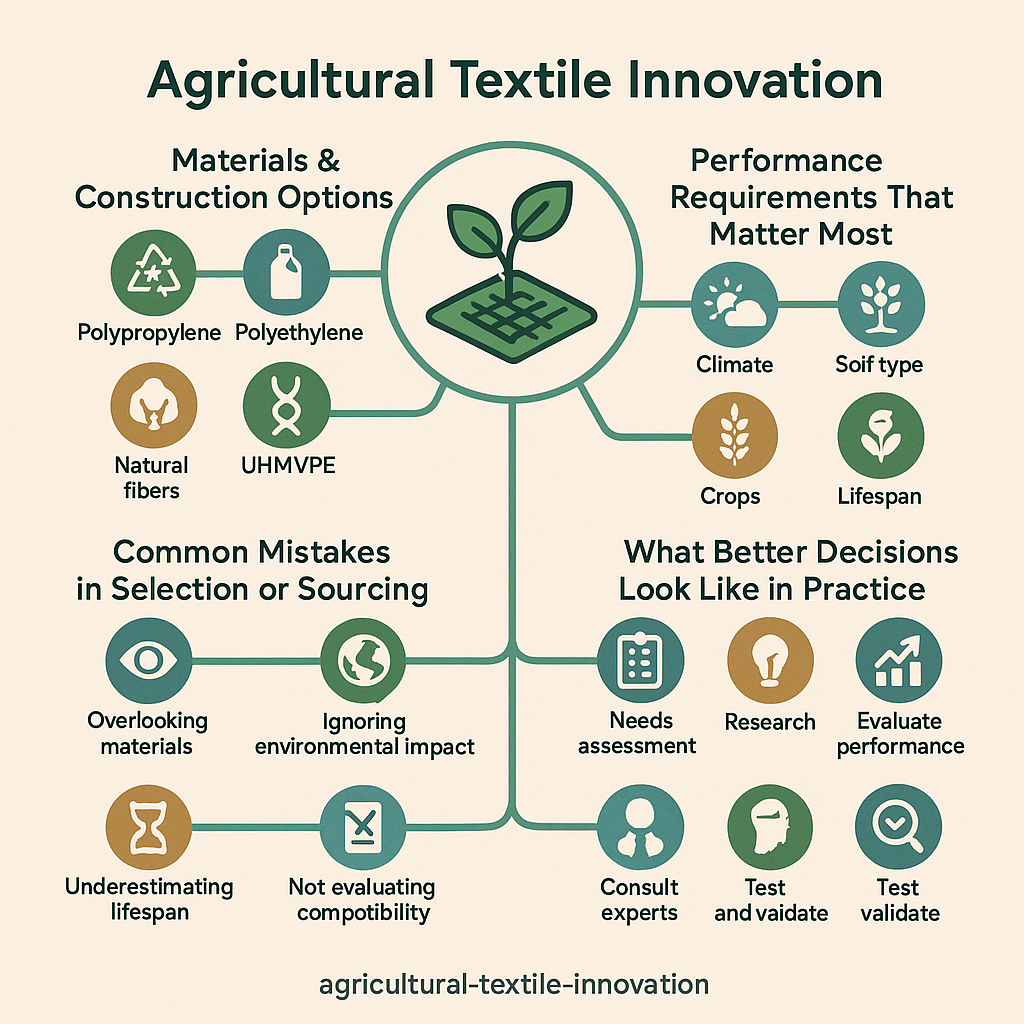
Materials and Construction Options
The foundation of any agricultural textile lies in its materials and construction. Understanding the various options available is essential for making informed decisions that align with specific agricultural needs.
Where Each Option Tends to Fit Best
- Polypropylene (PP): Widely used for its durability and resistance to moisture, making it suitable for ground covers and crop protection.
- Polyethylene (PE): Known for its lightweight nature and UV resistance, ideal for greenhouse covers and mulch films.
- Natural Fibers (e.g., jute, cotton): Biodegradable and sustainable, these are often used in erosion control and biodegradable mulch.
- UHMWPE (Ultra-High Molecular Weight Polyethylene): Offers exceptional strength and abrasion resistance, suitable for applications requiring high durability.
- Carbon Fiber Reinforced Polymers: While more expensive, they provide unmatched strength-to-weight ratios, useful in specialized agricultural machinery.
Each material has its unique properties, making it suitable for specific applications. For instance, while polypropylene is excellent for ground covers, UHMWPE might be more appropriate for high-stress applications such as equipment components.
Performance Requirements That Matter Most
When selecting agricultural textiles, performance requirements are paramount. These requirements often dictate the material choice and construction method.
How Environment and Use Conditions Change the Decision
- Climate Conditions: Textiles must withstand local weather patterns, including UV exposure, moisture, and temperature fluctuations.
- Soil Type: The interaction between textiles and soil can affect durability and performance, particularly in ground covers.
- Crops Grown: Different crops may have varying needs for protection and support, influencing textile choice.
- Intended Lifespan: Short-term applications may benefit from cost-effective materials, while long-term solutions may require higher-quality textiles.
Understanding these factors helps in making informed decisions that align with both agricultural goals and environmental conditions.
Common Mistakes in Selection or Sourcing
Even experienced professionals can fall prey to common pitfalls when selecting agricultural textiles. Awareness of these mistakes can lead to better decision-making.
- Overlooking Material Properties: Failing to consider the specific properties of materials can lead to inadequate performance.
- Ignoring Environmental Impact: Selecting textiles without considering their environmental footprint can lead to sustainability issues.
- Underestimating Lifespan: Choosing cheaper options without considering durability can result in higher long-term costs.
- Not Evaluating Compatibility: Failing to assess how textiles interact with crops and soil can lead to ineffective solutions.
By recognizing these common mistakes, decision-makers can make more informed choices that enhance agricultural productivity and sustainability.
What Better Decisions Look Like in Practice
Making better decisions in agricultural textile selection involves a systematic approach to evaluating needs, materials, and performance requirements. Here are some practical steps:
- Conduct a Needs Assessment: Identify specific agricultural challenges and requirements.
- Research Material Options: Investigate various materials and their properties to find the best fit.
- Evaluate Performance Criteria: Consider environmental factors and intended use to determine performance needs.
- Consult Experts: Engage with industry experts or sourcing partners to gain insights into the latest innovations and best practices.
- Test and Validate: Where possible, conduct trials to evaluate the effectiveness of selected textiles in real-world conditions.
By following these steps, agricultural professionals can enhance their decision-making processes, leading to improved outcomes in crop production and sustainability.
Conclusion
Agricultural textile innovation is a dynamic field that holds significant potential for enhancing agricultural practices. By understanding materials, performance requirements, and common pitfalls, decision-makers can make informed choices that align with their specific needs. As the industry continues to evolve, staying abreast of the latest developments in agricultural textiles will be crucial for maintaining competitive advantage and achieving sustainability goals.
In summary, a thoughtful approach to agricultural textile selection can lead to better outcomes, improved efficiency, and a more sustainable agricultural future. Consider these insights as you navigate the complexities of agricultural textile innovation.