
What is UHMWPE?
Core Definition and Material Structure
Ultra-high-molecular-weight polyethylene (UHMWPE) is a subset of polyethylene characterized by its extremely long chains, which provide enhanced strength and durability. This material is known for its high molecular weight, typically exceeding 3.1 million g/mol, which contributes to its unique properties.
Key Performance Characteristics
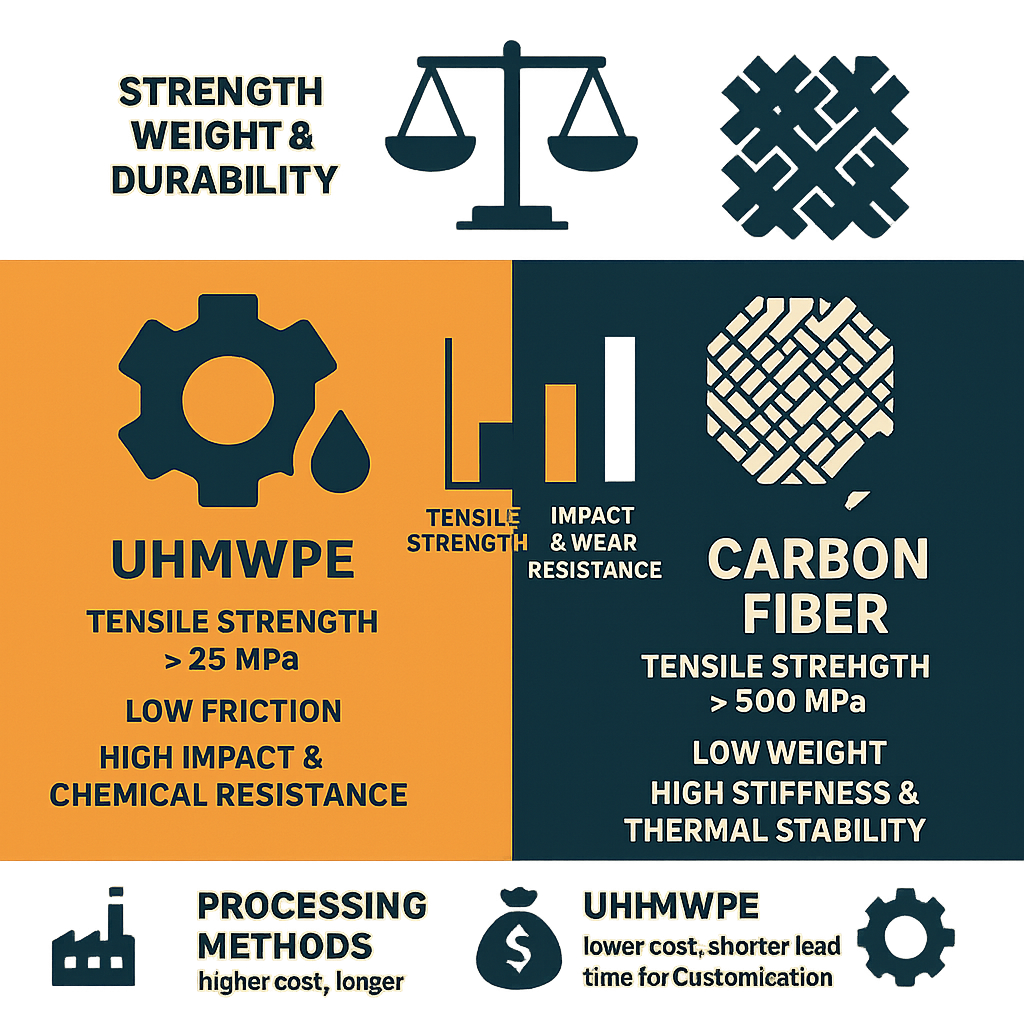
- Tensile Strength: UHMWPE exhibits impressive tensile strength, often exceeding 25 MPa.
- Low Friction: Its low coefficient of friction makes it ideal for applications requiring smooth movement.
- Impact Resistance: UHMWPE is highly resistant to impact, making it suitable for high-stress environments.
- Chemical Resistance: It resists a wide range of chemicals, enhancing its longevity in various applications.
Typical Industrial Forms and Specifications
UHMWPE is available in various forms, including sheets, rods, and custom shapes. It is often specified in thicknesses ranging from 1/8 inch to several inches, depending on the application.
What is Carbon Fiber?
Core Definition and Material Structure
Carbon fiber is a lightweight, high-strength material made from thin strands of carbon atoms bonded together in a crystalline structure. This arrangement gives carbon fiber its exceptional strength-to-weight ratio.
Key Performance Characteristics
- High Strength: Carbon fiber can achieve tensile strengths exceeding 500 MPa, making it one of the strongest materials available.
- Low Weight: Its lightweight nature allows for significant weight savings in applications.
- Stiffness: Carbon fiber exhibits high stiffness, which is beneficial in applications requiring rigidity.
- Thermal Stability: It maintains its properties at elevated temperatures, making it suitable for high-heat environments.
Typical Industrial Forms and Specifications
Carbon fiber is commonly available in woven fabrics, unidirectional tapes, and pre-preg materials. Specifications can vary widely based on the intended application, with options for different fiber orientations and resin systems.
Strength, Weight, and Durability Comparison
Tensile Strength and Weight Differences
When comparing UHMWPE vs carbon fiber, tensile strength is a critical factor. Carbon fiber generally outperforms UHMWPE in tensile strength, but UHMWPE offers a favorable strength-to-weight ratio, making it suitable for specific applications where weight is a concern.
Wear, Impact, and Environmental Resistance
UHMWPE excels in wear resistance and impact absorption, making it ideal for applications like conveyor systems and wear strips. Conversely, carbon fiber is more susceptible to wear but offers superior stiffness and thermal stability.
Application Suitability by End Use
Both materials have unique advantages depending on the application. UHMWPE is often used in environments where abrasion and impact are prevalent, while carbon fiber is favored in aerospace and automotive sectors where weight and strength are paramount.
Processing and Fabrication Differences
Common Processing Methods
UHMWPE can be processed through methods such as compression molding and extrusion, while carbon fiber is typically manufactured using techniques like filament winding and layup.
Design and Fabrication Limitations
Carbon fiber components often require precise engineering due to their stiffness and brittleness, which can limit design flexibility. In contrast, UHMWPE’s ductility allows for more forgiving designs.
Implications for Sourcing and Customization
When sourcing these materials, understanding the processing capabilities is crucial. UHMWPE may offer more straightforward customization options, while carbon fiber often requires specialized knowledge for effective fabrication.
Cost, Lead Time, and Sourcing Considerations
What Affects Pricing
The cost of UHMWPE and carbon fiber can vary significantly based on factors like material quality, processing methods, and market demand. Carbon fiber is generally more expensive due to its complex manufacturing processes.
MOQ, Sample, and Lead Time Considerations
Minimum order quantities (MOQs) and lead times can differ based on the material and supplier. Buyers should confirm these details early in the sourcing process to avoid delays.
What Buyers Should Confirm Before RFQ
Before requesting quotes, buyers should ensure they understand the specific requirements of their application, including performance needs and environmental conditions.
Which Material Fits Industrial Applications?
Typical Industries Using This Material
Industries such as aerospace, automotive, and manufacturing frequently utilize both UHMWPE and carbon fiber, each for its unique advantages in specific applications.
Why Engineers and Buyers Choose It
Engineers often select materials based on performance requirements, cost considerations, and application-specific needs. UHMWPE is chosen for its impact resistance, while carbon fiber is favored for its strength and weight advantages.
When Another Material May Be Better
In some cases, alternative materials may offer better performance characteristics or cost-effectiveness. For example, metals may be more suitable for applications requiring high thermal conductivity.
How to Choose the Right Specification
Key Specification Checklist
- Understand the mechanical properties required for your application.
- Evaluate environmental conditions that may affect material performance.
- Consider processing capabilities and design flexibility.
Matching Material to Application Conditions
Choosing the right material involves assessing the specific conditions under which it will be used, including temperature, load, and exposure to chemicals.
Common Mistakes Before Sampling or Bulk Order
One common mistake is failing to conduct thorough testing before committing to a bulk order. It’s essential to sample materials under real-world conditions to ensure they meet performance expectations.
In conclusion, the choice between UHMWPE vs carbon fiber ultimately depends on the specific requirements of your application. By understanding the strengths and limitations of each material, engineers and buyers can make informed decisions that align with their operational needs.