
What is UHMWPE?
Core Definition and Material Structure
Ultra-high-molecular-weight polyethylene (UHMWPE) is a subset of polyethylene characterized by its extremely long chains, which contribute to its remarkable properties. This thermoplastic polymer is known for its high molecular weight, typically exceeding 3.1 million g/mol, resulting in exceptional strength and durability.
Key Performance Characteristics
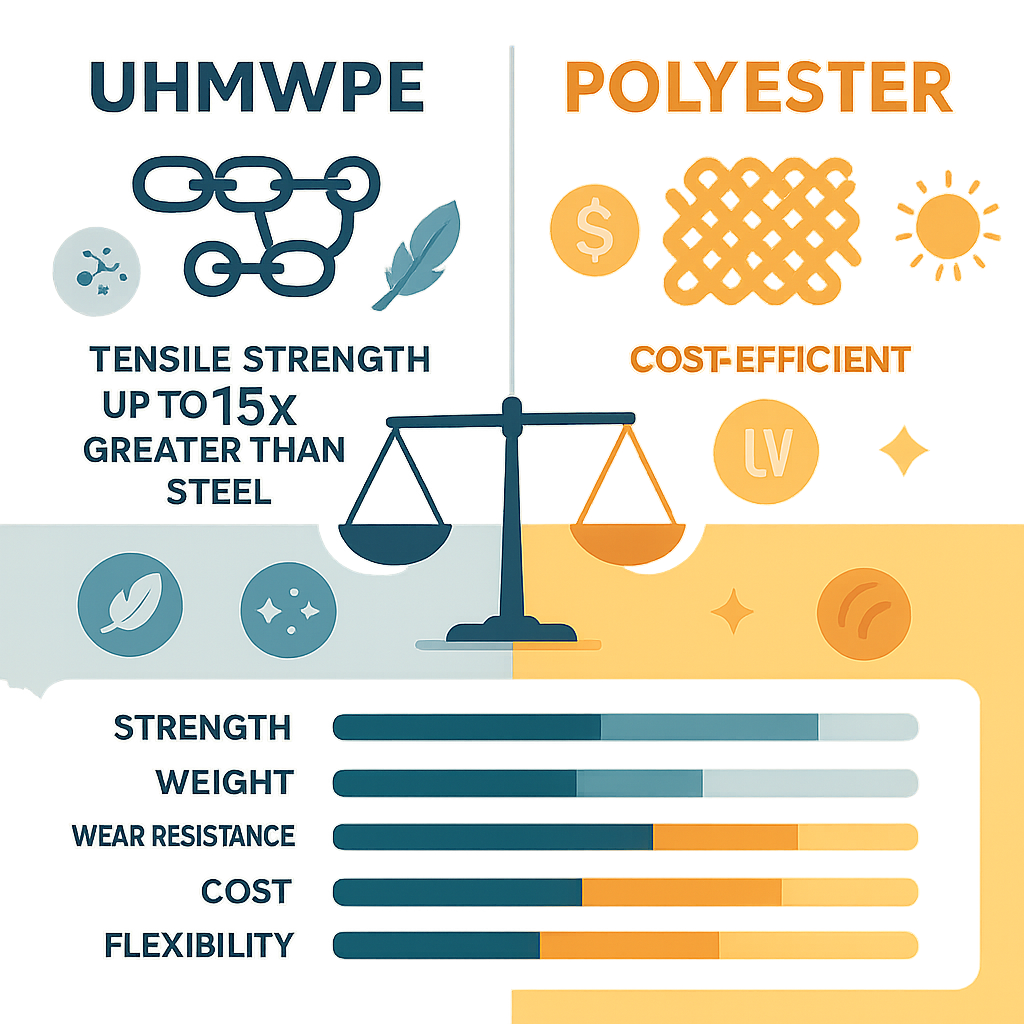
- Tensile Strength: UHMWPE exhibits a tensile strength that can be up to 15 times greater than that of steel, making it ideal for high-stress applications.
- Low Friction: Its low coefficient of friction allows for smooth movement and reduced wear in applications such as conveyor systems.
- Impact Resistance: UHMWPE is highly resistant to impact, making it suitable for environments where materials face sudden shocks.
- Chemical Resistance: This material is resistant to a wide range of chemicals, enhancing its versatility in various industrial settings.
Typical Industrial Forms and Specifications
UHMWPE is commonly available in sheets, rods, and custom shapes. It can be processed into various forms, including films and fibers, depending on the application requirements. Standard thicknesses range from 1/8″ to 2″ for sheets, while rods can vary in diameter from 1/4″ to 12″.
What is Polyester?
Core Definition and Material Structure
Polyester is a category of polymers that contain the ester functional group in their main chain. It is widely used in textiles and industrial applications due to its favorable properties. The most common type is polyethylene terephthalate (PET), which is known for its strength and durability.
Key Performance Characteristics
- Strength: Polyester offers good tensile strength, though generally not as high as UHMWPE.
- Moisture Resistance: This material is resistant to moisture, making it suitable for applications in humid environments.
- UV Resistance: Polyester can withstand UV exposure, which is beneficial for outdoor applications.
- Cost-Effectiveness: Polyester is often more affordable than UHMWPE, making it a popular choice for budget-conscious projects.
Typical Industrial Forms and Specifications
Polyester is available in various forms, including fibers, films, and sheets. It is commonly used in textiles, packaging, and automotive applications. Specifications can vary widely based on the intended use, with thicknesses and strengths tailored to specific requirements.
Strength, Weight, and Durability Comparison
Tensile Strength and Weight Differences
When comparing UHMWPE vs polyester, tensile strength is a significant differentiator. UHMWPE typically has a higher tensile strength, making it suitable for applications requiring high load-bearing capabilities. In terms of weight, UHMWPE is lightweight, which can be advantageous in applications where reducing weight is critical.
Wear, Impact, and Environmental Resistance
UHMWPE excels in wear resistance and impact strength, outperforming polyester in environments where abrasion and sudden impacts are common. Polyester, while durable, may not withstand extreme conditions as effectively as UHMWPE.
Application Suitability by End Use
UHMWPE is often used in applications such as:
- Conveyor systems
- Marine applications
- Medical devices
Polyester is commonly found in:
- Textiles and apparel
- Packaging materials
- Automotive interiors
Processing and Fabrication Differences
Common Processing Methods
UHMWPE is typically processed through methods such as compression molding and extrusion, which can be more complex due to its high viscosity. Polyester, on the other hand, is easier to process and can be molded, extruded, or woven into fabrics with relative ease.
Design and Fabrication Limitations
While UHMWPE offers superior performance, its processing limitations can restrict design flexibility. Polyester allows for more versatile design options, making it suitable for a broader range of applications.
Implications for Sourcing and Customization
When sourcing materials, understanding the processing capabilities is crucial. UHMWPE may require specialized equipment for fabrication, while polyester can be more readily available and customizable.
Cost, Lead Time, and Sourcing Considerations
What Affects Pricing
Pricing for both materials can vary based on factors such as raw material costs, processing complexity, and market demand. UHMWPE tends to be more expensive due to its advanced properties and processing requirements.
MOQ, Sample, and Lead Time Considerations
Minimum order quantities (MOQ) and lead times can differ significantly between the two materials. UHMWPE may have longer lead times due to its specialized processing, while polyester can often be sourced more quickly.
What Buyers Should Confirm Before RFQ
Before requesting a quote (RFQ), buyers should confirm:
- Specific material requirements
- Processing capabilities
- Delivery timelines
Which Material Fits Industrial Applications?
Typical Industries Using This Material
Industries that commonly utilize UHMWPE include:
- Mining
- Aerospace
- Medical
Polyester is widely used in:
- Textiles
- Packaging
- Automotive
Why Engineers and Buyers Choose It
Engineers and buyers often choose UHMWPE for its superior strength and durability, particularly in high-stress applications. Polyester is favored for its cost-effectiveness and versatility, making it suitable for a wide range of uses.
When Another Material May Be Better
While both materials have their strengths, there are scenarios where alternatives may be more appropriate. For example, if cost is a primary concern, polyester may be the better choice. In applications requiring extreme durability and low friction, UHMWPE would be preferable.
How to Choose the Right Specification
Key Specification Checklist
When selecting between UHMWPE vs polyester, consider the following checklist:
- Performance requirements (strength, weight, durability)
- Environmental conditions (temperature, moisture, chemicals)
- Processing capabilities
Matching Material to Application Conditions
Understanding the specific application conditions is critical. For high-load and impact applications, UHMWPE is often the better choice. For applications where cost and flexibility are more important, polyester may be more suitable.
Common Mistakes Before Sampling or Bulk Order
Before placing a bulk order or sampling, avoid common pitfalls such as:
- Not fully understanding the application requirements
- Overlooking processing limitations
- Failing to confirm sourcing capabilities
Conclusion
In the debate of UHMWPE vs polyester, the choice ultimately depends on the specific requirements of the application. UHMWPE offers superior strength and durability, making it ideal for high-performance environments, while polyester provides a cost-effective and versatile alternative for a wide range of uses. By understanding the characteristics, processing methods, and application suitability of each material, engineers and buyers can make informed decisions that align with their project needs.