
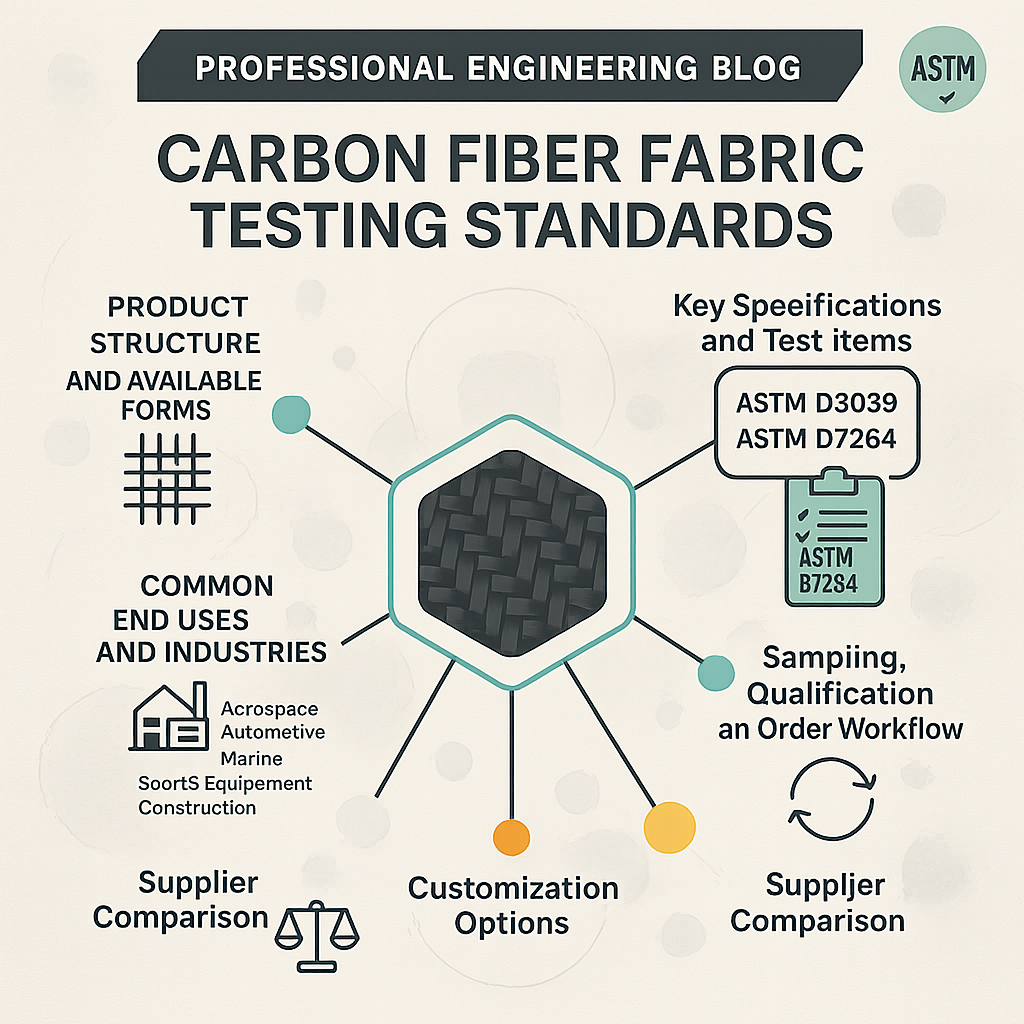
Product Structure and Available Forms
Carbon fiber fabric is renowned for its high strength-to-weight ratio, making it a preferred choice in various industries, from aerospace to automotive. Understanding the product structure and available forms is essential for making informed decisions regarding material selection.
Key Technical Points
Carbon fiber fabric typically consists of woven strands of carbon fibers, which can be produced in various weaves, such as plain, twill, or satin. Each weave type offers distinct mechanical properties and aesthetic qualities. The fabric can be combined with resins to form composite materials, enhancing its versatility.
Application and Sourcing Considerations
When sourcing carbon fiber fabric, it’s crucial to consider the specific application requirements. Factors such as tensile strength, modulus of elasticity, and thermal stability should guide your selection process. Additionally, the sourcing partner’s reliability and quality assurance processes play a significant role in ensuring the fabric meets the necessary standards.
Buyer Checklist Before Sampling
- Define the application requirements clearly.
- Identify the desired mechanical properties.
- Research potential suppliers and their testing standards.
- Request samples to evaluate fabric performance.
Key Specifications and Test Items
Understanding the key specifications and test items for carbon fiber fabric is vital for ensuring that the material meets industry standards and application needs.
Key Technical Points
Common specifications include tensile strength, compressive strength, flexural strength, and impact resistance. Testing methods such as ASTM D3039 for tensile properties and ASTM D7264 for flexural properties are widely recognized in the industry.
Application and Sourcing Considerations
Different applications may require specific testing standards. For instance, aerospace applications demand stringent testing for safety and performance, while automotive applications may focus on weight reduction and cost-efficiency. Understanding these nuances can aid in selecting the appropriate fabric.
Buyer Checklist Before Sampling
- Confirm the required testing standards for your application.
- Ensure the supplier can provide certification for test results.
- Evaluate the fabric’s performance in real-world conditions.
- Consider the long-term durability and maintenance needs.
Common End Uses and Industries
Carbon fiber fabric is utilized across a variety of industries, each with unique requirements and applications.
Typical Industries Using This Material
- Aerospace
- Automotive
- Marine
- Sports Equipment
- Construction
Why Engineers and Buyers Choose It
Engineers and buyers often select carbon fiber fabric due to its exceptional strength-to-weight ratio, corrosion resistance, and design flexibility. These properties enable the creation of lightweight yet robust structures, which is particularly advantageous in industries where performance and efficiency are paramount.
When Another Material May Be Better
While carbon fiber fabric offers numerous advantages, it may not always be the best choice. For applications requiring high impact resistance or lower cost, materials like fiberglass or aluminum may be more suitable. Additionally, the specific environmental conditions, such as exposure to chemicals or extreme temperatures, should also influence material selection.
Customization Options
Customization is often necessary to meet specific application requirements, and understanding the available options is essential for effective sourcing.
Key Technical Points
Customization can include variations in weave patterns, fiber types, and resin systems. Each of these factors can significantly affect the performance characteristics of the final product.
Application and Sourcing Considerations
When considering customization, it’s important to communicate clearly with your supplier about your specific needs. This includes discussing the intended application, performance requirements, and any regulatory standards that must be met.
Buyer Checklist Before Sampling
- Identify the specific customization needs for your project.
- Discuss potential trade-offs with your supplier.
- Request prototypes to assess the effectiveness of customizations.
- Evaluate the impact of customizations on cost and lead time.
Sampling, Qualification, and Order Workflow
Understanding the workflow for sampling, qualification, and ordering is crucial for ensuring that the carbon fiber fabric meets your project requirements.
Key Technical Points
The sampling process should include a thorough evaluation of the fabric’s properties through standardized testing. Qualification involves assessing the fabric’s performance in real-world applications, while the order workflow should be streamlined to ensure timely delivery.
Application and Sourcing Considerations
Consider the lead times associated with sampling and qualification. It’s essential to factor in these timelines when planning your project to avoid delays. Additionally, ensure that the supplier has a robust quality assurance process to maintain consistency across batches.
Buyer Checklist Before Sampling
- Establish a clear timeline for sampling and qualification.
- Communicate your performance criteria to the supplier.
- Request detailed documentation of test results.
- Plan for potential adjustments based on sampling feedback.
How to Compare Offers from Different Suppliers
When evaluating offers from various carbon fiber fabric suppliers, a systematic approach can help ensure you make an informed decision.
Key Technical Points
Compare offers based on key specifications, testing standards, and customization options. Pay attention to the supplier’s reputation, quality assurance processes, and customer service capabilities.
Application and Sourcing Considerations
Consider how each supplier’s offerings align with your specific application needs. Evaluate their ability to meet deadlines and provide consistent quality, as these factors can significantly impact your project’s success.
Buyer Checklist Before Sampling
- List the critical specifications and requirements for your project.
- Request detailed quotes from multiple suppliers.
- Evaluate the supplier’s testing capabilities and certifications.
- Consider the overall value, not just the price.
Conclusion
Understanding carbon fiber fabric testing standards is essential for making informed decisions in material selection. By considering the specifications, applications, and sourcing options, engineers and buyers can navigate the complexities of carbon fiber fabric effectively. A systematic approach to sampling, qualification, and supplier comparison will further enhance the decision-making process, ensuring that the chosen material meets both performance and application requirements.
In summary, take the time to evaluate your specific needs, communicate effectively with suppliers, and utilize the provided checklists to guide your decision-making process. This thoughtful approach will help you leverage the advantages of carbon fiber fabric while minimizing potential pitfalls.