
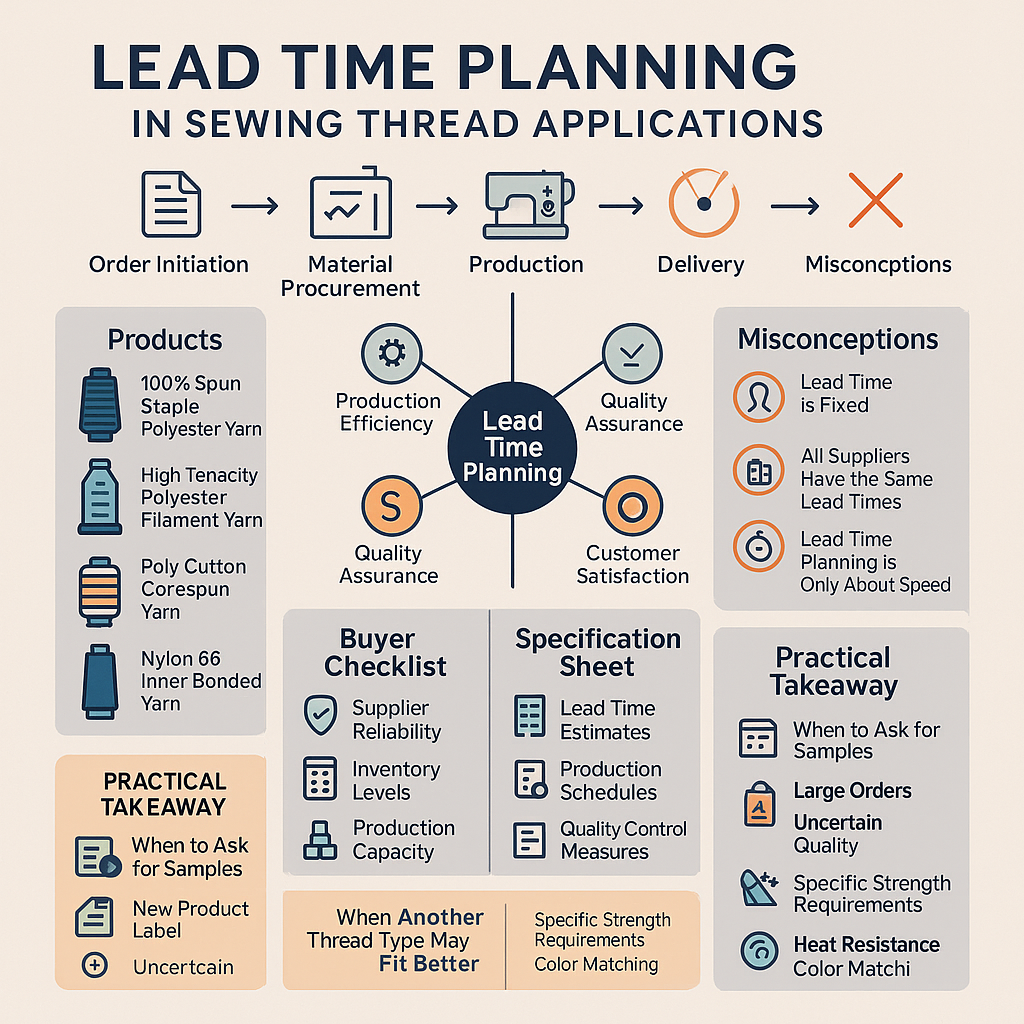
What does lead time planning mean in sewing thread applications?
Lead time planning is a critical aspect of the supply chain that directly impacts the efficiency and effectiveness of sewing thread applications. In the context of sewing, lead time refers to the amount of time required from the initiation of an order to the delivery of the finished product. Understanding this concept is essential for manufacturers, distributors, and sourcing managers to ensure timely production and delivery.
Basic definition
At its core, lead time planning involves forecasting and managing the time it takes to procure materials, produce goods, and deliver them to customers. In the realm of sewing threads, this means considering factors such as production schedules, inventory levels, and supplier capabilities. Effective lead time planning helps businesses align their production processes with market demand, minimizing delays and optimizing resource utilization.
Why it matters in sewing performance
Lead time planning is crucial for several reasons:
- Production Efficiency: By accurately forecasting lead times, businesses can streamline their production processes, reducing downtime and improving overall efficiency.
- Cost Management: Understanding lead times allows companies to manage costs more effectively, as delays can lead to increased expenses, such as expedited shipping or overtime labor.
- Quality Assurance: Adequate lead time enables thorough quality checks and testing, ensuring that the sewing threads meet the necessary performance standards.
- Customer Satisfaction: Timely delivery of products enhances customer satisfaction and strengthens business relationships, which is vital in the competitive sewing industry.
Where is lead time planning used?
Lead time planning is applicable across various sectors within the sewing industry, influencing how businesses operate and make decisions.
Common sewing thread products or applications
Lead time planning is particularly relevant for the following sewing thread products:
- 100% Spun Staple Polyester Yarn: Commonly used for general sewing applications, this yarn requires careful lead time management to ensure consistent quality and availability.
- High Tenacity Polyester Filament Yarn: Used in demanding applications, this thread type necessitates precise lead time planning to meet performance expectations.
- Poly Cotton Corespun Yarn: This versatile yarn combines the benefits of polyester and cotton, making lead time planning essential for diverse applications.
- Nylon 66 Inner Bonded Yarn: Often used in heavy-duty applications, the lead time for this type of thread can significantly impact production schedules.
What buyers usually check
When evaluating lead time planning, buyers typically consider:
- Supplier Reliability: The track record of suppliers in meeting lead times is critical for maintaining production schedules.
- Inventory Levels: Understanding current inventory can help buyers anticipate potential delays and plan accordingly.
- Production Capacity: Assessing a supplier’s production capabilities is essential to ensure they can meet demand within the required time frame.
- Logistics and Shipping: Evaluating shipping options and timelines is crucial for aligning lead times with production schedules.
How to evaluate lead time planning
To effectively evaluate lead time planning, it’s important to focus on specific aspects of the procurement and production process.
Key points on a specification sheet
A well-structured specification sheet should include:
- Lead Time Estimates: Clear estimates of lead times for different products or orders help in planning.
- Production Schedules: Information on production timelines allows for better alignment with demand.
- Quality Control Measures: Details on quality assurance processes can indicate how lead times may affect product quality.
- Supplier Contact Information: Having direct access to suppliers can facilitate quicker resolution of any lead time issues.
Common misunderstandings
Several misconceptions can cloud the understanding of lead time planning:
- Lead Time is Fixed: Many assume lead times are static, but they can fluctuate based on demand, supplier performance, and other factors.
- All Suppliers Have the Same Lead Times: Different suppliers may have varying capabilities and processes, leading to differing lead times.
- Lead Time Planning is Only About Speed: While speed is important, quality and reliability are equally crucial in lead time planning.
Practical takeaway for sourcing teams
For sourcing teams, understanding lead time planning is essential for making informed decisions that affect production and delivery.
When to ask for samples
Requesting samples is a critical step in the sourcing process. It is advisable to ask for samples when:
- Evaluating new suppliers to assess quality and consistency.
- Considering a new thread type for a specific application to ensure it meets performance requirements.
- Planning for a large order to confirm that the thread will perform as expected in production.
When another thread type may fit better
Sometimes, a different thread type may be more suitable for an application. Consider alternative options when:
- The current thread type consistently leads to production delays or quality issues.
- New applications emerge that require specific performance characteristics not provided by the existing thread.
- Market trends shift, necessitating a reevaluation of thread selections to meet changing demands.
In conclusion, effective lead time planning is vital for optimizing sewing thread applications. By understanding its significance, evaluating key factors, and recognizing when to adapt, sourcing teams can enhance production efficiency, manage costs, and ultimately improve customer satisfaction. A proactive approach to lead time planning not only streamlines operations but also positions businesses to respond swiftly to market demands.