
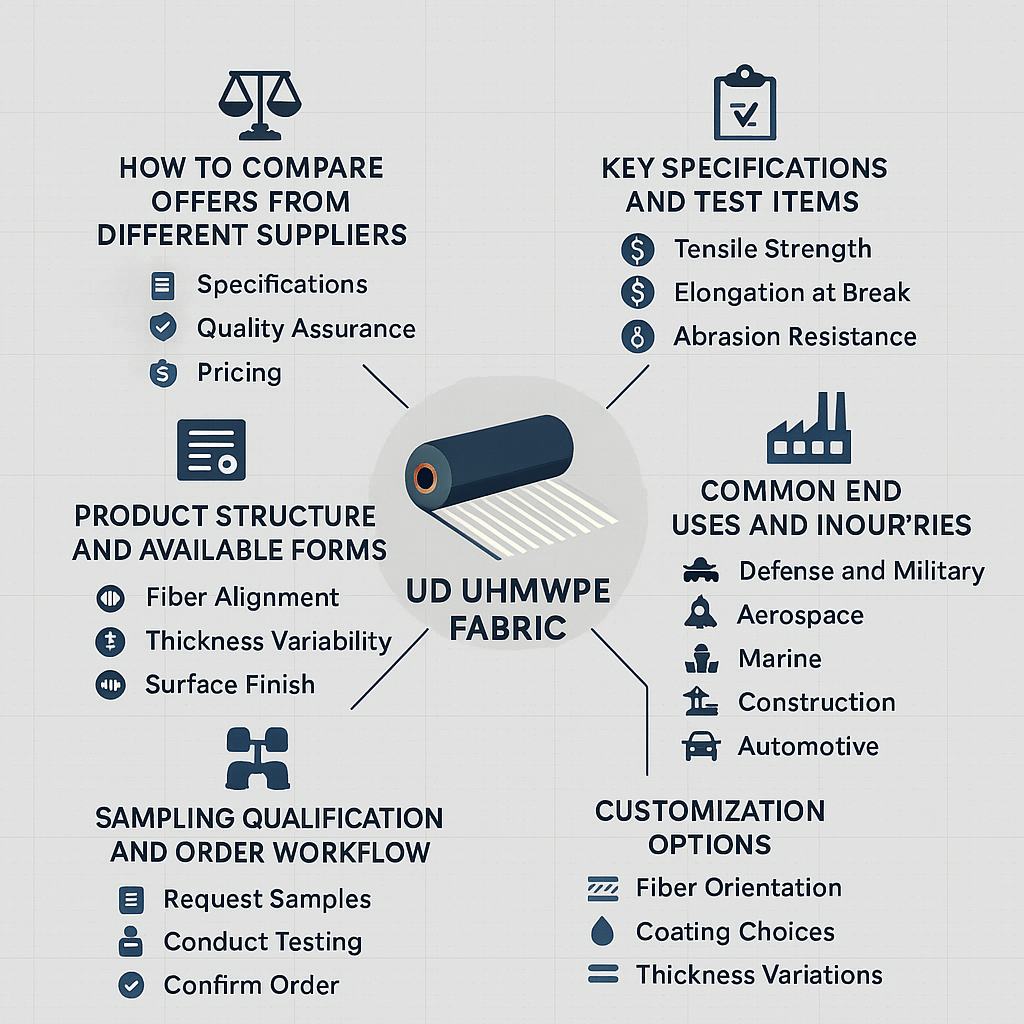
Product Structure and Available Forms
Understanding the structure of UD UHMWPE (Ultra-High Molecular Weight Polyethylene) fabric is essential for identifying its common defects. This material is known for its exceptional strength-to-weight ratio and resistance to abrasion, making it a popular choice in various industrial applications.
Key Technical Points
UD UHMWPE fabric is typically produced in a unidirectional format, which means the fibers are aligned in a single direction. This alignment enhances tensile strength and impact resistance, but it can also lead to specific defects if not manufactured or handled correctly. Key technical points to consider include:
- Fiber Alignment: Proper alignment is critical; misalignment can lead to weak points in the fabric.
- Thickness Variability: Inconsistent thickness can affect performance, particularly in load-bearing applications.
- Surface Finish: The surface texture can influence adhesion and compatibility with other materials.
Application and Sourcing Considerations
When sourcing UD UHMWPE fabric, it is vital to consider the intended application. Common applications include:
- Ballistic protection
- Marine applications
- Industrial textiles
Understanding the specific requirements of these applications will help in selecting the right fabric and avoiding common defects.
Buyer Checklist Before Sampling
Before requesting samples, buyers should evaluate the following:
- Define the application requirements clearly.
- Assess the supplier’s quality control processes.
- Request detailed specifications and test results.
Key Specifications and Test Items
To ensure the quality of UD UHMWPE fabric, specific specifications and test items must be considered. These can help identify potential defects before they impact performance.
Key Technical Points
Key specifications include:
- Tensile Strength: A critical measure of the fabric’s ability to withstand forces.
- Elongation at Break: Indicates how much the fabric can stretch before failure.
- Abrasion Resistance: Essential for applications exposed to wear and tear.
Application and Sourcing Considerations
Different applications may require different specifications. For example, ballistic applications may prioritize tensile strength, while marine applications may focus on abrasion resistance. Understanding these nuances is vital for effective sourcing.
Buyer Checklist Before Sampling
Before sampling, buyers should ensure they have:
- A clear understanding of the performance requirements for their specific application.
- Knowledge of relevant industry standards.
- A list of potential suppliers with proven track records.
Common End Uses and Industries
UD UHMWPE fabric is utilized across various industries, each with unique requirements and challenges. Understanding these end uses can help in identifying potential defects and their implications.
Typical Industries Using This Material
Industries that commonly use UD UHMWPE fabric include:
- Defense and military
- Aerospace
- Marine
- Construction
- Automotive
Why Engineers and Buyers Choose It
Engineers and buyers often select UD UHMWPE fabric for its:
- High strength-to-weight ratio
- Excellent chemical resistance
- Durability in harsh environments
These properties make it suitable for demanding applications, but they also necessitate careful consideration of potential defects.
When Another Material May Be Better
While UD UHMWPE fabric has many advantages, there are scenarios where alternative materials may be more suitable. For example:
- In applications requiring high thermal resistance, materials like aramid fibers may be more appropriate.
- For applications needing flexibility, woven fabrics may outperform unidirectional options.
Customization Options
Customization can play a significant role in the performance of UD UHMWPE fabric. Understanding available options can help mitigate common defects.
Key Technical Points
Customization options may include:
- Fiber orientation
- Coating choices for enhanced performance
- Thickness variations to meet specific load requirements
Application and Sourcing Considerations
When considering customization, it is essential to align the options with the application requirements. For instance, a thicker fabric may be necessary for high-load applications, while a coated fabric may be needed for chemical resistance.
Buyer Checklist Before Sampling
Before finalizing customization, buyers should:
- Clearly define the performance criteria.
- Discuss customization options with potential suppliers.
- Evaluate the impact of customization on lead times and costs.
Sampling, Qualification, and Order Workflow
The process of sampling, qualification, and ordering UD UHMWPE fabric is crucial for ensuring the material meets the required specifications and performance standards.
Key Technical Points
During the sampling process, it is important to:
- Request samples that reflect the final product specifications.
- Conduct thorough testing to identify any potential defects.
- Evaluate the supplier’s responsiveness and communication during the process.
Application and Sourcing Considerations
Consider the following when moving through the workflow:
- Ensure that the supplier can meet your timeline and quality requirements.
- Understand the implications of lead times on your project.
- Be aware of any minimum order quantities that may affect your sourcing strategy.
Buyer Checklist Before Sampling
Before proceeding with sampling and ordering, buyers should confirm:
- The alignment of the material specifications with application needs.
- The supplier’s ability to meet quality and delivery expectations.
- Any potential risks associated with the sourcing process.
How to Compare Offers from Different Suppliers
When evaluating offers from various suppliers, it is essential to adopt a systematic approach to ensure that the selected fabric meets all necessary criteria.
Key Technical Points
Consider the following when comparing offers:
- Specifications: Ensure that the technical specifications align with your application needs.
- Quality Assurance: Investigate the supplier’s quality control processes and certifications.
- Pricing: While cost is a factor, it should not be the sole consideration; evaluate the overall value.
Application and Sourcing Considerations
When comparing offers, consider how each supplier’s fabric will perform in your specific application. Look for:
- Performance metrics relevant to your use case.
- Supplier reputation and reliability.
- Post-sale support and service options.
Buyer Checklist Before Sampling
Before finalizing a supplier, ensure you have:
- Reviewed all specifications and test results.
- Considered potential trade-offs between cost and quality.
- Clarified any uncertainties with the supplier.
Conclusion
Understanding the common defects in UD UHMWPE fabric is crucial for making informed decisions in material selection. By considering the product structure, specifications, and application fit, engineers and buyers can mitigate risks associated with defects. A thorough evaluation process, including a detailed checklist, can enhance the likelihood of sourcing high-quality materials that meet specific application requirements.
Ultimately, the key to successful sourcing lies in understanding the nuances of UD UHMWPE fabric and its applications, ensuring that the selected material aligns with both performance expectations and operational needs.