
What does what is thread lubricity mean in sewing thread applications?
Understanding what is thread lubricity is essential for sewing thread buyers who aim to optimize their sewing performance. Thread lubricity refers to the ability of a thread to slide smoothly through the sewing machine and fabric without excessive friction. This characteristic is vital in determining how well a thread performs during various sewing applications.
Basic definition
In simple terms, thread lubricity is the measure of how easily a thread can move through the needle and fabric without causing snags or breakage. Threads with high lubricity allow for smoother sewing, reducing the risk of thread fraying and needle damage. Conversely, low lubricity can lead to increased friction, which may result in thread breakage and inconsistent stitching.
Why it matters in sewing performance
Thread lubricity significantly impacts sewing performance in several ways:
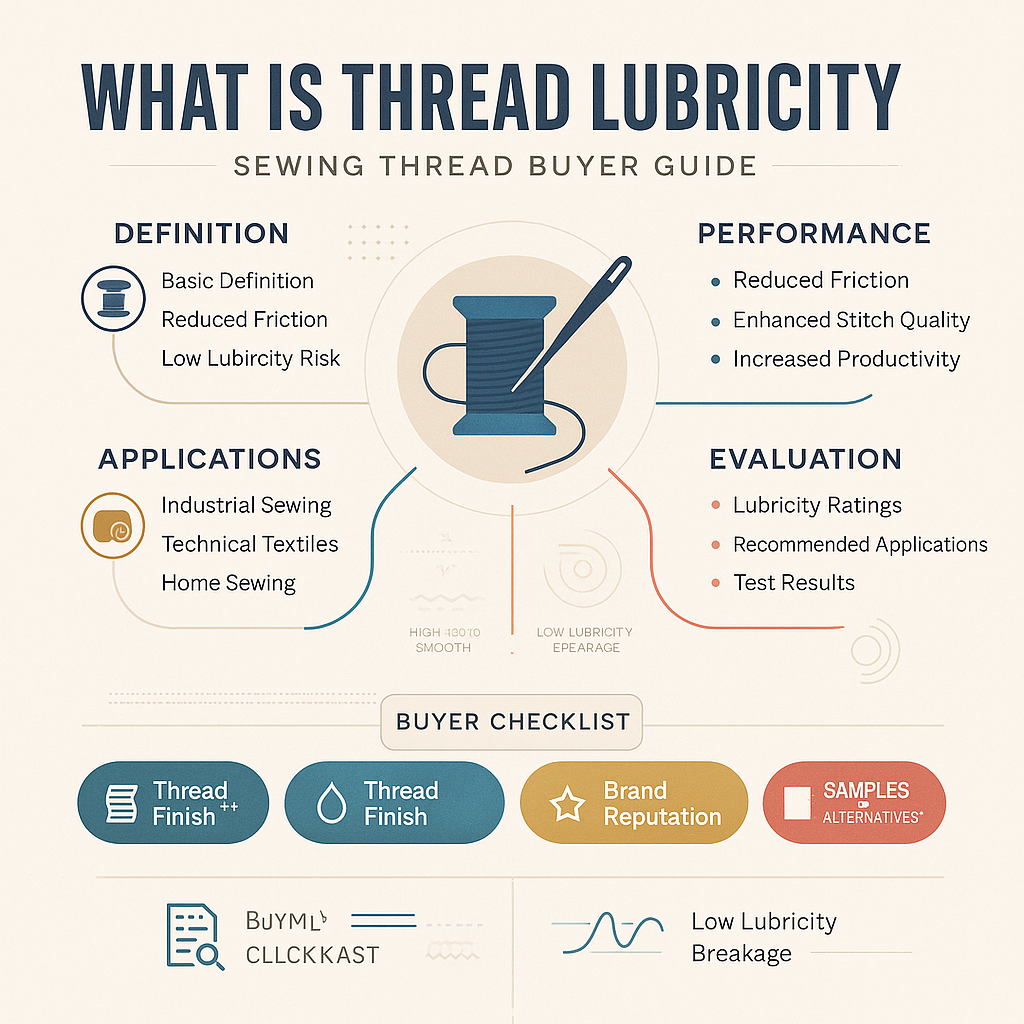
- Reduced Friction: High lubricity threads minimize friction, leading to smoother operation and less wear on sewing machine components.
- Enhanced Stitch Quality: Threads with good lubricity produce more consistent stitches, which is crucial for aesthetic and functional quality.
- Increased Productivity: Smooth sewing reduces downtime caused by thread breakage, allowing for more efficient production.
Where is what is thread lubricity used?
Thread lubricity is applicable across various sewing thread products and applications. Understanding where it is used helps buyers make informed decisions.
Common sewing thread products or applications
Thread lubricity is particularly important in the following areas:
- Industrial Sewing: High-performance threads are often used in manufacturing garments, upholstery, and other textiles where durability is essential.
- Technical Textiles: Applications such as automotive and aerospace require threads that can withstand extreme conditions, making lubricity a key factor.
- Home Sewing: Even in domestic sewing, choosing the right thread with adequate lubricity can enhance the sewing experience.
What buyers usually check
When evaluating thread lubricity, buyers often consider:
- Thread Composition: Different materials, such as polyester or nylon, exhibit varying levels of lubricity.
- Thread Finish: The type of finish applied to the thread can influence its lubricity, affecting performance.
- Brand Reputation: Established brands often provide detailed specifications, including lubricity ratings.
How to evaluate what is thread lubricity
Evaluating thread lubricity involves understanding specific indicators and common misconceptions that may arise.
Key points on a specification sheet
When reviewing a thread’s specification sheet, look for:
- Lubricity Ratings: Some manufacturers provide explicit ratings or descriptions of lubricity.
- Recommended Applications: Specifications often include suggested uses, which can indicate the thread’s lubricity.
- Test Results: Look for any performance tests that highlight the thread’s behavior under different conditions.
Common misunderstandings
Several misconceptions can cloud the understanding of thread lubricity:
- All Threads Are the Same: Not all threads have the same lubricity; material and finish play crucial roles.
- Lubricity Equals Strength: While lubricity can affect performance, it does not directly correlate with the thread’s tensile strength.
- Higher Price Means Better Quality: Price does not always indicate superior lubricity; thorough evaluation is necessary.
Practical takeaway for sourcing teams
For sourcing teams, understanding thread lubricity can lead to better purchasing decisions and improved sewing outcomes.
When to ask for samples
Requesting samples is advisable when:
- You are considering a new supplier or thread type.
- You are unsure how a specific thread will perform in your sewing applications.
- You need to evaluate the thread’s lubricity in real-world conditions.
When another thread type may fit better
Sometimes, a different thread type may be more suitable based on the specific requirements of the sewing project. Consider alternatives if:
- The current thread consistently experiences breakage or fraying.
- You are working with fabrics that require specialized threads for optimal performance.
- Your production speed is hindered by thread-related issues.
In conclusion, understanding what is thread lubricity is vital for making informed decisions in the realm of sewing threads. By evaluating lubricity alongside other specifications, buyers can enhance sewing performance, ensure quality, and streamline production processes. The right choice of thread can lead to significant improvements in both efficiency and product quality.