
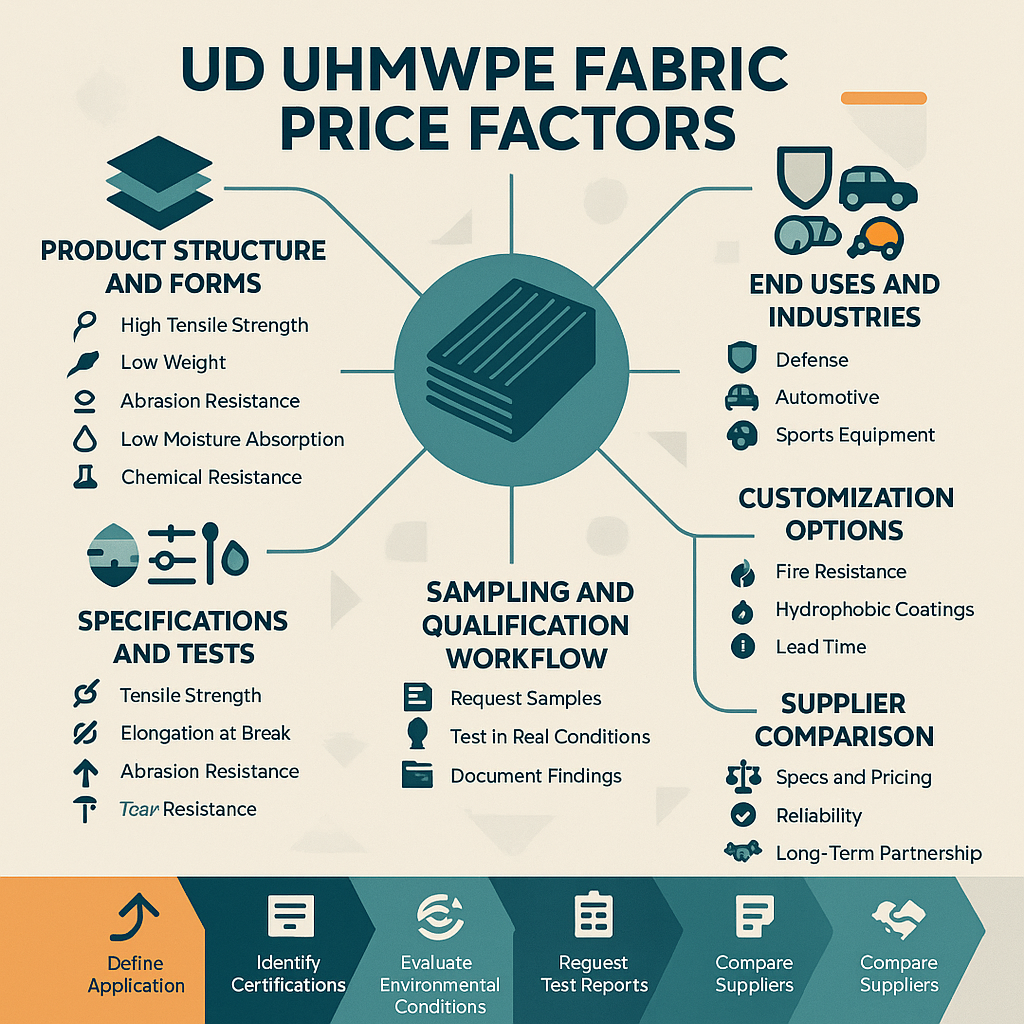
Product Structure and Available Forms
Understanding the price factors associated with UD UHMWPE fabric requires a comprehensive look at its structure and the various forms it can take. UD, or unidirectional, UHMWPE (Ultra-High Molecular Weight Polyethylene) fabric is engineered for high-performance applications, making it a popular choice in industries ranging from aerospace to personal protective equipment.
Key Technical Points
UD UHMWPE fabric is characterized by its high tensile strength, low weight, and excellent abrasion resistance. The unidirectional alignment of the fibers contributes to its superior strength-to-weight ratio, which is a critical factor in applications where weight savings are paramount. Additionally, the fabric offers low moisture absorption and high chemical resistance, making it suitable for various environmental conditions.
Application and Sourcing Considerations
When sourcing UD UHMWPE fabric, it’s essential to consider the specific applications it will be used for. Different industries may require varying specifications, such as thickness, weave pattern, and treatment processes. Understanding these nuances can significantly impact pricing. For instance, fabrics treated for UV resistance or enhanced chemical durability may come at a premium.
Buyer Checklist Before Sampling
- Define the specific application and performance requirements.
- Identify the necessary certifications or compliance standards.
- Consider the environmental conditions the fabric will face.
- Evaluate potential suppliers based on their sourcing capabilities and reliability.
Key Specifications and Test Items
To fully grasp the price factors of UD UHMWPE fabric, it’s vital to understand the key specifications and test items that influence its performance and cost.
Key Technical Points
Specifications such as tensile strength, elongation at break, and abrasion resistance are critical metrics. For instance, a fabric with a higher tensile strength may be more expensive but will offer better performance in high-stress applications. Additionally, testing for properties like tear resistance and impact strength can provide insights into the fabric’s durability.
Application and Sourcing Considerations
Different applications may necessitate specific tests. For example, fabrics used in ballistic protection must undergo rigorous testing to meet industry standards. Understanding these requirements can help buyers make informed decisions about the price they are willing to pay.
Buyer Checklist Before Sampling
- Review the required specifications for your application.
- Request test reports and certifications from potential suppliers.
- Assess the reliability of the supplier based on their testing capabilities.
Common End Uses and Industries
UD UHMWPE fabric is utilized across various industries, each with unique requirements that influence pricing.
Typical Industries Using This Material
Industries such as defense, automotive, and sports equipment frequently use UD UHMWPE fabric. In defense, for instance, its lightweight and strong properties make it ideal for body armor and ballistic vests. In automotive applications, it can be found in lightweight components that enhance fuel efficiency.
Why Engineers and Buyers Choose It
Engineers and buyers often select UD UHMWPE fabric for its exceptional performance characteristics. Its high strength-to-weight ratio allows for innovative designs that can lead to cost savings in material usage and improved product performance.
When Another Material May Be Better
While UD UHMWPE fabric offers numerous advantages, there are scenarios where alternative materials may be more suitable. For example, if cost is a primary concern, other synthetic fibers may provide adequate performance at a lower price point. Additionally, in applications where flexibility is more critical than strength, materials like nylon or polyester may be preferred.
Customization Options
Customization can significantly affect the price of UD UHMWPE fabric, as tailored solutions often require specialized processes.
Key Technical Points
Customization options may include specific treatments for enhanced properties, such as fire resistance or hydrophobic coatings. These enhancements can increase the fabric’s functionality but also its cost. Buyers should weigh the benefits of customization against their budget constraints.
Application and Sourcing Considerations
When considering customization, it’s essential to communicate clearly with suppliers about your specific needs. This ensures that the final product aligns with your application requirements and budget.
Buyer Checklist Before Sampling
- Identify the specific custom features needed for your application.
- Discuss potential impacts on pricing with suppliers.
- Consider lead times associated with customized orders.
Sampling, Qualification, and Order Workflow
Understanding the workflow for sampling and qualification is crucial for making informed purchasing decisions.
Key Technical Points
Sampling allows buyers to evaluate the fabric’s performance before committing to larger orders. It’s advisable to request samples that reflect the final specifications required for your application. This can help avoid costly mistakes later in the procurement process.
Application and Sourcing Considerations
During the qualification phase, it’s important to assess the fabric’s performance in real-world conditions. This may involve testing for durability, flexibility, and other critical properties relevant to your application.
Buyer Checklist Before Sampling
- Ensure that the sample reflects the final specifications.
- Plan for testing under actual use conditions.
- Document all findings for future reference.
How to Compare Offers from Different Suppliers
When evaluating offers from various suppliers, a structured approach can help ensure that you make the best decision based on your needs.
Key Technical Points
Comparing offers should involve a detailed analysis of specifications, pricing, and supplier reliability. Look for transparency in pricing and ensure that all costs are accounted for, including potential customization and shipping fees.
Application and Sourcing Considerations
Consider the supplier’s track record in delivering quality products on time. A supplier with a strong reputation may justify a higher price due to their reliability and service.
Buyer Checklist Before Sampling
- Compare specifications and pricing across suppliers.
- Evaluate supplier reliability and customer service.
- Consider long-term relationships and potential for future sourcing needs.
Conclusion
Understanding the price factors associated with UD UHMWPE fabric is essential for making informed procurement decisions. By considering the material’s structure, specifications, and application fit, buyers can better navigate the complexities of sourcing. A thoughtful approach to sampling, qualification, and supplier comparison can lead to successful outcomes in various industrial applications. Ultimately, the key is to align your material choices with your specific performance requirements while being mindful of budget constraints.