
Product Structure and Available Forms
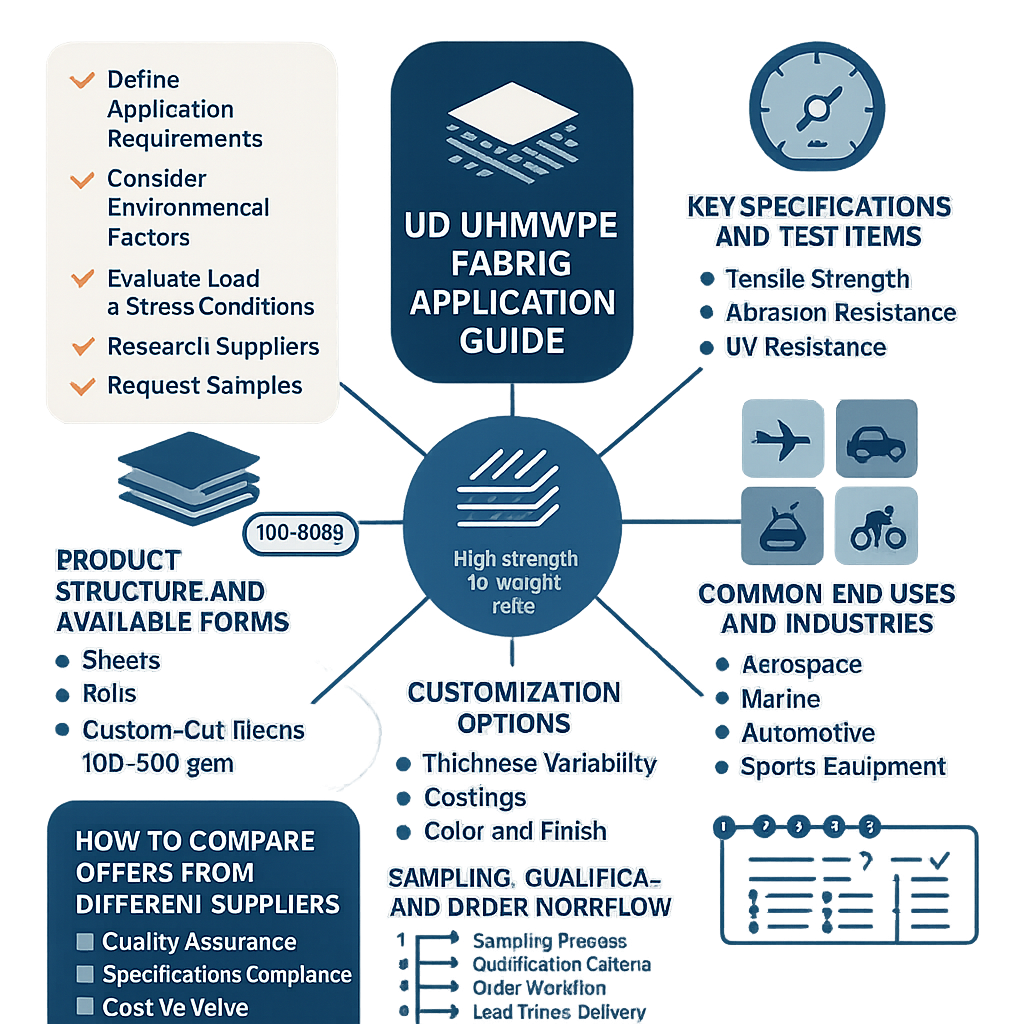
Understanding the structure and forms of UD UHMWPE (Ultra-High Molecular Weight Polyethylene) fabric is crucial for selecting the right material for specific applications. This fabric is characterized by its high strength-to-weight ratio, excellent abrasion resistance, and low friction properties. Typically, UD UHMWPE fabric is available in various forms, including sheets, rolls, and custom-cut pieces, depending on the intended use.
Key Technical Points
- Composition: UD UHMWPE fabric is made from long-chain polyethylene molecules, which contribute to its exceptional durability and performance.
- Weave Structure: The unidirectional (UD) weave enhances tensile strength, making it suitable for high-stress applications.
- Weight Variability: The fabric can vary in weight, typically ranging from 100 to 500 grams per square meter, allowing for flexibility in application.
Application and Sourcing Considerations
When considering UD UHMWPE fabric for a project, it’s essential to evaluate the specific requirements of the application. Factors such as environmental conditions, load-bearing needs, and compatibility with other materials should be assessed. Sourcing from a reliable supplier is critical, as the quality of the fabric can significantly impact performance.
Buyer Checklist Before Sampling
- Define the application requirements clearly.
- Consider environmental factors such as temperature and exposure to chemicals.
- Evaluate the expected load and stress conditions.
- Research potential suppliers and their quality assurance processes.
- Request samples to assess material performance in real-world conditions.
Key Specifications and Test Items
Understanding the key specifications and test items for UD UHMWPE fabric is vital for ensuring it meets the necessary performance standards. Various tests can provide insights into the fabric’s durability, strength, and suitability for specific applications.
Key Technical Points
- Tensile Strength: This is a critical measure of how much load the fabric can withstand before failure.
- Abrasion Resistance: Evaluates how well the fabric can endure wear and tear over time.
- UV Resistance: Important for outdoor applications where exposure to sunlight can degrade material properties.
Application and Sourcing Considerations
When sourcing UD UHMWPE fabric, it’s essential to consider the testing standards that the fabric must meet. Different industries may have specific requirements, so understanding these can guide the selection process.
Buyer Checklist Before Sampling
- Identify the necessary specifications for your application.
- Check if the supplier provides test results and certifications.
- Understand the implications of the fabric’s performance characteristics.
- Consider the long-term durability and maintenance needs.
- Assess the supplier’s ability to provide consistent quality.
Common End Uses and Industries
UD UHMWPE fabric finds applications across various industries due to its unique properties. Understanding these applications can help engineers and buyers make informed decisions.
Typical Industries Using This Material
- Aerospace: Used in lightweight components and protective gear.
- Marine: Ideal for sails, ropes, and protective coverings.
- Automotive: Utilized in components requiring high strength and low weight.
- Sports Equipment: Found in protective gear and performance apparel.
Why Engineers and Buyers Choose It
Engineers and buyers often select UD UHMWPE fabric for its excellent performance characteristics, including high tensile strength, low weight, and resistance to environmental factors. These properties make it suitable for demanding applications where reliability is paramount.
When Another Material May Be Better
While UD UHMWPE fabric offers numerous advantages, there are scenarios where alternative materials may be more appropriate. For instance, if cost is a primary concern, other fabrics may provide a more economical solution, albeit with trade-offs in performance.
Customization Options
Customization can enhance the performance of UD UHMWPE fabric for specific applications. Understanding the available options is essential for maximizing the material’s effectiveness.
Key Technical Points
- Thickness Variability: Custom thickness can be tailored to meet specific load requirements.
- Coatings: Various coatings can be applied to enhance properties such as water resistance or UV stability.
- Color and Finish: Custom colors and finishes can be specified for branding or aesthetic purposes.
Application and Sourcing Considerations
When considering customization, it’s important to communicate clearly with suppliers about the specific needs of your application. This ensures that the final product meets all performance and aesthetic requirements.
Buyer Checklist Before Sampling
- Define the customization needs clearly.
- Discuss potential impacts on performance with suppliers.
- Request samples of customized options to evaluate effectiveness.
- Ensure that the supplier can deliver consistent quality in customized orders.
Sampling, Qualification, and Order Workflow
Understanding the workflow for sampling, qualification, and ordering UD UHMWPE fabric is essential for ensuring a smooth procurement process.
Key Technical Points
- Sampling Process: Request samples to evaluate the fabric’s performance in real-world conditions.
- Qualification Criteria: Establish clear criteria for evaluating samples based on application needs.
- Order Workflow: Understand the steps involved in placing an order, including lead times and delivery expectations.
Application and Sourcing Considerations
When engaging with suppliers, it’s important to discuss the entire workflow, from sampling to final order. This ensures that all parties are aligned on expectations and timelines.
Buyer Checklist Before Sampling
- Clarify the sampling process with potential suppliers.
- Define qualification criteria based on application requirements.
- Understand the order workflow and lead times.
- Communicate any specific needs or concerns to suppliers upfront.
How to Compare Offers from Different Suppliers
Comparing offers from different suppliers can be challenging, but understanding key factors can simplify the process.
Key Technical Points
- Quality Assurance: Evaluate the quality assurance processes each supplier has in place.
- Specifications Compliance: Ensure that the fabric meets the necessary specifications for your application.
- Cost vs. Value: Consider the overall value of the offer, not just the price.
Application and Sourcing Considerations
When comparing offers, it’s important to consider not only the price but also the quality and reliability of the supplier. A lower price may not always equate to better value if the fabric does not meet performance standards.
Buyer Checklist Before Sampling
- List out key criteria for comparison.
- Request detailed specifications and quality assurance processes from each supplier.
- Evaluate the overall value of each offer, considering long-term performance.
- Engage in discussions with suppliers to clarify any uncertainties.
Conclusion
In summary, selecting the right UD UHMWPE fabric involves a comprehensive understanding of its properties, applications, and sourcing considerations. By following the outlined checklists and engaging thoughtfully with suppliers, engineers and decision-makers can make informed choices that align with their specific needs. This approach not only enhances the likelihood of successful applications but also fosters long-term relationships with reliable suppliers.