
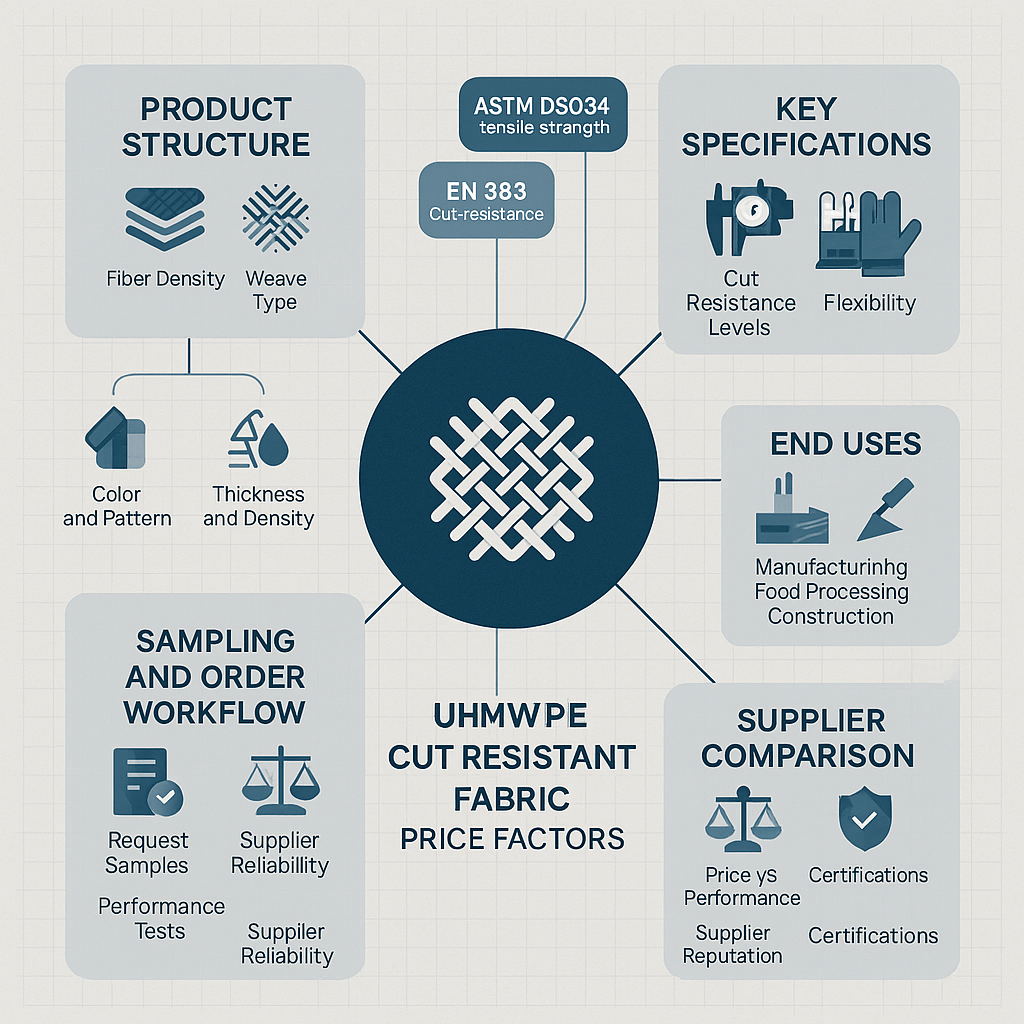
Product Structure and Available Forms
UHMWPE (Ultra High Molecular Weight Polyethylene) cut resistant fabric is engineered to provide exceptional durability and protection in various applications. Understanding its structure and the forms in which it is available is essential for evaluating its price factors.
Key Technical Points
UHMWPE fibers are characterized by their high molecular weight, which contributes to their superior cut resistance and abrasion resistance. The fabric can be woven or knitted, with variations in thickness and density affecting its performance. Key technical points to consider include:
- Fiber Density: Higher density fabrics typically offer better cut resistance but may be heavier.
- Weave Type: Different weaving techniques can influence flexibility and comfort.
- Coating: Some fabrics may be coated to enhance water resistance or grip, impacting price.
Application and Sourcing Considerations
When sourcing UHMWPE cut resistant fabric, it’s important to consider the specific applications it will be used for. Common applications include:
- Protective clothing for industrial workers
- Cut-resistant gloves and sleeves
- Safety gear in the food processing industry
Each application may require different specifications, which can significantly influence pricing. For example, fabrics designed for food safety may need to meet specific regulatory standards.
Buyer Checklist Before Sampling
Before requesting samples, buyers should consider the following checklist:
- Define the application requirements clearly.
- Assess the necessary certifications for your industry.
- Determine the expected performance metrics (cut resistance, durability, etc.).
Key Specifications and Test Items
Understanding the specifications and test items relevant to UHMWPE cut resistant fabric is critical for evaluating its price factors.
Key Technical Points
Specifications often include:
- Cut Resistance Levels: Measured according to ASTM or ISO standards, influencing pricing based on performance.
- Weight: Heavier fabrics may provide better protection but could be less comfortable.
- Flexibility: Important for applications requiring dexterity.
Application and Sourcing Considerations
Different applications may require specific tests, such as:
- EN388 for cut resistance
- ASTM D5034 for tensile strength
Understanding these tests helps buyers gauge the fabric’s suitability and price point.
Buyer Checklist Before Sampling
Before sampling, consider:
- What tests are relevant to your application?
- Are there industry-specific certifications needed?
- What performance metrics are critical for your end use?
Common End Uses and Industries
UHMWPE cut resistant fabric is utilized across various industries, each with unique requirements and standards.
Typical Industries Using This Material
- Manufacturing: Used in protective clothing and gloves.
- Food Processing: Essential for safety gear to prevent cuts.
- Construction: Employed in protective equipment for workers.
Why Engineers and Buyers Choose It
Engineers and buyers often select UHMWPE cut resistant fabric due to its:
- High cut resistance
- Durability and longevity
- Lightweight nature, which enhances comfort
When Another Material May Be Better
While UHMWPE is an excellent choice for many applications, there are scenarios where other materials may be more suitable. For instance:
- Cost Constraints: Alternatives like aramid fibers may offer lower initial costs.
- Specific Environmental Conditions: Other materials may perform better in extreme temperatures or chemical exposure.
Customization Options
Customization can significantly influence the price of UHMWPE cut resistant fabric. Understanding the available options is crucial for informed decision-making.
Key Technical Points
Customization options may include:
- Color and Pattern: Aesthetic choices can impact pricing.
- Thickness and Density: Tailoring these aspects can enhance performance but may increase costs.
- Special Coatings: Additional features for specific applications can raise the price.
Application and Sourcing Considerations
When considering customization, think about:
- How the customization aligns with application needs.
- Potential trade-offs in performance versus cost.
- Lead times associated with custom orders.
Buyer Checklist Before Sampling
Before proceeding with custom orders, ensure you:
- Clearly define customization requirements.
- Understand the implications on pricing and lead times.
- Verify that the supplier can meet your specifications.
Sampling, Qualification, and Order Workflow
Understanding the workflow for sampling and qualification is vital for ensuring that the selected UHMWPE cut resistant fabric meets your needs.
Key Technical Points
Key steps in the workflow include:
- Requesting samples based on defined specifications.
- Conducting performance tests to verify claims.
- Evaluating supplier reliability and delivery timelines.
Application and Sourcing Considerations
Consider the following during the workflow:
- How quickly you need the samples for testing.
- What performance metrics are critical for your application.
- Supplier responsiveness and support during the qualification process.
Buyer Checklist Before Sampling
Before initiating the sampling process, ensure you:
- Have a clear understanding of your performance requirements.
- Know the testing methods you will use to evaluate the samples.
- Are prepared to assess the supplier’s capabilities.
How to Compare Offers from Different Suppliers
When evaluating offers from various suppliers, a structured approach can help ensure you make the best decision.
Key Technical Points
Consider the following when comparing offers:
- Price vs. Performance: Ensure that lower prices do not compromise quality.
- Supplier Reputation: Research supplier reliability and customer feedback.
- Certifications: Verify that the fabric meets relevant industry standards.
Application and Sourcing Considerations
When comparing offers, consider:
- The specific needs of your application.
- Long-term relationships with suppliers for ongoing support.
- Potential for customization and flexibility in sourcing.
Buyer Checklist Before Sampling
Before finalizing your decision, ensure you:
- Have compared technical specifications thoroughly.
- Understand the total cost of ownership, including potential hidden costs.
- Are clear on delivery timelines and support options.
Conclusion
Understanding the UHMWPE cut resistant fabric price factors is essential for making informed sourcing decisions. By considering the product structure, specifications, applications, and supplier comparisons, buyers can navigate the complexities of material selection effectively. A thoughtful approach to evaluating these factors will lead to better outcomes in terms of performance, cost, and application fit.