
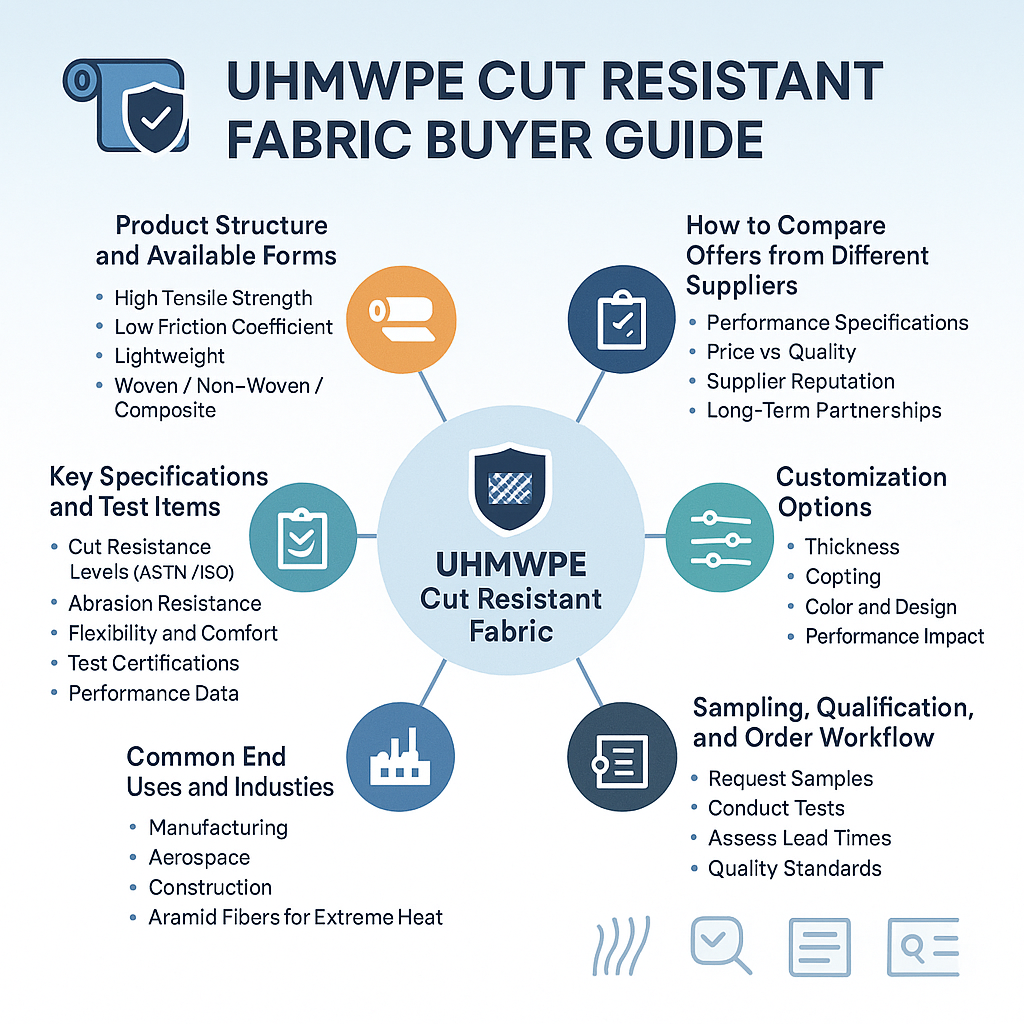
Product Structure and Available Forms
Understanding the structure and forms of UHMWPE (Ultra-High Molecular Weight Polyethylene) cut resistant fabric is crucial for making informed decisions. This material is known for its exceptional strength-to-weight ratio and resistance to abrasion, making it a popular choice in various industrial applications.
Key Technical Points
UHMWPE cut resistant fabric is typically manufactured through a process that involves the alignment of long polymer chains, resulting in a fabric that exhibits remarkable tensile strength and cut resistance. Key technical properties include:
- High tensile strength: UHMWPE fibers can withstand significant forces, making them suitable for protective applications.
- Low friction coefficient: This property reduces wear and tear, extending the lifespan of the fabric.
- Lightweight: The low density of UHMWPE allows for comfortable wear without sacrificing protection.
Application and Sourcing Considerations
When considering UHMWPE cut resistant fabric, it’s essential to evaluate the specific application requirements. Different forms, such as woven or non-woven fabrics, may be more suitable depending on the intended use. Additionally, sourcing from reputable suppliers is vital to ensure quality and consistency in performance.
Buyer Checklist Before Sampling
- Define the application requirements: What level of cut resistance is needed?
- Identify the form of fabric required: Woven, non-woven, or composite?
- Research potential suppliers: What is their reputation in the industry?
Key Specifications and Test Items
Understanding the key specifications and test items for UHMWPE cut resistant fabric is essential for evaluating its performance and suitability for specific applications.
Key Technical Points
Common specifications to consider include:
- Cut resistance levels: Measured according to ASTM or ISO standards, these levels indicate the fabric’s ability to withstand cutting forces.
- Abrasion resistance: This property assesses how well the fabric can endure wear from friction.
- Flexibility and comfort: Important for applications where mobility is crucial.
Application and Sourcing Considerations
When sourcing UHMWPE cut resistant fabric, it’s important to consider the specific tests that the fabric has undergone. Look for certifications that validate the fabric’s performance in real-world scenarios.
Buyer Checklist Before Sampling
- Verify test certifications: Are they from recognized testing bodies?
- Assess performance data: How does it compare to other materials?
- Consider the intended application: Will the fabric meet specific industry standards?
Common End Uses and Industries
UHMWPE cut resistant fabric finds applications across various industries, each with unique demands and requirements.
Typical Industries Using This Material
- Manufacturing: Used in protective clothing and equipment.
- Aerospace: Lightweight and strong materials for safety gear.
- Construction: Protective gear for workers handling sharp materials.
Why Engineers and Buyers Choose It
Engineers and buyers often opt for UHMWPE cut resistant fabric due to its superior performance characteristics, such as high cut resistance, lightweight nature, and durability. These attributes make it an ideal choice for protective applications where safety is paramount.
When Another Material May Be Better
While UHMWPE is an excellent choice for many applications, there are scenarios where other materials may be more suitable. For instance, if extreme heat resistance is required, aramid fibers may be a better option. Understanding the specific requirements of your application is key to making the right material choice.
Customization Options
Customization can enhance the performance of UHMWPE cut resistant fabric for specific applications.
Key Technical Points
Customization options may include:
- Thickness: Varying thickness can impact cut resistance and flexibility.
- Coating: Additional coatings can improve water resistance or enhance grip.
- Color and design: Custom colors or patterns may be necessary for branding or visibility.
Application and Sourcing Considerations
When considering customization, it’s important to communicate specific requirements to suppliers. This ensures that the final product meets the desired performance standards.
Buyer Checklist Before Sampling
- Define customization needs: What specific properties are required?
- Discuss options with suppliers: What customization capabilities do they offer?
- Evaluate the impact of customization on performance: Will it enhance or compromise the fabric’s properties?
Sampling, Qualification, and Order Workflow
Understanding the workflow for sampling and qualification is essential for ensuring that the UHMWPE cut resistant fabric meets your needs.
Key Technical Points
The sampling process typically involves:
- Requesting samples from multiple suppliers to compare performance.
- Conducting tests to evaluate cut resistance, abrasion resistance, and other relevant properties.
- Assessing the supplier’s ability to meet lead times and quality standards.
Application and Sourcing Considerations
During the qualification phase, it’s crucial to ensure that the fabric meets all specified performance criteria. This may involve collaboration with suppliers to refine the product based on test results.
Buyer Checklist Before Sampling
- Identify key performance metrics: What tests will be conducted?
- Establish a timeline for sampling and evaluation: How long will the process take?
- Communicate expectations with suppliers: What are the quality standards required?
How to Compare Offers from Different Suppliers
Comparing offers from various suppliers requires a systematic approach to ensure you select the best option for your needs.
Key Technical Points
When evaluating offers, consider:
- Performance specifications: How do they compare across different suppliers?
- Price vs. quality: Is the lowest price indicative of lower quality?
- Supplier reputation: What do reviews and testimonials indicate about their reliability?
Application and Sourcing Considerations
It’s important to weigh both technical specifications and supplier reliability when making a decision. A lower price may not justify a compromise in quality or service.
Buyer Checklist Before Sampling
- Gather performance data from all suppliers: What are the key differences?
- Evaluate supplier reliability: What is their track record in the industry?
- Consider long-term partnerships: Which suppliers offer the best support and service?
Conclusion
In summary, selecting the right UHMWPE cut resistant fabric involves a thorough understanding of its properties, applications, and sourcing considerations. By following the outlined buyer checklist and evaluating offers carefully, decision-makers can ensure they choose a fabric that meets their specific needs. This guide serves as a valuable resource for navigating the complexities of material selection in the B2B landscape.