
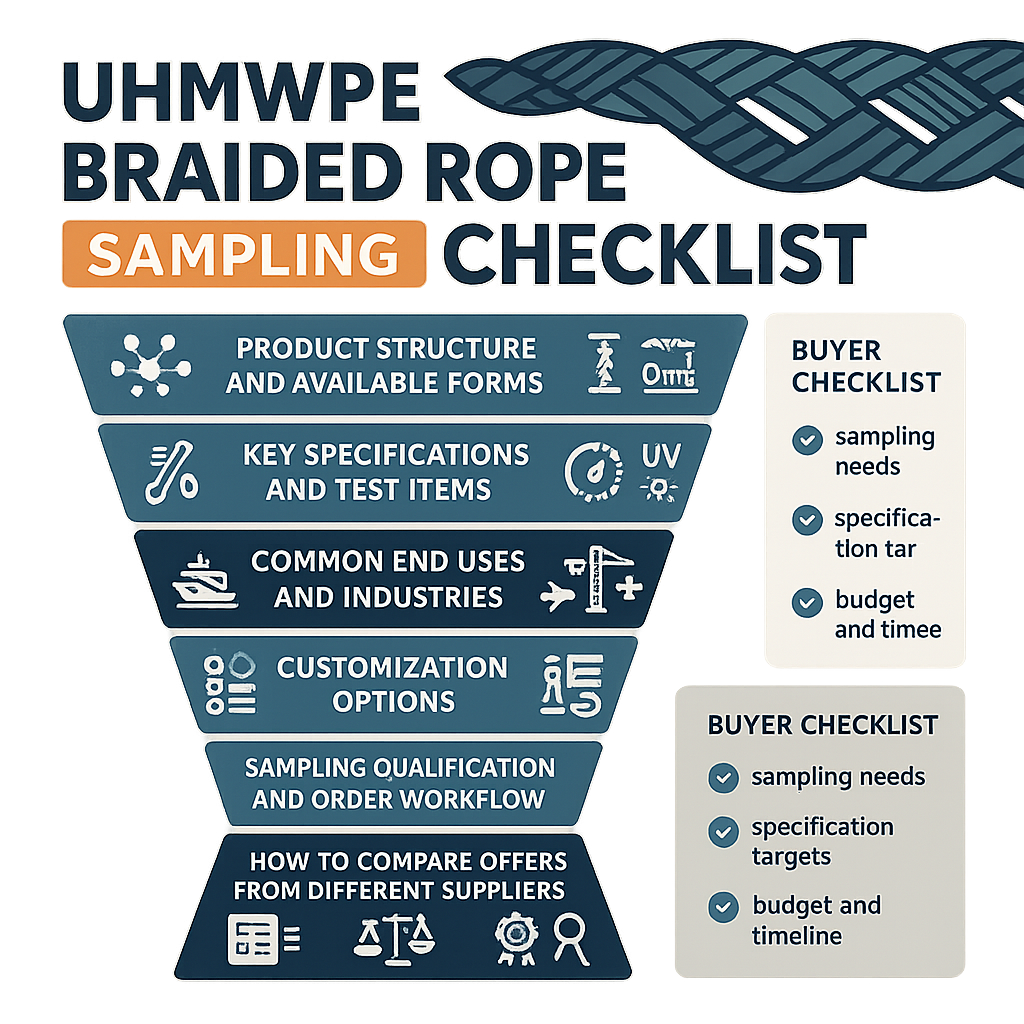
Product Structure and Available Forms
Understanding the structure and forms of UHMWPE (Ultra High Molecular Weight Polyethylene) braided rope is crucial for making informed decisions in material selection. UHMWPE braided rope is known for its exceptional strength-to-weight ratio, low stretch, and high abrasion resistance, making it suitable for various demanding applications.
Key Technical Points
- Composition: UHMWPE is a polyethylene with a molecular weight significantly higher than standard polyethylene, contributing to its superior mechanical properties.
- Construction: Braided ropes can be constructed in various braiding patterns, affecting flexibility and strength. Common patterns include 8-strand and 12-strand braids.
- Diameter and Length: Available in various diameters and lengths, the choice depends on the specific application requirements.
Application and Sourcing Considerations
When sourcing UHMWPE braided rope, consider the intended application. Different applications may require specific characteristics, such as increased flexibility for marine uses or enhanced abrasion resistance for industrial applications.
Buyer Checklist Before Sampling
- Define the application requirements clearly.
- Identify the necessary specifications, such as diameter, length, and braid pattern.
- Evaluate potential suppliers based on their expertise and product range.
Key Specifications and Test Items
Before committing to a supplier, it’s essential to understand the key specifications and testing protocols associated with UHMWPE braided rope.
Key Technical Points
- Tensile Strength: Evaluate the maximum load the rope can withstand before breaking.
- Elongation at Break: Understand how much the rope can stretch under load.
- UV Resistance: Assess the material’s ability to withstand prolonged exposure to sunlight.
Application and Sourcing Considerations
Different applications may prioritize different specifications. For example, marine applications may require higher UV resistance, while industrial uses might focus on tensile strength.
Buyer Checklist Before Sampling
- Request detailed specifications from potential suppliers.
- Inquire about testing methods and certifications.
- Ensure that the supplier can provide samples that meet your specifications.
Common End Uses and Industries
UHMWPE braided rope is utilized across various industries due to its unique properties. Understanding these applications can help in making informed sourcing decisions.
Typical Industries Using This Material
- Marine: Used for mooring lines, towing, and fishing.
- Construction: Employed in lifting and rigging applications.
- Aerospace: Utilized in lightweight, high-strength applications.
Why Engineers and Buyers Choose It
Engineers and buyers often select UHMWPE braided rope for its combination of strength, lightweight nature, and resistance to environmental factors. These properties make it a versatile choice for demanding applications.
When Another Material May Be Better
While UHMWPE braided rope has many advantages, there are scenarios where other materials may be more suitable. For example, if cost is a primary concern, traditional nylon or polyester ropes may offer a more economical solution.
Customization Options
Customization can enhance the performance of UHMWPE braided rope for specific applications. Understanding available options is essential for tailoring the product to meet unique requirements.
Key Technical Points
- Color Coding: Custom colors can aid in identification and safety.
- Coatings: Specialized coatings can enhance UV resistance or provide additional grip.
- End Terminations: Custom terminations can improve usability in specific applications.
Application and Sourcing Considerations
When considering customization, evaluate how these options align with your application needs. Custom features may enhance performance but could also affect lead times and costs.
Buyer Checklist Before Sampling
- Identify necessary custom features based on application.
- Discuss customization options with potential suppliers.
- Request samples that incorporate these custom features.
Sampling, Qualification, and Order Workflow
Understanding the workflow for sampling and ordering UHMWPE braided rope can streamline the procurement process.
Key Technical Points
- Sampling Process: Ensure that the sampling process is clearly defined with the supplier.
- Qualification Criteria: Establish criteria for evaluating samples based on performance and specifications.
- Order Workflow: Understand the steps involved from sampling to final order placement.
Application and Sourcing Considerations
Different suppliers may have varying workflows. Familiarize yourself with these processes to avoid delays and ensure that your requirements are met.
Buyer Checklist Before Sampling
- Clarify the sampling process with the supplier.
- Define qualification criteria for evaluating samples.
- Understand the order workflow to ensure timely delivery.
How to Compare Offers from Different Suppliers
When evaluating offers from various suppliers, a systematic approach can help in making informed decisions.
Key Technical Points
- Specification Alignment: Ensure that the specifications of the offers align with your requirements.
- Price vs. Quality: Consider the balance between cost and the quality of materials offered.
- Supplier Reputation: Research the supplier’s reputation and track record in the industry.
Application and Sourcing Considerations
Different suppliers may offer varying levels of expertise and service. Assessing their capabilities can provide insights into their suitability for your needs.
Buyer Checklist Before Sampling
- Compare specifications and pricing from multiple suppliers.
- Evaluate supplier reputation through industry reviews and references.
- Consider long-term partnership potential based on service and support.
Conclusion
In summary, the selection of UHMWPE braided rope involves a thorough understanding of its properties, applications, and sourcing considerations. By utilizing the provided sampling checklist and evaluating potential suppliers carefully, decision-makers can ensure they choose the right material for their specific needs. This approach not only enhances performance but also mitigates risks associated with material selection.