
Product Structure and Available Forms
UHMWPE (Ultra High Molecular Weight Polyethylene) braided rope is renowned for its exceptional strength-to-weight ratio, durability, and resistance to abrasion and chemicals. Understanding its structure and available forms is crucial for making informed decisions regarding its application.
Key Technical Points
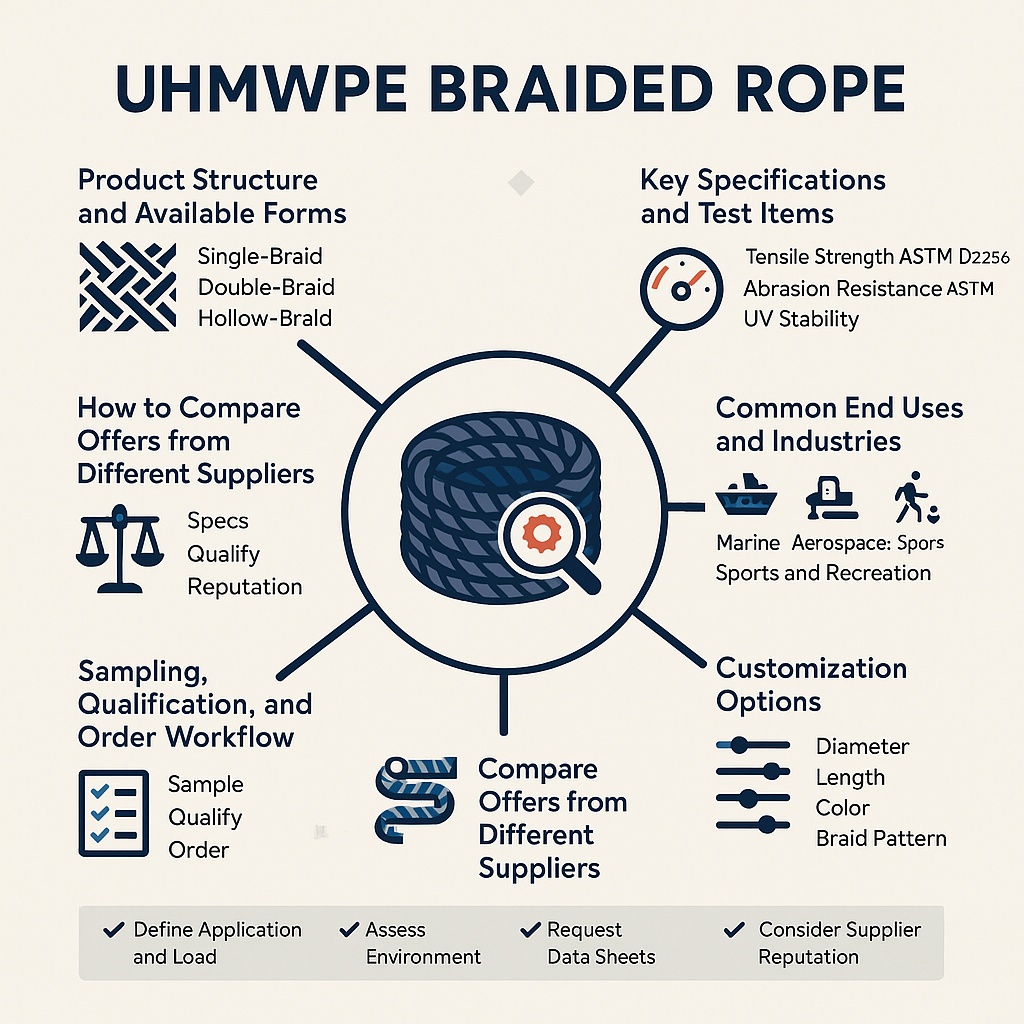
UHMWPE braided rope is typically constructed from high-performance fibers that are tightly woven to enhance tensile strength and flexibility. The braiding process not only increases the rope’s durability but also allows for various configurations, such as single-braid, double-braid, and hollow-braid forms. Each configuration has unique characteristics that can affect performance in specific applications.
Application and Sourcing Considerations
When considering the application of UHMWPE braided rope, it is essential to evaluate the specific requirements of the intended use. Factors such as load capacity, environmental conditions, and exposure to chemicals should be assessed. Additionally, sourcing from a reliable UHMWPE braided rope supplier can ensure quality and consistency in performance.
Buyer Checklist Before Sampling
- Define the specific application and load requirements.
- Assess environmental factors such as temperature and chemical exposure.
- Inquire about the rope’s construction and available forms.
- Request technical data sheets and certifications.
- Consider the supplier’s reputation and reliability.
Key Specifications and Test Items
Understanding the key specifications and test items for UHMWPE braided rope is vital for ensuring it meets the demands of your application.
Key Technical Points
Key specifications include tensile strength, elongation at break, abrasion resistance, and UV stability. These properties are critical in determining how the rope will perform under various conditions. Testing methods such as ASTM D2256 for tensile strength and ASTM D624 for abrasion resistance provide standardized metrics for comparison.
Application and Sourcing Considerations
When sourcing UHMWPE braided rope, consider the specific tests that are relevant to your application. For example, if the rope will be used in marine environments, UV resistance and saltwater exposure tests should be prioritized. Ensure that suppliers can provide documentation of these tests to validate performance claims.
Buyer Checklist Before Sampling
- Identify the key specifications relevant to your application.
- Request test results and certifications from suppliers.
- Evaluate the rope’s performance under specific conditions.
- Consider the potential for customization based on application needs.
Common End Uses and Industries
UHMWPE braided rope finds applications across a variety of industries due to its unique properties.
Typical Industries Using This Material
- Marine: Used for mooring lines, towing, and rigging due to its lightweight and high strength.
- Aerospace: Employed in applications requiring high tensile strength and low weight.
- Construction: Utilized in lifting and rigging applications.
- Sports and Recreation: Found in climbing, sailing, and other outdoor activities.
Why Engineers and Buyers Choose It
Engineers and buyers often select UHMWPE braided rope for its superior strength, lightweight nature, and resistance to environmental factors. Its low stretch characteristics make it ideal for applications requiring precise load management.
When Another Material May Be Better
While UHMWPE braided rope offers numerous advantages, there are scenarios where alternative materials may be more suitable. For instance, if high-temperature resistance is a priority, aramid fibers may be a better choice. Additionally, in applications where cost is a significant factor, traditional nylon or polyester ropes might be more economical.
Customization Options
Customization can enhance the performance of UHMWPE braided rope for specific applications.
Key Technical Points
Customization options may include variations in diameter, length, color, and specific braiding patterns. These adjustments can optimize the rope’s performance characteristics for particular uses.
Application and Sourcing Considerations
When considering customization, it is essential to communicate your specific needs to the supplier. This ensures that the final product aligns with your application requirements and performance expectations.
Buyer Checklist Before Sampling
- Identify the specific customization needs for your application.
- Discuss potential options with suppliers.
- Request samples of customized products to evaluate performance.
Sampling, Qualification, and Order Workflow
Establishing a clear workflow for sampling, qualification, and ordering is crucial for successful procurement of UHMWPE braided rope.
Key Technical Points
The sampling process should include a thorough evaluation of the rope’s performance characteristics. This may involve testing for tensile strength, flexibility, and resistance to environmental factors.
Application and Sourcing Considerations
During the qualification phase, ensure that the rope meets all specified requirements. This may include compliance with industry standards and certifications. A well-defined order workflow can streamline the procurement process and minimize delays.
Buyer Checklist Before Sampling
- Establish clear performance criteria for the rope.
- Communicate these criteria to potential suppliers.
- Evaluate samples thoroughly before placing a larger order.
How to Compare Offers from Different Suppliers
When evaluating offers from various UHMWPE braided rope suppliers, a systematic approach can help ensure you make an informed decision.
Key Technical Points
Compare key specifications such as tensile strength, elongation, and abrasion resistance. Additionally, consider the supplier’s ability to provide documentation for these specifications.
Application and Sourcing Considerations
Assess the supplier’s reputation in the industry and their experience with UHMWPE braided rope. Customer reviews and case studies can provide valuable insights into their reliability and product performance.
Buyer Checklist Before Sampling
- Compile a list of key specifications for comparison.
- Request documentation and test results from suppliers.
- Evaluate the supplier’s experience and customer feedback.
Conclusion
In summary, understanding the applications and specifications of UHMWPE braided rope is essential for making informed decisions in various industries. By considering the technical points, customization options, and sourcing strategies outlined in this guide, buyers and engineers can effectively navigate the complexities of material selection. A thoughtful approach to sampling, qualification, and supplier comparison will further enhance the likelihood of successful procurement.
As you explore your options, keep in mind the importance of aligning your material choices with the specific demands of your application. This careful consideration will ultimately lead to better performance and satisfaction in your projects.