
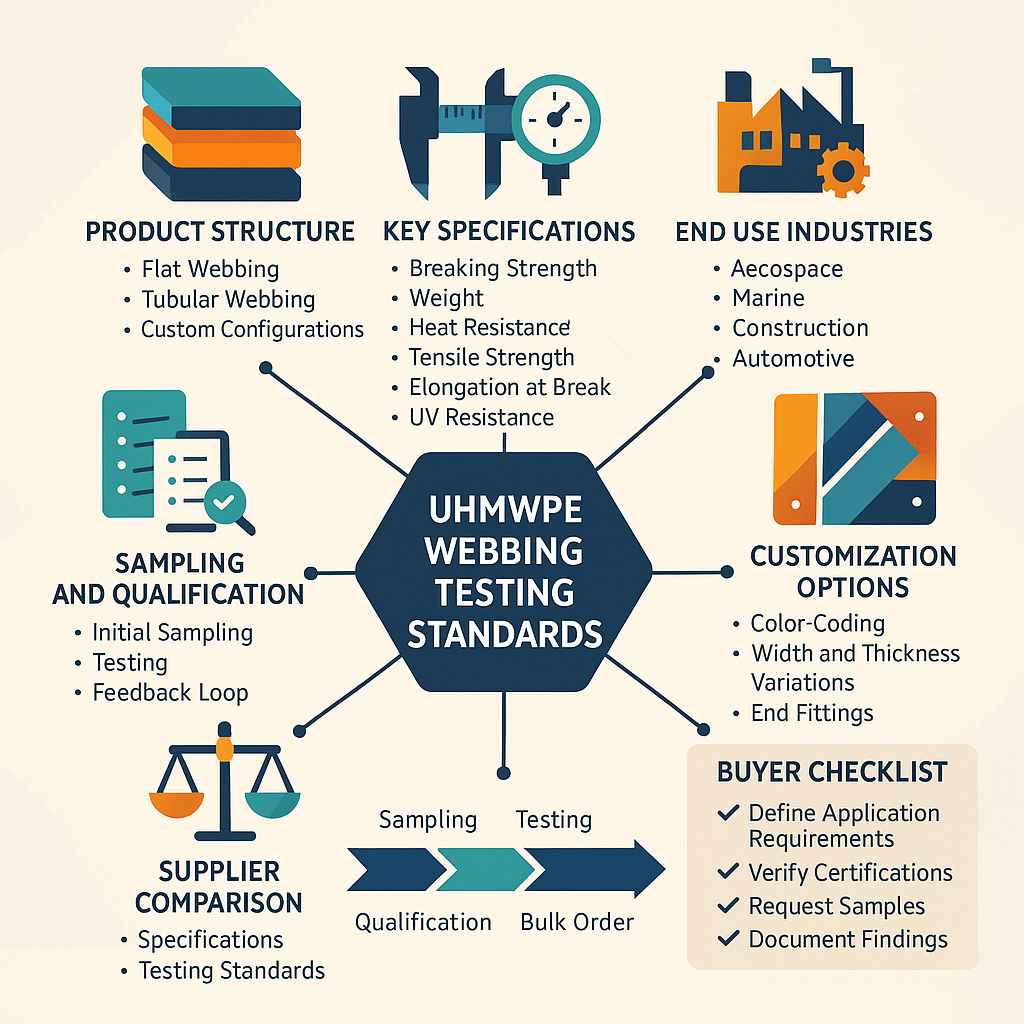
Product Structure and Available Forms
Understanding the structure and forms of UHMWPE (Ultra-High Molecular Weight Polyethylene) webbing is essential for evaluating its performance in various applications. UHMWPE webbing is known for its high strength-to-weight ratio, excellent abrasion resistance, and low moisture absorption. These properties make it suitable for a wide range of industrial applications.
Key Technical Points
UHMWPE webbing typically comes in various forms, including flat webbing, tubular webbing, and custom configurations. The molecular weight of UHMWPE contributes to its unique properties, allowing it to withstand extreme conditions while maintaining flexibility. Key technical points to consider include:
- Tensile Strength: UHMWPE webbing exhibits exceptional tensile strength, often exceeding that of steel on a weight-for-weight basis.
- Elongation at Break: This property indicates how much the webbing can stretch before breaking, which is crucial for applications requiring flexibility.
- UV Resistance: UHMWPE is resistant to UV degradation, making it suitable for outdoor applications.
Application and Sourcing Considerations
When sourcing UHMWPE webbing, it’s vital to consider the specific application requirements. For instance, webbing used in safety harnesses must meet stringent safety standards, while webbing for marine applications may prioritize water resistance. Understanding these nuances can guide you in selecting the right supplier who can provide tailored solutions.
Buyer Checklist Before Sampling
- Define the application requirements clearly.
- Verify the supplier’s certifications and testing capabilities.
- Request samples to evaluate performance in real-world conditions.
- Assess the supplier’s ability to customize webbing based on your specifications.
Key Specifications and Test Items
To ensure that UHMWPE webbing meets the necessary performance criteria, various specifications and test items must be considered. These standards help in assessing the quality and suitability of the webbing for specific applications.
Key Technical Points
Key specifications for UHMWPE webbing include:
- Breaking Strength: The maximum load the webbing can bear before failure.
- Weight: The weight of the webbing per unit length, which affects handling and application suitability.
- Heat Resistance: The ability of the webbing to maintain its integrity under high temperatures.
Application and Sourcing Considerations
Different applications may require different testing standards. For example, webbing used in lifting applications must undergo rigorous testing to meet safety regulations. Understanding these requirements can help in sourcing the right UHMWPE webbing from a reliable supplier.
Buyer Checklist Before Sampling
- Identify the relevant testing standards for your application.
- Ensure the supplier conducts tests in accredited laboratories.
- Request detailed test reports for transparency.
- Evaluate the supplier’s experience in your specific industry.
Common End Uses and Industries
UHMWPE webbing is utilized across various industries due to its superior properties. Understanding these end uses can help in making informed decisions regarding material selection.
Typical Industries Using This Material
- Aerospace: For safety harnesses and cargo securing.
- Marine: In sailing and fishing applications for rigging and mooring lines.
- Construction: For lifting and securing heavy loads.
- Automotive: In safety systems and high-performance applications.
Why Engineers and Buyers Choose It
Engineers and buyers often opt for UHMWPE webbing due to its lightweight nature combined with high strength and durability. These properties lead to increased efficiency and safety in applications, making it a preferred choice in demanding environments.
When Another Material May Be Better
While UHMWPE webbing offers numerous advantages, there are scenarios where alternative materials may be more suitable. For example, if cost is a primary concern, polyester webbing may provide a more economical solution, albeit with lower performance characteristics. Additionally, for applications requiring high heat resistance, aramid fibers may be more appropriate.
Customization Options
Customization is a critical aspect of sourcing UHMWPE webbing, as different applications may require specific features. Understanding the available customization options can enhance performance and suitability.
Key Technical Points
Customization options for UHMWPE webbing include:
- Color Coding: For easy identification in complex systems.
- Width and Thickness Variations: Tailoring dimensions to meet specific load requirements.
- End Fittings: Custom fittings can enhance usability and safety.
Application and Sourcing Considerations
When considering customization, it’s essential to communicate your requirements clearly to the supplier. This ensures that the final product meets your specific needs and adheres to any relevant standards.
Buyer Checklist Before Sampling
- Define your customization needs upfront.
- Discuss potential limitations with the supplier.
- Request prototypes to evaluate the effectiveness of custom features.
- Ensure that the supplier can meet your timeline for delivery.
Sampling, Qualification, and Order Workflow
Understanding the sampling and qualification process is vital for ensuring that the UHMWPE webbing meets your specifications before placing a bulk order.
Key Technical Points
The sampling process should include:
- Initial Sampling: Obtain samples to evaluate performance and suitability.
- Testing: Conduct necessary tests to ensure compliance with specifications.
- Feedback Loop: Provide feedback to the supplier for adjustments if needed.
Application and Sourcing Considerations
During the qualification phase, it’s crucial to establish clear criteria for acceptance. This may include performance metrics, compliance with testing standards, and overall quality assurance.
Buyer Checklist Before Sampling
- Define the testing criteria for the samples.
- Communicate your expectations clearly to the supplier.
- Document all findings during the sampling process.
- Establish a timeline for feedback and adjustments.
How to Compare Offers from Different Suppliers
When evaluating offers from various UHMWPE webbing suppliers, a structured approach can help in making informed decisions.
Key Technical Points
Consider the following when comparing offers:
- Specifications: Ensure that the webbing meets your technical requirements.
- Testing Standards: Verify that the supplier adheres to recognized testing standards.
- Customization Capabilities: Assess the supplier’s ability to meet your specific needs.
Application and Sourcing Considerations
Understanding the supplier’s experience in your industry can also provide insights into their reliability and capability to deliver quality products.
Buyer Checklist Before Sampling
- List your must-have specifications and features.
- Request detailed quotes that include testing and certification information.
- Evaluate the supplier’s reputation through reviews and case studies.
- Consider the total cost of ownership, not just the initial price.
Conclusion
Understanding UHMWPE webbing testing standards is crucial for making informed decisions in material selection. By considering the technical specifications, application requirements, and supplier capabilities, you can ensure that the webbing you choose meets the necessary performance criteria. A structured approach to sampling, qualification, and comparison will further enhance your sourcing strategy, leading to successful outcomes in your projects.
As you navigate the complexities of sourcing UHMWPE webbing, remember to prioritize your specific needs and requirements. This thoughtful approach will help you select the right supplier and material for your applications, ensuring optimal performance and reliability.