
What does specification sheet review properties mean in sewing thread applications?
In the world of industrial sewing, the selection of the right thread can significantly impact the quality and durability of the final product. One of the critical tools in making this selection is the specification sheet, which outlines the properties of the thread. Understanding these specification sheet review properties is essential for making informed decisions that align with specific sewing applications.
Basic definition
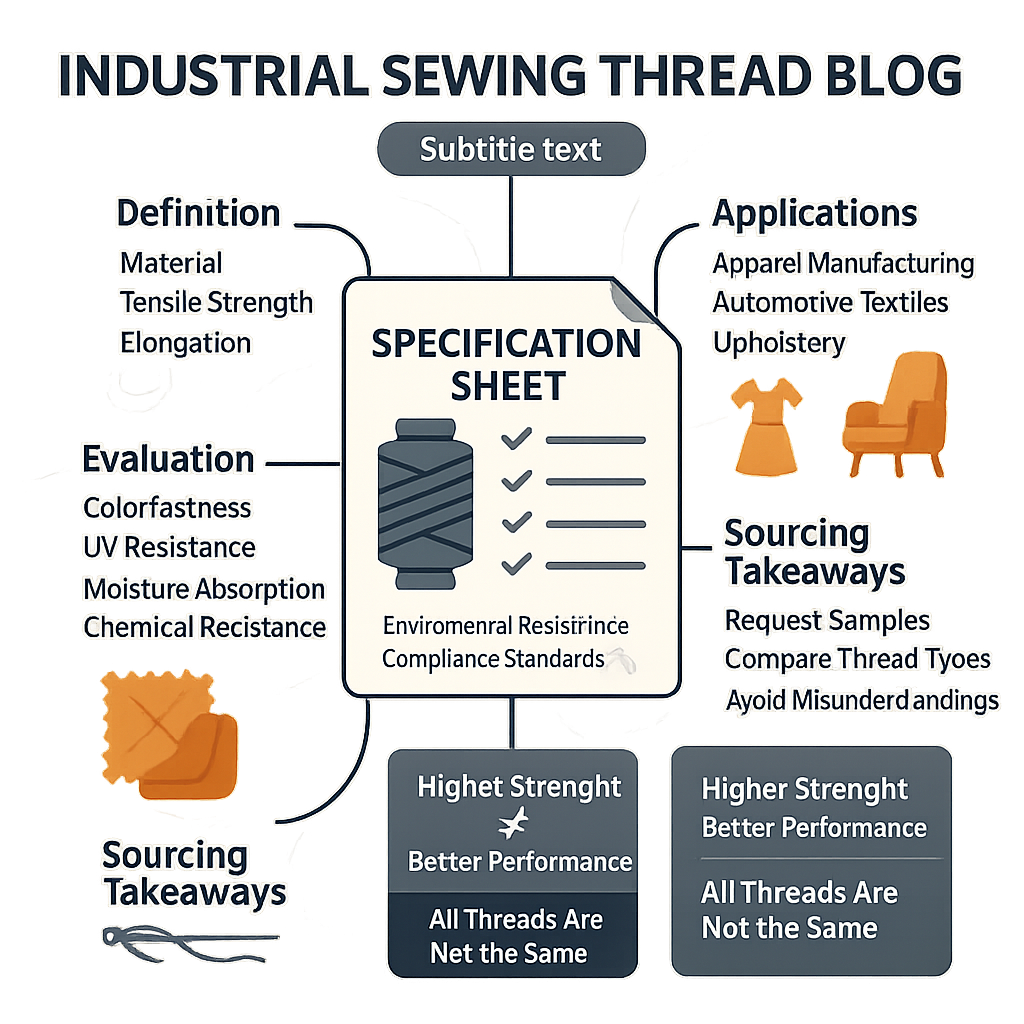
A specification sheet is a detailed document that provides essential information about a sewing thread, including its material composition, tensile strength, elongation, and other performance metrics. These properties help buyers assess whether a particular thread is suitable for their intended application.
Why it matters in sewing performance
The properties outlined in a specification sheet directly influence sewing performance. For example, the tensile strength of a thread determines its ability to withstand stress during sewing and in the final product. Similarly, elongation properties can affect how well the thread performs under different conditions, such as stretch or shrinkage. Understanding these factors can help manufacturers avoid costly mistakes and ensure product quality.
Where is specification sheet review properties used?
Specification sheet review properties are utilized across various sectors in the sewing industry, guiding the selection of threads for different applications.
Common sewing thread products or applications
- Apparel Manufacturing: Threads used in clothing must be durable yet flexible, often requiring specific tensile strength and elongation properties.
- Automotive Textiles: Threads for automotive applications must withstand extreme conditions, necessitating high tenacity and resistance to wear.
- Upholstery: Upholstery threads need to be robust and colorfast, making specification sheets crucial for ensuring longevity.
What buyers usually check
When reviewing specification sheets, buyers typically focus on several key properties:
- Material Composition: Understanding whether a thread is made from polyester, nylon, or a corespun blend can influence its performance.
- Tensile Strength: This indicates how much force the thread can withstand before breaking.
- Elongation: This property measures how much the thread can stretch before it breaks, which is critical for applications requiring flexibility.
- Colorfastness: Important for applications where the thread will be exposed to washing or sunlight.
How to evaluate specification sheet review properties
Evaluating specification sheet review properties requires a systematic approach to ensure that the selected thread meets the specific needs of the application.
Key points on a specification sheet
When reviewing a specification sheet, consider the following key points:
- Performance Metrics: Look for quantitative data on tensile strength and elongation, as these will directly impact sewing performance.
- Environmental Resistance: Check for properties related to UV resistance, moisture absorption, and chemical resistance, especially for outdoor or industrial applications.
- Compliance Standards: Ensure that the thread meets relevant industry standards, which can vary by application.
Common misunderstandings
Several misconceptions can arise when evaluating specification sheets:
- All Threads are the Same: Many buyers assume that all threads perform similarly, but variations in material and construction can lead to significant differences.
- Higher Strength Equals Better Performance: While tensile strength is important, other factors like elongation and environmental resistance also play crucial roles in overall performance.
Practical takeaway for sourcing teams
For sourcing teams, understanding specification sheet review properties is not just about selecting a thread; it’s about aligning the thread’s characteristics with the specific demands of the application.
When to ask for samples
Requesting samples is advisable when:
- You are considering a new thread type for a specific application.
- You need to verify the performance of a thread against the specifications outlined in the sheet.
When another thread type may fit better
Sometimes, a different thread type may be more suitable based on the evaluation of specification sheet review properties. For example, if a project requires high elasticity, a nylon thread might be more appropriate than a polyester thread, despite the latter’s higher tensile strength.
In conclusion, a thorough understanding of specification sheet review properties is essential for making informed decisions in sewing thread selection. By focusing on the key characteristics outlined in these sheets, buyers can ensure that they choose the right thread for their specific applications, ultimately leading to better product quality and performance.