
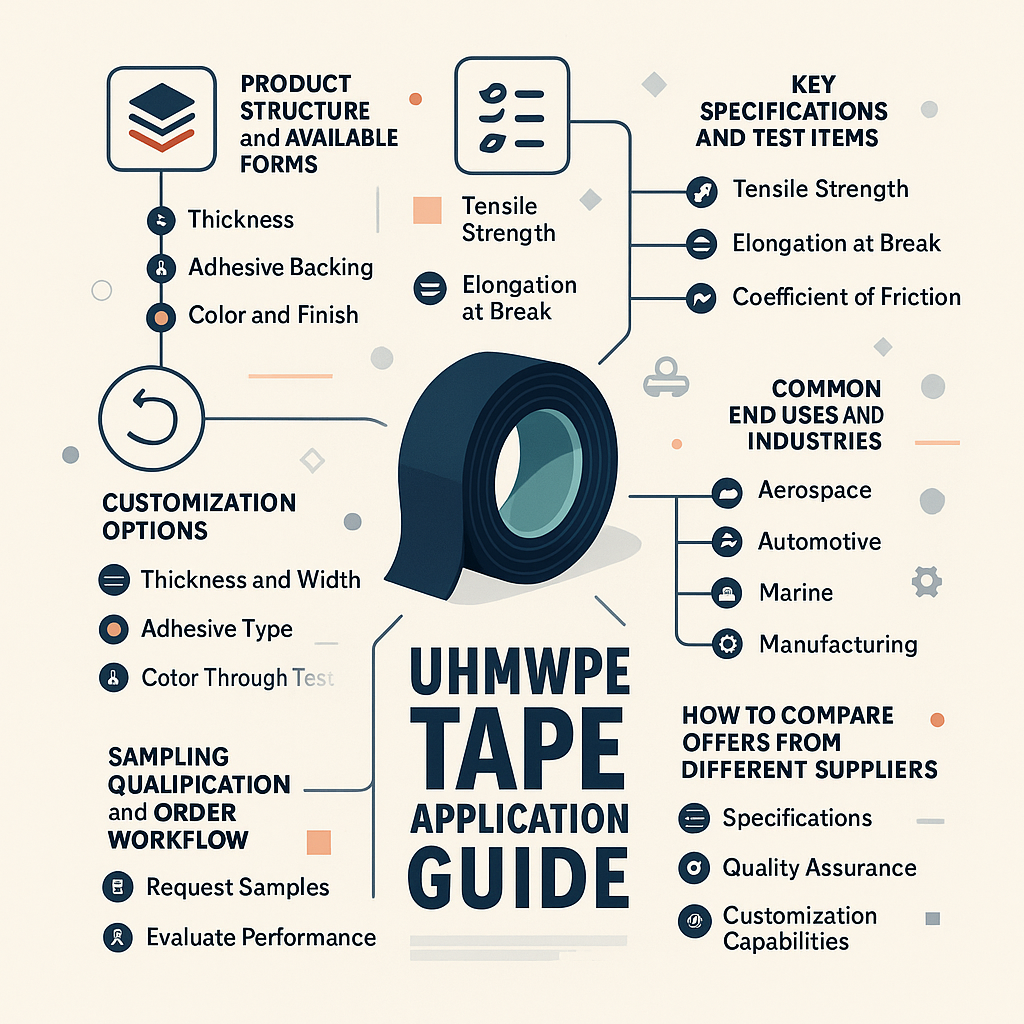
Product Structure and Available Forms
UHMWPE (Ultra High Molecular Weight Polyethylene) tape is a versatile material known for its exceptional strength, low friction, and high resistance to wear and chemicals. Understanding its structure and available forms is crucial for making informed decisions regarding its applications.
Key Technical Points
UHMWPE tape typically consists of long-chain polyethylene molecules, which contribute to its high molecular weight and unique properties. The tape is available in various thicknesses and widths, allowing for customization based on specific application needs. Key technical points to consider include:
- Thickness: Ranges from a few mils to several millimeters, impacting durability and flexibility.
- Adhesive Backing: Some UHMWPE tapes come with adhesive backing for easy application, while others may require additional bonding methods.
- Color and Finish: Available in various colors and finishes, which can be important for aesthetic or functional purposes.
Application and Sourcing Considerations
When sourcing UHMWPE tape, it’s essential to consider the specific requirements of your application. Factors such as environmental conditions, load-bearing needs, and compatibility with other materials can influence the choice of tape. Additionally, working with a reliable UHMWPE tape supplier can ensure access to high-quality products that meet industry standards.
Buyer Checklist Before Sampling
- Define the specific application and performance requirements.
- Evaluate the environmental conditions the tape will be exposed to.
- Consider the required thickness and width for your application.
- Assess the adhesive properties if applicable.
- Research potential suppliers and their product certifications.
Key Specifications and Test Items
Understanding the key specifications and test items for UHMWPE tape is vital for ensuring it meets the necessary performance standards for your application.
Key Technical Points
Specifications for UHMWPE tape typically include:
- Tensile Strength: Indicates the maximum stress the tape can withstand before failing.
- Elongation at Break: Measures the tape’s ability to stretch before breaking, which is crucial for applications requiring flexibility.
- Coefficient of Friction: A lower coefficient indicates better sliding properties, which is essential in applications involving movement.
Application and Sourcing Considerations
When evaluating specifications, consider how they align with your application needs. For example, high tensile strength may be necessary for load-bearing applications, while a low coefficient of friction is critical for sliding applications. Always consult with suppliers to ensure the tape meets the required specifications.
Buyer Checklist Before Sampling
- Identify the critical specifications needed for your application.
- Request test data from suppliers to verify performance claims.
- Consider the implications of each specification on your application.
- Ensure compliance with relevant industry standards.
Common End Uses and Industries
UHMWPE tape is utilized across various industries due to its unique properties. Understanding its common end uses can help in making informed decisions about its application.
Typical Industries Using This Material
- Aerospace: Used for surface protection and reducing friction in moving parts.
- Automotive: Applied in components requiring high wear resistance and low friction.
- Marine: Utilized for protective applications in harsh environments.
- Manufacturing: Commonly used in conveyor systems and machinery to reduce wear.
Why Engineers and Buyers Choose It
Engineers and buyers often select UHMWPE tape due to its:
- Durability: High resistance to wear and tear extends the lifespan of components.
- Low Friction: Enhances the efficiency of moving parts, reducing energy consumption.
- Chemical Resistance: Suitable for applications in harsh environments where exposure to chemicals is a concern.
When Another Material May Be Better
While UHMWPE tape offers numerous advantages, there are scenarios where alternative materials may be more suitable. For example, if extreme temperatures are involved, materials like PTFE (Teflon) may perform better. Additionally, for applications requiring high tensile strength in a compact form, carbon fiber may be a more appropriate choice.
Customization Options
Customization is often necessary to meet specific application requirements. Understanding the available options can help in selecting the right UHMWPE tape.
Key Technical Points
Customization options for UHMWPE tape may include:
- Thickness and Width: Tailoring dimensions to fit specific application needs.
- Adhesive Type: Choosing between different adhesive properties based on surface compatibility.
- Color and Finish: Selecting colors or finishes that align with branding or functional requirements.
Application and Sourcing Considerations
When considering customization, it’s essential to communicate your specific needs to suppliers. Discussing the intended application and any unique requirements will help in sourcing the most suitable product.
Buyer Checklist Before Sampling
- Clearly define your customization requirements.
- Discuss potential impacts of customization on performance.
- Request samples to evaluate the customized product.
- Ensure that the supplier can meet your customization needs consistently.
Sampling, Qualification, and Order Workflow
Understanding the workflow for sampling, qualification, and ordering UHMWPE tape is crucial for ensuring a smooth procurement process.
Key Technical Points
The sampling process typically involves:
- Requesting samples based on defined specifications and application needs.
- Evaluating samples for performance in real-world conditions.
- Qualifying the tape through testing against industry standards.
Application and Sourcing Considerations
When sourcing UHMWPE tape, consider the lead times for sampling and qualification. Engaging with suppliers early in the process can help mitigate delays and ensure that the selected tape meets performance expectations.
Buyer Checklist Before Sampling
- Define the testing criteria for evaluating samples.
- Communicate your timeline for sampling and qualification.
- Ensure that the supplier understands your application needs.
- Document the results of sample evaluations for future reference.
How to Compare Offers from Different Suppliers
When evaluating offers from different UHMWPE tape suppliers, a structured approach can help in making informed decisions.
Key Technical Points
Consider the following when comparing offers:
- Specifications: Ensure that the specifications align with your application needs.
- Quality Assurance: Look for suppliers with robust quality control processes and certifications.
- Customization Capabilities: Assess whether suppliers can meet your specific customization requirements.
Application and Sourcing Considerations
Understanding the sourcing landscape can provide insights into the reliability and reputation of potential suppliers. Researching supplier backgrounds and customer reviews can offer valuable context.
Buyer Checklist Before Sampling
- Gather and compare specifications from different suppliers.
- Evaluate supplier reputation and customer feedback.
- Consider the total cost of ownership, including potential hidden costs.
- Document your findings to facilitate decision-making.
Conclusion
In summary, the UHMWPE tape application guide provides essential insights for engineers and decision-makers involved in material selection. By understanding the product structure, specifications, common applications, customization options, and sourcing considerations, you can make informed decisions that align with your project requirements. Always approach the sourcing process with a clear understanding of your needs and a structured evaluation of potential suppliers to ensure the best outcomes for your applications.