
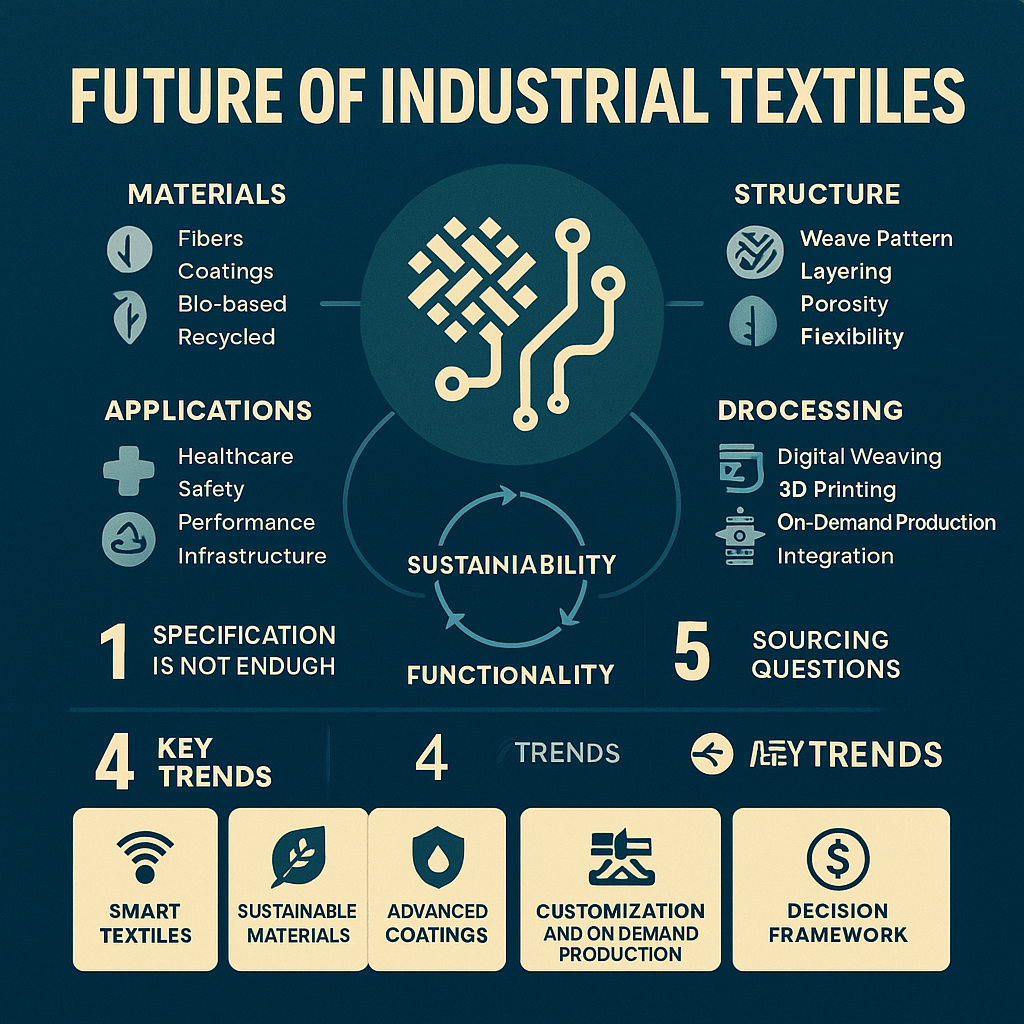
The Bigger Picture Behind Industrial Textiles
The future of industrial textiles is not just about new materials; it encompasses a broader vision of how these textiles can enhance performance, sustainability, and functionality across various applications. As industries evolve, the demand for high-end industrial textiles that meet specific performance criteria is growing. This shift is driven by technological advancements, environmental considerations, and the need for more efficient manufacturing processes.
Understanding the future landscape of industrial textiles requires a grasp of the interplay between materials, design, and application. This article aims to provide a comprehensive overview of what to expect in the coming years, focusing on the innovations and trends that are likely to shape the industry.
How Materials, Structure, and Processing Affect Results
The performance of industrial textiles is heavily influenced by the choice of materials, the structural design, and the processing techniques employed. Each of these factors plays a crucial role in determining the final properties of the textile.
Why One Specification Never Tells the Full Story
When evaluating industrial textiles, it is essential to recognize that a single specification often fails to capture the complete picture. For instance, while tensile strength is a critical property, it does not account for other factors such as elongation, abrasion resistance, or thermal stability. Each application may prioritize different properties, making it vital to consider a holistic view of the material’s performance.
Moreover, the interaction between different specifications can lead to trade-offs. For example, increasing the tensile strength of a textile may reduce its flexibility, which could be detrimental in applications requiring both strength and adaptability. Understanding these nuances is key to making informed decisions.
How to Compare Options by End-Use Requirements
To effectively navigate the future of industrial textiles, decision-makers must align material choices with specific end-use requirements. This alignment ensures that the selected textiles meet the operational demands of their intended applications.
Questions Worth Asking Before Sourcing
- What are the primary performance requirements? Identify the critical properties needed for the application, such as strength, durability, or chemical resistance.
- What environmental conditions will the textiles face? Consider factors like temperature fluctuations, moisture exposure, and UV radiation.
- How will the textiles be processed and integrated into existing systems? Assess compatibility with manufacturing processes and other materials.
- What are the long-term sustainability goals? Evaluate the environmental impact of the materials and processes used.
- What are the cost implications? Consider the balance between performance and budget constraints.
By addressing these questions, stakeholders can better navigate the complexities of material selection and ensure that their choices align with both current and future needs.
Examples, Trends, and What to Watch Next
As we look ahead, several trends are emerging that will likely shape the future of industrial textiles. These trends reflect a growing emphasis on innovation, sustainability, and performance optimization.
- Smart Textiles: The integration of sensors and electronics into textiles is gaining traction. These smart textiles can monitor environmental conditions, providing real-time data for applications in healthcare, safety, and performance optimization.
- Sustainable Materials: The push for sustainability is leading to increased interest in bio-based and recycled materials. Innovations in this area are making it possible to produce high-performance textiles with a lower environmental footprint.
- Advanced Coatings: The development of advanced coatings can enhance the performance of textiles, providing properties such as water resistance, flame retardancy, and anti-microbial effects without compromising breathability.
- Customization and On-Demand Production: Advances in manufacturing technologies, including 3D printing and digital weaving, are enabling more customized textile solutions that can be produced on demand, reducing waste and improving efficiency.
Staying informed about these trends will be crucial for businesses looking to leverage the future of industrial textiles. By understanding the implications of these advancements, stakeholders can make strategic decisions that align with their operational goals.
Conclusion
The future of industrial textiles is poised for significant transformation, driven by advancements in materials, technology, and sustainability. As industries continue to evolve, the demand for high-performance textiles that meet specific application needs will only increase. By understanding the complexities of material selection, performance trade-offs, and emerging trends, decision-makers can navigate this landscape more effectively.
Ultimately, the key to success lies in a thoughtful approach to sourcing and evaluating industrial textiles. By asking the right questions and considering the broader implications of material choices, businesses can position themselves to thrive in an increasingly competitive environment.