
What does thread shade continuity uses mean in sewing thread applications?
In the realm of sewing, thread shade continuity refers to the consistency of color across different batches of thread. This concept is crucial for ensuring that the final product meets the desired aesthetic and quality standards. Understanding thread shade continuity uses is essential for manufacturers, designers, and sourcing teams alike, as it directly impacts the visual appeal and overall performance of sewn products.
Basic definition
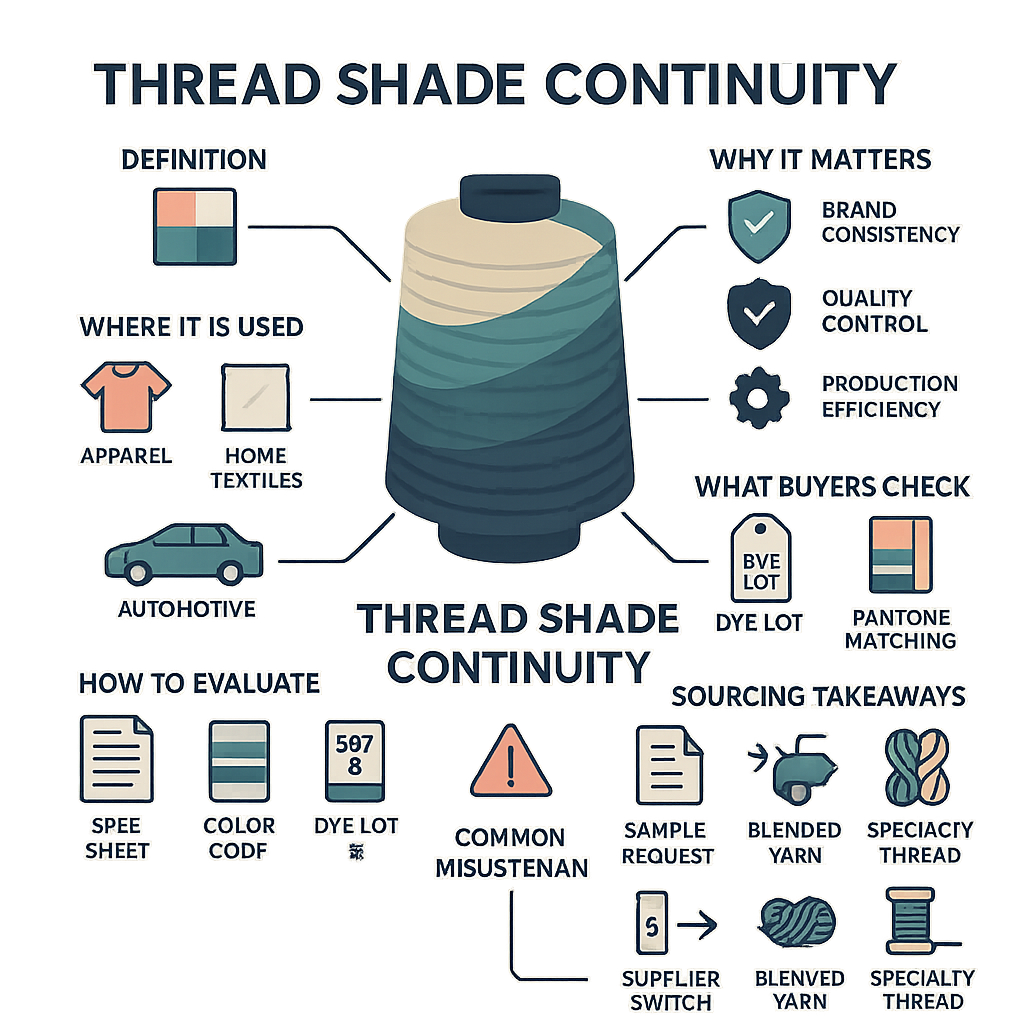
Thread shade continuity uses involve maintaining a uniform color throughout the production process. This means that when a specific shade of thread is selected for a project, all subsequent spools or batches of that thread should match in color. Variations can occur due to differences in dye lots, manufacturing processes, or even environmental factors. Therefore, ensuring shade continuity is vital for achieving a cohesive look in finished goods.
Why it matters in sewing performance
The importance of thread shade continuity extends beyond aesthetics. Here are several reasons why it matters:
- Brand Consistency: For brands that rely on specific color palettes, maintaining shade continuity is essential for brand identity.
- Quality Control: Inconsistent thread colors can indicate quality issues in the manufacturing process, potentially leading to product recalls or customer dissatisfaction.
- Production Efficiency: Ensuring shade continuity can reduce the need for rework or adjustments, streamlining the production process.
Where is thread shade continuity uses used?
Thread shade continuity is utilized across various sewing applications, from fashion to industrial textiles. Understanding where it is commonly applied can help sourcing teams make informed decisions.
Common sewing thread products or applications
Some common applications where thread shade continuity is critical include:
- Apparel Manufacturing: In clothing production, especially for high-end garments, color consistency is paramount.
- Home Textiles: Products like curtains, upholstery, and bedding require uniformity in color to meet consumer expectations.
- Automotive Textiles: In automotive interiors, thread shade continuity is crucial for aesthetic appeal and brand alignment.
What buyers usually check
When sourcing threads, buyers typically evaluate several factors to ensure shade continuity:
- Dye Lot Information: Buyers should request information on dye lots to understand potential variations.
- Color Matching Standards: Familiarity with color matching systems (like Pantone) can help ensure that selected threads will meet expectations.
- Sample Requests: Obtaining samples from different batches can help assess color consistency before large-scale production.
How to evaluate thread shade continuity uses
Evaluating thread shade continuity requires a keen eye and a systematic approach. Here are some key points to consider.
Key points on a specification sheet
A well-documented specification sheet should include:
- Color Codes: Clear identification of color codes used in production.
- Dye Lot Numbers: Information on dye lots to track potential variations.
- Testing Methods: Details on how color consistency is tested and verified.
Common misunderstandings
Several misconceptions can lead to issues in thread shade continuity:
- All Threads Are the Same: Not all threads from different manufacturers will match, even if they are labeled with the same color code.
- Shade Variations Are Acceptable: While minor variations may be tolerable in some applications, they can be detrimental in high-quality products.
Practical takeaway for sourcing teams
For sourcing teams, understanding thread shade continuity uses is essential for making informed decisions. Here are some practical takeaways:
When to ask for samples
Requesting samples is crucial when:
- Launching a new product line that requires specific color matching.
- Switching suppliers or manufacturers to ensure consistency.
- Working on projects with strict quality control measures.
When another thread type may fit better
In some cases, it may be beneficial to consider alternative thread types:
- Blended Yarns: If shade continuity is a concern, blended yarns may offer more consistent color across different batches.
- Specialty Threads: For unique applications, specialty threads may provide better performance and aesthetic appeal.
In conclusion, understanding thread shade continuity uses is vital for ensuring quality and consistency in sewing applications. By evaluating specifications, requesting samples, and being aware of common misunderstandings, sourcing teams can make more informed decisions that enhance the overall quality of their products.