
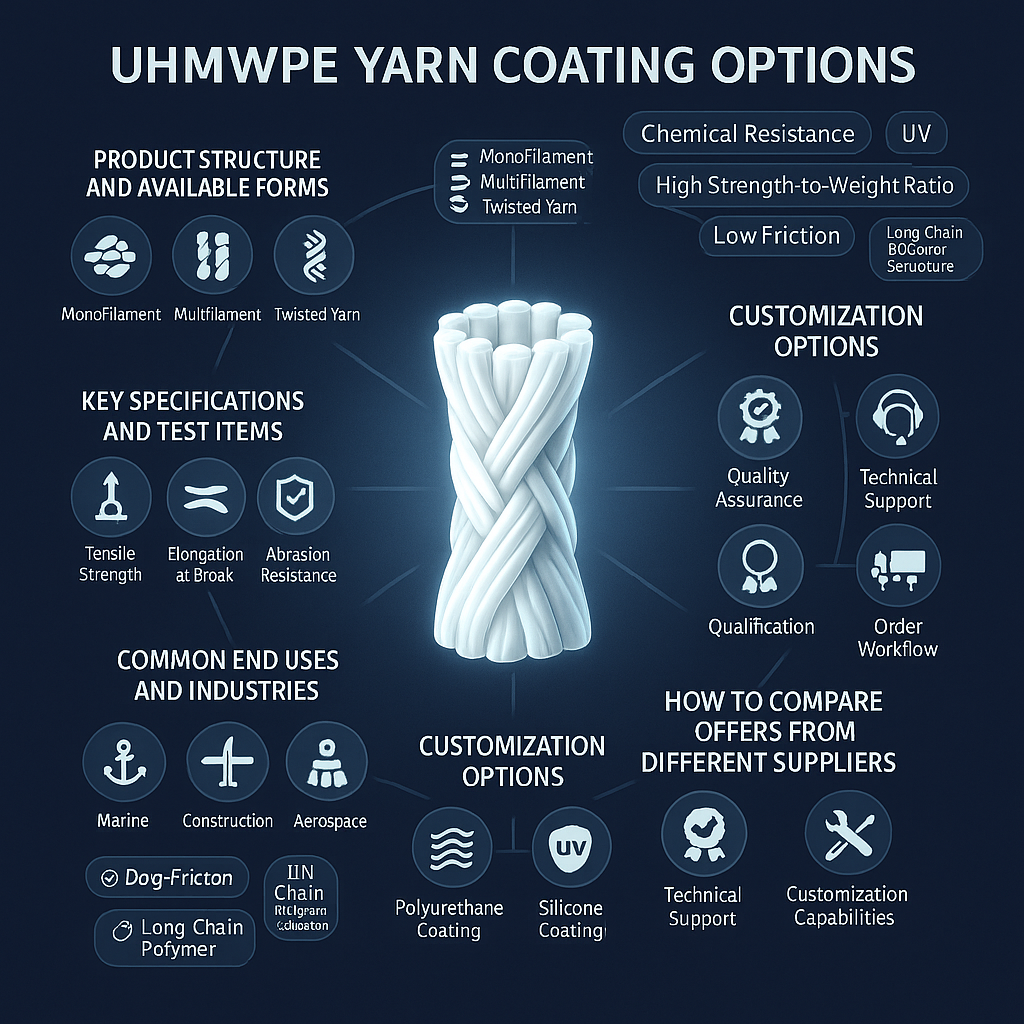
Product Structure and Available Forms
UHMWPE (Ultra High Molecular Weight Polyethylene) yarn is renowned for its exceptional strength-to-weight ratio and durability. Understanding the structure and available forms of UHMWPE yarn is crucial for making informed decisions about its applications and coating options.
Key Technical Points
UHMWPE yarn is characterized by its long-chain polymer structure, which contributes to its high tensile strength and resistance to abrasion. It is available in various forms, including:
- Monofilament: A single, continuous strand that offers high strength and flexibility.
- Multifilament: Composed of multiple strands, providing enhanced softness and flexibility.
- Twisted yarn: Yarns twisted together for added strength and stability.
Each form has unique properties that may influence the choice of coating options.
Application and Sourcing Considerations
When selecting UHMWPE yarn for specific applications, consider the environment in which the yarn will be used. Factors such as exposure to chemicals, UV light, and mechanical stress can dictate the need for specific coatings. Sourcing from reputable suppliers who understand these requirements is essential for ensuring quality and performance.
Buyer Checklist Before Sampling
- Define the application requirements, including environmental conditions.
- Identify the desired properties of the coating (e.g., chemical resistance, UV stability).
- Research potential suppliers and their certifications.
- Request samples to evaluate performance in real-world conditions.
Key Specifications and Test Items
Understanding the specifications and test items associated with UHMWPE yarn is vital for ensuring that the selected product meets the necessary performance standards.
Key Technical Points
Specifications for UHMWPE yarn typically include:
- Tensile Strength: The maximum stress that the yarn can withstand while being stretched.
- Elongation at Break: The extent to which the yarn can be stretched before breaking.
- Abrasion Resistance: The yarn’s ability to withstand wear and tear.
These specifications can help in comparing different coating options and their suitability for specific applications.
Application and Sourcing Considerations
Different applications may require different specifications. For example, a marine application may prioritize UV resistance, while a construction application may focus on tensile strength. Understanding these nuances can guide sourcing decisions.
Buyer Checklist Before Sampling
- Assess the required specifications for your application.
- Determine the testing methods used to validate these specifications.
- Ensure that the supplier can provide relevant test data.
- Evaluate the consistency of the yarn’s performance across batches.
Common End Uses and Industries
UHMWPE yarn is utilized across a variety of industries due to its unique properties. Understanding the common end uses can help in selecting the right coating options.
Typical Industries Using This Material
- Marine: Used in ropes and nets due to its resistance to saltwater and UV rays.
- Construction: Employed in safety harnesses and lifting equipment.
- Aerospace: Utilized in lightweight, high-strength applications.
- Medical: Found in surgical sutures and other medical devices.
Why Engineers and Buyers Choose It
Engineers and buyers often select UHMWPE yarn for its superior performance characteristics, including:
- High strength-to-weight ratio, making it ideal for applications where weight is a concern.
- Excellent resistance to chemicals and abrasion, ensuring longevity.
- Low friction properties, which can enhance performance in moving applications.
When Another Material May Be Better
While UHMWPE yarn offers numerous advantages, there are scenarios where alternative materials may be more suitable. For instance, if extreme heat resistance is required, aramid fibers may be a better choice. Understanding the specific requirements of your application is crucial for making the right decision.
Customization Options
Customization of UHMWPE yarn can enhance its performance for specific applications. Various coating options can be tailored to meet the unique needs of different industries.
Key Technical Points
Coating options for UHMWPE yarn may include:
- Polyurethane Coatings: Enhance abrasion resistance and provide a degree of chemical resistance.
- Silicone Coatings: Offer excellent UV resistance and flexibility.
- Epoxy Coatings: Provide a hard, durable finish suitable for high-wear applications.
Each coating type has its benefits and trade-offs, which should be carefully evaluated based on the intended use.
Application and Sourcing Considerations
When considering customization, it is essential to evaluate how the coating will interact with the base UHMWPE yarn. Factors such as adhesion, flexibility, and environmental resistance should be assessed to ensure compatibility.
Buyer Checklist Before Sampling
- Identify the specific performance requirements for the coating.
- Evaluate the supplier’s capabilities in providing customized solutions.
- Request data on the durability and performance of the coating under expected conditions.
- Consider the lead time for customized products.
Sampling, Qualification, and Order Workflow
Understanding the sampling and qualification process is essential for ensuring that the selected UHMWPE yarn meets the necessary standards before placing a bulk order.
Key Technical Points
The sampling process typically involves:
- Requesting samples from potential suppliers to evaluate quality and performance.
- Conducting tests to confirm that the yarn meets specified requirements.
- Assessing the consistency of the yarn across different batches.
Application and Sourcing Considerations
During the qualification phase, it is important to consider how the yarn will perform in real-world applications. This may involve field testing or pilot projects to validate performance under actual operating conditions.
Buyer Checklist Before Sampling
- Define the testing criteria and performance metrics for evaluation.
- Ensure that the supplier can provide adequate support during the qualification process.
- Document all findings and comparisons for future reference.
- Establish a clear timeline for sampling and qualification.
How to Compare Offers from Different Suppliers
When evaluating offers from various UHMWPE yarn suppliers, a systematic approach can help ensure that you select the best option for your needs.
Key Technical Points
Factors to consider when comparing suppliers include:
- Quality Assurance: Review the supplier’s quality control processes and certifications.
- Technical Support: Assess the level of technical assistance offered during the selection and qualification process.
- Customization Capabilities: Determine the supplier’s ability to provide tailored solutions.
Application and Sourcing Considerations
Understanding the supplier’s experience in your specific industry can provide insights into their ability to meet your requirements effectively. Look for suppliers with a proven track record in similar applications.
Buyer Checklist Before Sampling
- Compile a list of key criteria for evaluation.
- Request detailed product specifications and test data from each supplier.
- Engage in discussions to clarify any uncertainties regarding performance or sourcing.
- Consider the long-term relationship potential with the supplier.
Conclusion
Understanding the various UHMWPE yarn coating options is essential for making informed decisions in industrial applications. By considering the technical specifications, application requirements, and supplier capabilities, buyers can effectively navigate the complexities of material selection. A thorough evaluation process, including sampling and qualification, will ensure that the chosen yarn meets the necessary performance standards. Ultimately, a thoughtful approach to sourcing will lead to better outcomes in your projects.