
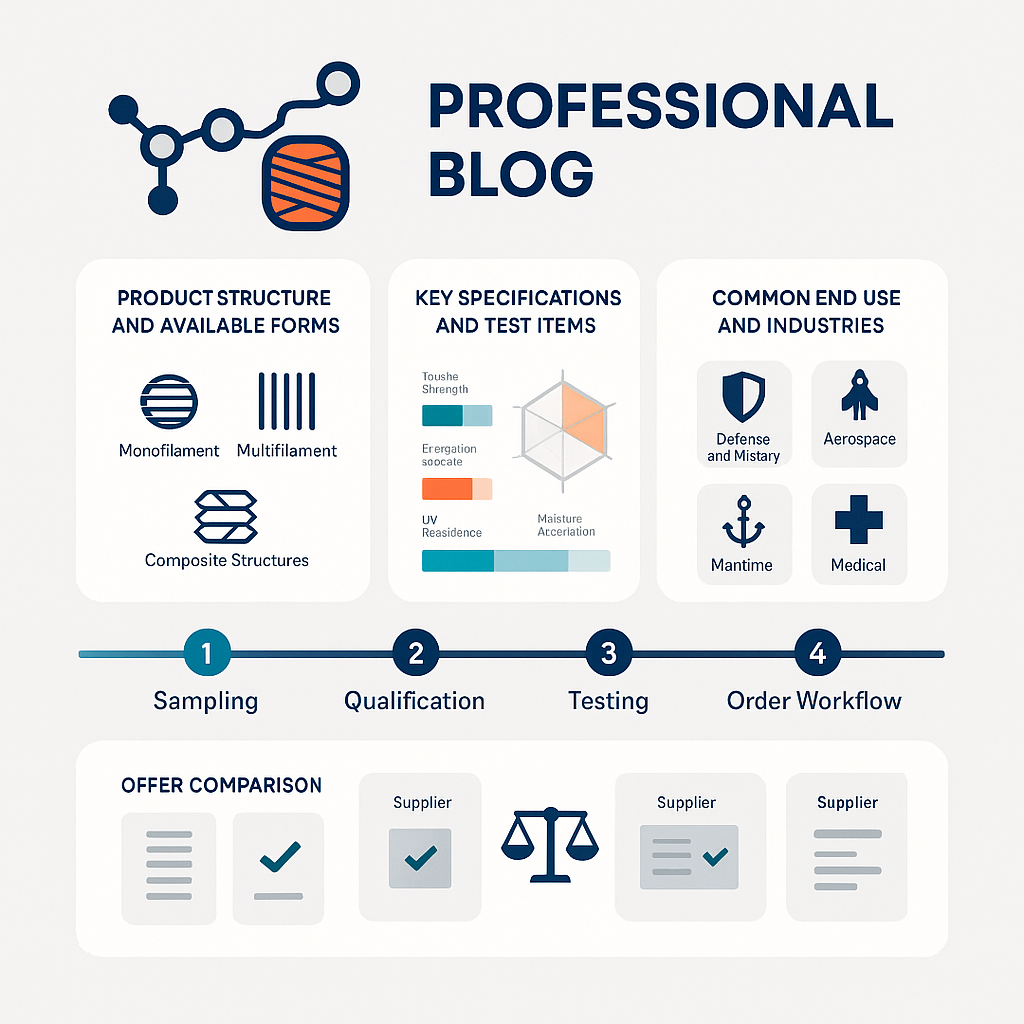
Product Structure and Available Forms
UHMWPE (Ultra-High Molecular Weight Polyethylene) yarn is renowned for its exceptional strength-to-weight ratio and durability. However, understanding its structure and the forms it is available in is essential for identifying potential defects that may arise during production or application.
Key Technical Points
UHMWPE yarn is typically produced through a gel-spinning process, which aligns the polymer chains to enhance mechanical properties. The yarn can be found in various forms, including:
- Monofilament: Single strands that offer high tensile strength.
- Multifilament: Composed of multiple filaments, providing flexibility and softness.
- Composite Structures: Combining UHMWPE with other materials for specialized applications.
Each form has its unique characteristics, which can influence performance and susceptibility to defects.
Application and Sourcing Considerations
When sourcing UHMWPE yarn, it is crucial to consider the intended application. Common uses include:
- Ballistic protection
- Marine applications
- Industrial ropes and slings
- Medical devices
Understanding the specific requirements of these applications will help in selecting the right form and quality of yarn, minimizing the risk of defects.
Buyer Checklist Before Sampling
- Define the application and performance requirements.
- Evaluate the supplier’s quality control processes.
- Request samples to assess physical properties.
- Inquire about testing certifications and compliance.
Key Specifications and Test Items
Before committing to a purchase, it is essential to understand the key specifications and test items that can indicate the quality of UHMWPE yarn.
Key Technical Points
Specifications often include:
- Tensile strength
- Elongation at break
- UV resistance
- Moisture absorption
Each of these properties plays a crucial role in the yarn’s performance in real-world applications.
Application and Sourcing Considerations
Different applications may prioritize specific properties. For instance, ballistic applications may require higher tensile strength, while marine applications may focus on UV resistance. Understanding these nuances can guide sourcing decisions.
Buyer Checklist Before Sampling
- Identify critical specifications for your application.
- Ensure the supplier can provide relevant test data.
- Check for consistency in production quality.
- Assess the yarn’s performance in environmental conditions similar to its intended use.
Common End Uses and Industries
UHMWPE yarn finds applications across various industries due to its unique properties. Understanding these end uses can help in evaluating potential defects and performance issues.
Typical Industries Using This Material
- Defense and military
- Aerospace
- Maritime
- Medical
Each industry has specific requirements that can influence the selection of UHMWPE yarn.
Why Engineers and Buyers Choose It
Engineers and buyers often select UHMWPE yarn for its:
- High strength-to-weight ratio
- Resistance to abrasion and chemicals
- Low moisture absorption
These properties make it suitable for demanding applications where performance is critical.
When Another Material May Be Better
While UHMWPE yarn has many advantages, it may not always be the best choice. For example, in applications requiring high-temperature resistance, aramid fibers may be more suitable. Understanding the limitations of UHMWPE yarn is essential for making informed decisions.
Customization Options
Customization can play a significant role in optimizing UHMWPE yarn for specific applications. Understanding the available options can help mitigate common defects.
Key Technical Points
Customization may include:
- Yarn diameter
- Twist level
- Color and finish
These factors can influence the yarn’s performance and suitability for particular applications.
Application and Sourcing Considerations
When considering customization, it is essential to evaluate how changes may affect the yarn’s mechanical properties and performance in real-world conditions.
Buyer Checklist Before Sampling
- Discuss customization options with the supplier.
- Assess how customization may impact performance.
- Request samples of customized yarn for evaluation.
Sampling, Qualification, and Order Workflow
The process of sampling, qualification, and ordering UHMWPE yarn is critical for ensuring quality and performance.
Key Technical Points
Establishing a clear workflow can help streamline the process:
- Define sampling criteria based on application needs.
- Conduct thorough testing of samples.
- Document all findings for future reference.
Application and Sourcing Considerations
Consider how the sampling process aligns with your project timelines and requirements. Ensure that the supplier can meet your deadlines and quality expectations.
Buyer Checklist Before Sampling
- Clarify your sampling requirements with the supplier.
- Ensure that testing protocols are in place.
- Establish a timeline for evaluation and feedback.
How to Compare Offers from Different Suppliers
When evaluating offers from various UHMWPE yarn suppliers, a systematic approach can help identify the best fit for your needs.
Key Technical Points
Consider the following factors when comparing offers:
- Quality assurance processes
- Technical support and expertise
- Pricing structures and terms
Application and Sourcing Considerations
Different suppliers may offer varying levels of customization and support. Assess how these factors align with your project requirements.
Buyer Checklist Before Sampling
- Request detailed specifications and test results from each supplier.
- Evaluate the supplier’s reputation and experience in the industry.
- Consider long-term partnership potential based on service and support.
Conclusion
Understanding the common defects associated with UHMWPE yarn is essential for making informed decisions in sourcing and application. By considering product structure, specifications, and supplier offerings, engineers and buyers can mitigate risks and optimize performance. A systematic approach to sampling, qualification, and comparison can further enhance decision-making, ensuring that the selected yarn meets the specific needs of the application.
Ultimately, being well-informed about the characteristics and potential issues of UHMWPE yarn can lead to better outcomes in various industrial applications.