
What does seam strength mean in sewing thread applications?
Seam strength is a critical factor in the performance and durability of sewn products. It refers to the ability of a seam to withstand stress without breaking or failing. Understanding seam strength is essential for manufacturers, distributors, and sourcing managers who aim to ensure that their products meet quality standards and perform well in their intended applications.
Basic definition
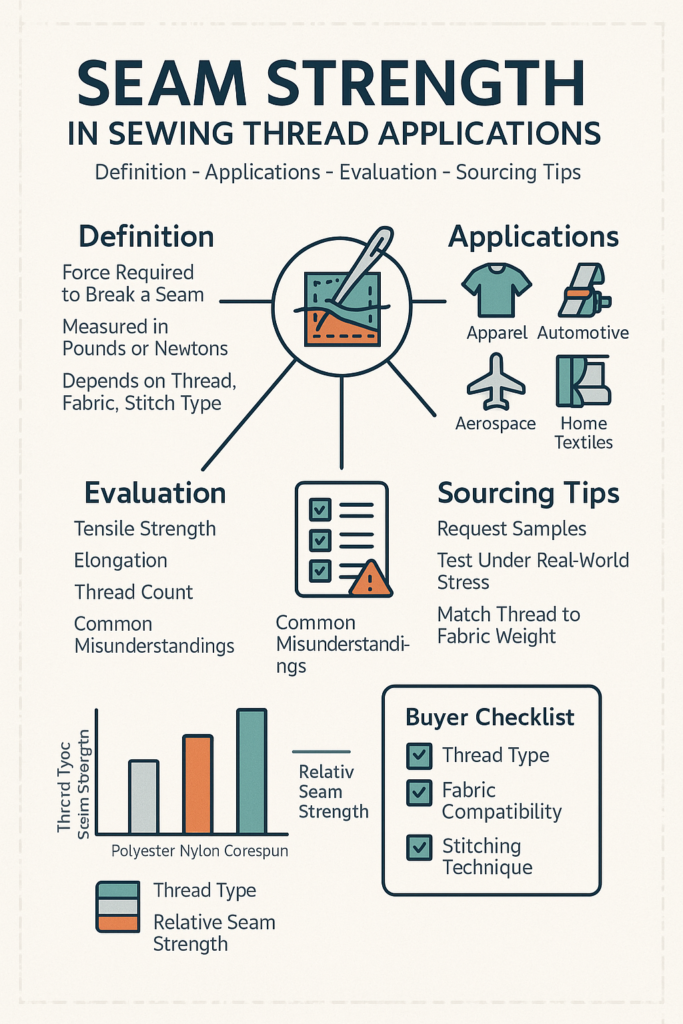
In simple terms, seam strength is the measure of the force required to break a seam. This force is typically expressed in pounds or newtons and can vary based on several factors, including the type of sewing thread used, the fabric being sewn, and the stitching technique employed. A higher seam strength indicates a more durable seam, which is particularly important in applications where the sewn item will be subjected to significant stress or wear.
Why it matters in sewing performance
The importance of seam strength cannot be overstated. A seam that lacks adequate strength can lead to product failure, resulting in costly returns, repairs, or even damage to a brand’s reputation. In industries such as automotive, aerospace, and apparel, where safety and durability are paramount, understanding and selecting the right seam strength is crucial. Additionally, the right seam strength can enhance the overall aesthetic of the finished product, ensuring that seams lay flat and do not pucker or distort.
Where is seam strength used?
Seam strength is a key consideration in various sewing applications, influencing the choice of thread and stitching methods. Different industries have unique requirements for seam strength based on the end use of the product.
Common sewing thread products or applications
- Apparel: In clothing manufacturing, seam strength is vital for ensuring that garments can withstand wear and tear while maintaining their shape and fit.
- Automotive: Automotive upholstery and seatbelts require high seam strength to ensure safety and durability under stress.
- Aerospace: In aerospace applications, seams must endure extreme conditions, making seam strength a critical factor in material selection.
- Home textiles: Curtains, upholstery, and bedding also benefit from strong seams to enhance longevity and performance.
What buyers usually check
When sourcing sewing threads, buyers typically evaluate several factors related to seam strength:
- Thread type: Different threads, such as polyester, nylon, or corespun, offer varying levels of seam strength.
- Fabric compatibility: The type of fabric being sewn can influence the required seam strength.
- Stitching technique: Certain stitching methods may require stronger threads to achieve optimal seam strength.
How to evaluate seam strength
Evaluating seam strength involves understanding the specifications and performance characteristics of the sewing threads being considered. This process can help ensure that the selected thread meets the needs of the specific application.
Key points on a specification sheet
When reviewing a thread’s specification sheet, buyers should look for:
- Tensile strength: This indicates the maximum amount of stress the thread can withstand before breaking.
- Elongation: This measures how much the thread can stretch before breaking, which can affect seam performance.
- Thread count: A higher thread count often correlates with increased seam strength.
Common misunderstandings
There are several misconceptions regarding seam strength that can lead to poor thread selection:
- Stronger is always better: While high seam strength is desirable, it must be balanced with other factors such as flexibility and compatibility with the fabric.
- All threads are the same: Different threads have unique properties that affect seam strength and performance; understanding these differences is essential.
Practical takeaway for sourcing teams
For sourcing teams, understanding seam strength is essential for making informed decisions about thread selection. Here are some practical considerations:
When to ask for samples
Requesting samples is a valuable step in evaluating seam strength. By testing different threads in real-world applications, teams can assess how well a thread performs under stress and whether it meets the specific requirements of their projects.
When another thread type may fit better
In some cases, a thread with lower seam strength may be more suitable for specific applications. For example, lightweight fabrics may require a softer thread that allows for more flexibility and movement. Understanding the nuances of thread types can help teams make better choices that align with their product goals.
In conclusion, seam strength is a fundamental aspect of sewing thread applications that directly impacts the performance and durability of finished products. By understanding its definition, importance, and evaluation methods, sourcing teams can make informed decisions that enhance product quality and customer satisfaction. Whether you are selecting thread for apparel, automotive, or home textiles, prioritizing seam strength will contribute to the overall success of your sewing projects.