
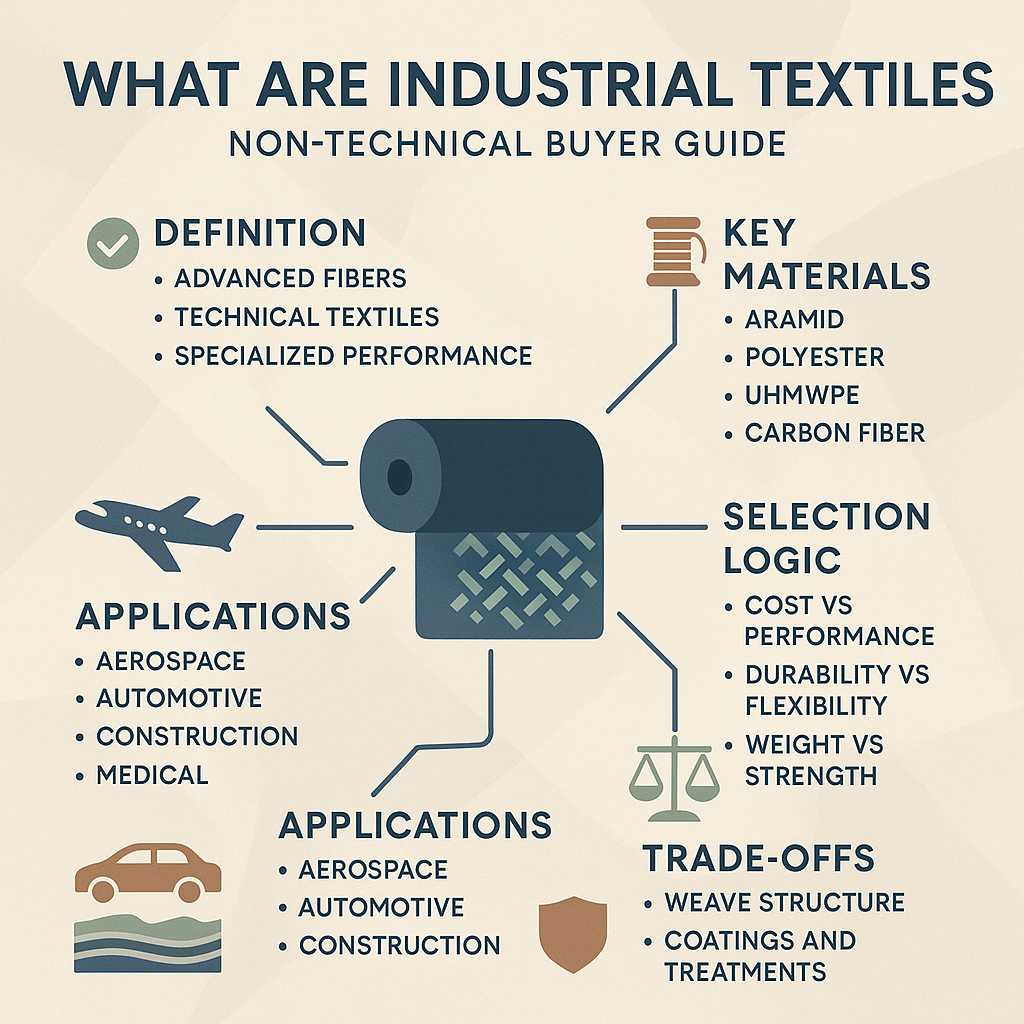
Why this what are industrial textiles matters in practical use
In the realm of industrial applications, the term industrial textiles encompasses a wide array of materials and products designed for specific functionalities. Understanding what industrial textiles are is essential for non-technical buyers, as it directly impacts decision-making in procurement, application, and performance evaluation. The significance of these materials extends beyond mere fabric; they play a pivotal role in enhancing efficiency, safety, and durability in various industries.
For instance, industries such as automotive, aerospace, and construction rely heavily on high-end industrial textiles for components that require exceptional strength, lightweight properties, and resistance to environmental factors. By grasping the nuances of industrial textiles, buyers can better align their needs with the right materials, ensuring optimal performance and cost-effectiveness.
How the industrial textiles is typically defined and where the boundaries really are
At its core, industrial textiles refer to fabrics and materials engineered for specific industrial applications. These textiles differ from conventional fabrics in that they are often designed with enhanced properties to meet rigorous performance standards.
What people often oversimplify
One common oversimplification is equating industrial textiles solely with heavy-duty fabrics. While durability is a key characteristic, industrial textiles also include lightweight, flexible materials that offer unique functionalities. For example, technical textiles may incorporate advanced fibers like UHMWPE or carbon fiber, which provide exceptional strength-to-weight ratios and resistance to wear and tear.
Additionally, the boundaries of what constitutes industrial textiles can be blurred. Many buyers may not realize that textiles used in medical applications, protective clothing, or even geotextiles fall under this category. Understanding this breadth is crucial for making informed choices.
Key materials, structures, or design choices that shape performance
The performance of industrial textiles is influenced by several factors, including the materials used, the structure of the textile, and the design choices made during production. Each of these elements can significantly affect the final product’s suitability for a given application.
What changes the most from one application to another
- Material Composition: Different applications may require specific fibers, such as aramid for heat resistance or polyester for moisture management.
- Weave Structure: The way fibers are woven together can impact tensile strength, flexibility, and breathability. For example, a tight weave may enhance durability but reduce flexibility.
- Coatings and Treatments: Additional treatments, such as waterproofing or flame retardants, can further tailor textiles to meet specific performance criteria.
Understanding these factors allows buyers to evaluate how well a textile will perform in their specific context, whether it be in a high-stress environment or a more controlled setting.
Selection logic: what to evaluate before choosing a solution
When selecting industrial textiles, a systematic approach is essential. Buyers should consider several key criteria to ensure they choose the most appropriate solution for their needs.
Common trade-offs to keep in mind
- Cost vs. Performance: Higher-performing materials often come at a premium. Buyers must assess whether the benefits justify the costs in their specific application.
- Durability vs. Flexibility: Some applications may prioritize durability, while others may require flexibility. Understanding the specific demands of the application is crucial.
- Weight vs. Strength: Lightweight materials can enhance efficiency but may compromise strength. Buyers should evaluate the critical balance needed for their application.
By weighing these trade-offs, buyers can make more informed decisions that align with their operational requirements and budget constraints.
Application examples and practical takeaways
To further illustrate the importance of understanding industrial textiles, consider the following application examples:
- Aerospace: In aircraft manufacturing, the use of advanced industrial textiles like carbon fiber composites is crucial for reducing weight while maintaining structural integrity.
- Automotive: High-performance textiles are used in automotive interiors and safety components, where both aesthetics and functionality are paramount.
- Construction: Geotextiles play a vital role in soil stabilization and erosion control, demonstrating the diverse applications of industrial textiles.
These examples highlight the versatility and critical role of industrial textiles across various sectors. Buyers should take note of the specific requirements of their industry and application to ensure they select the right materials.
Conclusion
Understanding what industrial textiles are and the factors that influence their performance is essential for non-technical buyers. By recognizing the complexities of material selection, application fit, and performance considerations, decision-makers can navigate the landscape of industrial textiles more effectively.
As you consider your options, keep in mind the trade-offs that may arise and the specific demands of your application. A thoughtful approach to material selection can lead to enhanced performance, cost savings, and ultimately, a more successful outcome in your industrial endeavors.
In summary, take the time to evaluate your needs, understand the materials available, and consider how they align with your operational goals. This framework will serve you well as you navigate the world of industrial textiles.