
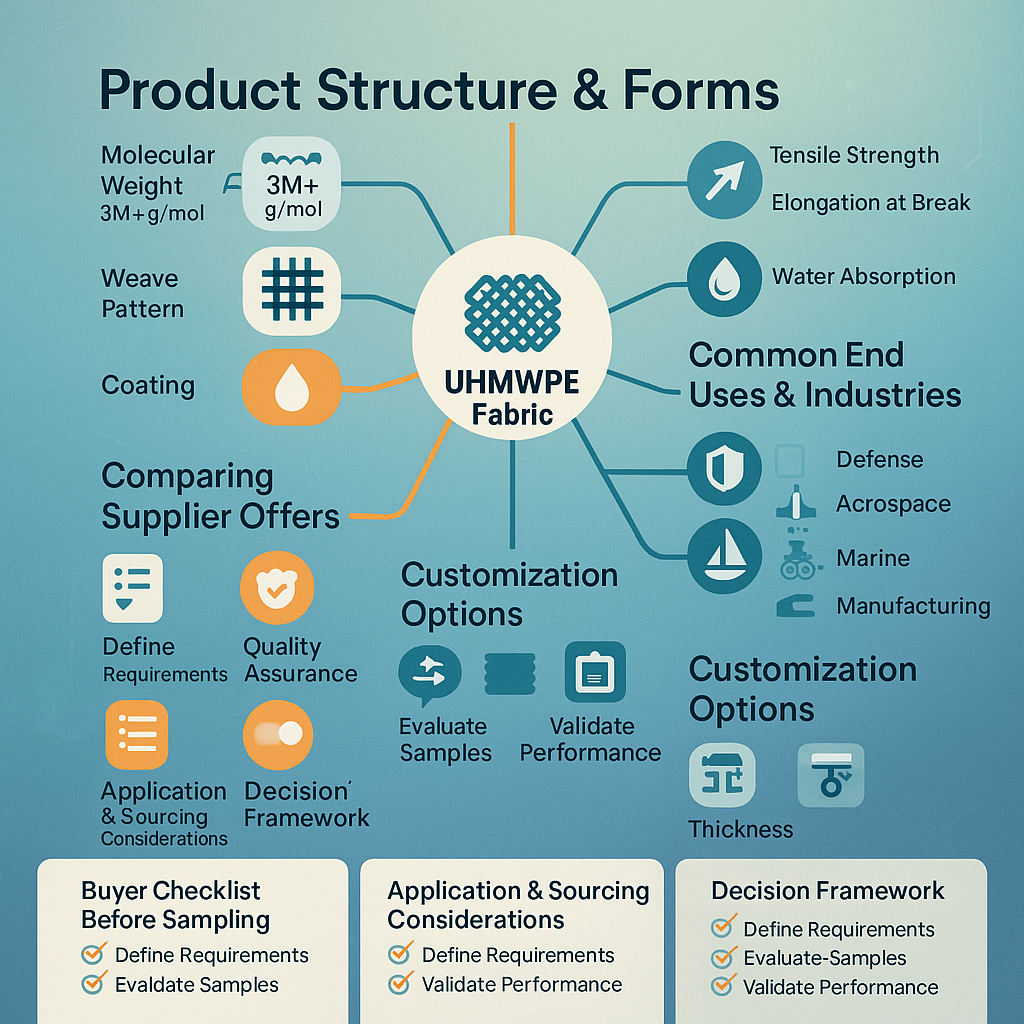
Product Structure and Available Forms
UHMWPE (Ultra High Molecular Weight Polyethylene) fabric is renowned for its exceptional strength-to-weight ratio, chemical resistance, and low friction properties. Understanding its structure and available forms is essential for identifying potential defects and ensuring optimal performance in various applications.
Key Technical Points
UHMWPE fabric is typically produced through a process that involves the spinning of UHMWPE fibers into a textile structure. The key technical points to consider include:
- Molecular Weight: UHMWPE fibers have a molecular weight exceeding 3 million g/mol, contributing to their high tensile strength and durability.
- Weave Patterns: The fabric can be woven in various patterns, affecting its flexibility, strength, and suitability for specific applications.
- Coating Options: Some UHMWPE fabrics are coated with additional materials to enhance properties such as water resistance or UV protection.
Application and Sourcing Considerations
When sourcing UHMWPE fabric, it’s vital to consider the intended application. Common applications include:
- Protective clothing and gear
- Industrial liners and belts
- Marine applications such as sails and rigging
Understanding the specific requirements of these applications can help in identifying potential defects that may arise from improper material selection.
Buyer Checklist Before Sampling
Before sampling UHMWPE fabric, buyers should consider the following checklist:
- Define the specific application and performance requirements.
- Review the supplier’s certifications and quality assurance processes.
- Request samples to assess the fabric’s properties and suitability.
Key Specifications and Test Items
Understanding the key specifications and test items for UHMWPE fabric is crucial for evaluating its quality and performance. Common specifications include:
Key Technical Points
Key specifications to consider include:
- Tensile Strength: A critical measure of the fabric’s ability to withstand pulling forces.
- Elongation at Break: Indicates the fabric’s flexibility and ability to stretch without breaking.
- Water Absorption: Important for applications where moisture resistance is critical.
Application and Sourcing Considerations
When evaluating specifications, consider how they align with the intended application. For instance, high tensile strength is essential for protective gear, while low water absorption may be more critical for marine applications.
Buyer Checklist Before Sampling
Before sampling, ensure you have:
- A clear understanding of the performance metrics required for your application.
- Access to relevant test data from the supplier.
- A method for evaluating the samples against your specifications.
Common End Uses and Industries
UHMWPE fabric is utilized across various industries due to its unique properties. Understanding these applications can help in recognizing potential defects and their implications.
Typical Industries Using This Material
- Defense and law enforcement (for protective gear)
- Aerospace (for lightweight components)
- Marine (for sails and rigging)
- Manufacturing (for conveyor belts and liners)
Why Engineers and Buyers Choose It
Engineers and buyers often select UHMWPE fabric for its:
- Exceptional strength and durability
- Resistance to chemicals and UV light
- Low friction properties, making it ideal for moving parts
When Another Material May Be Better
While UHMWPE fabric has many advantages, there are scenarios where alternative materials may be more suitable. For instance:
- For applications requiring high-temperature resistance, aramid fibers may be a better choice.
- In environments where flexibility is paramount, softer fabrics may outperform UHMWPE.
Customization Options
Customization of UHMWPE fabric can enhance its performance for specific applications. Understanding available options is crucial for making informed decisions.
Key Technical Points
Customization can include:
- Adjusting the weave pattern for specific strength or flexibility requirements.
- Incorporating coatings for additional properties like water resistance or fire retardancy.
- Modifying thickness to meet specific performance criteria.
Application and Sourcing Considerations
When considering customization, evaluate how these changes will impact the fabric’s performance in your application. For example, a thicker fabric may offer more durability but could reduce flexibility.
Buyer Checklist Before Sampling
Before sampling customized UHMWPE fabric, ensure you:
- Clearly define the customization requirements based on your application.
- Discuss potential impacts on performance with your supplier.
- Request samples that reflect the desired customizations.
Sampling, Qualification, and Order Workflow
A structured approach to sampling and qualification is essential for ensuring the UHMWPE fabric meets your specifications.
Key Technical Points
Key steps in the workflow include:
- Initial discussions with suppliers to define requirements.
- Receiving and evaluating samples based on predefined criteria.
- Conducting necessary tests to validate performance.
Application and Sourcing Considerations
Consider how the sampling process aligns with your project timelines and requirements. Ensure that the testing methods used are relevant to your application.
Buyer Checklist Before Sampling
Before initiating the sampling process, ensure you have:
- A clear understanding of your project timeline and deadlines.
- A defined set of performance criteria for evaluation.
- A method for documenting and comparing results from different samples.
How to Compare Offers from Different Suppliers
When evaluating offers from various suppliers, a systematic approach can help ensure you select the right UHMWPE fabric for your needs.
Key Technical Points
Consider the following when comparing offers:
- Specifications: Ensure that the fabric meets your performance requirements.
- Quality Assurance: Review the supplier’s quality control processes and certifications.
- Customization Options: Evaluate the flexibility of suppliers to meet your specific needs.
Application and Sourcing Considerations
Assess how each supplier’s offerings align with your application requirements. Consider factors such as lead times, support, and after-sales service.
Buyer Checklist Before Sampling
Before finalizing your supplier choice, ensure you:
- Have a comprehensive understanding of each supplier’s strengths and weaknesses.
- Compare pricing structures, but prioritize quality and performance.
- Document your findings to facilitate informed decision-making.
Conclusion
Understanding the common defects in UHMWPE fabric is essential for making informed decisions in material selection and application. By considering the product structure, specifications, and sourcing considerations, buyers can better navigate the complexities of UHMWPE fabric. A thoughtful approach to sampling and supplier evaluation can further enhance the likelihood of successful outcomes in various industrial applications.
Ultimately, a clear decision framework can guide engineers and buyers in selecting the right UHMWPE fabric, ensuring it meets the demands of their specific applications while minimizing the risk of defects.