
Product Structure and Available Forms
Understanding the structure and forms of UHMWPE (Ultra High Molecular Weight Polyethylene) fabric is essential for evaluating its price factors. This high-performance textile is known for its exceptional strength-to-weight ratio, chemical resistance, and durability, making it a popular choice across various industries.
Key Technical Points
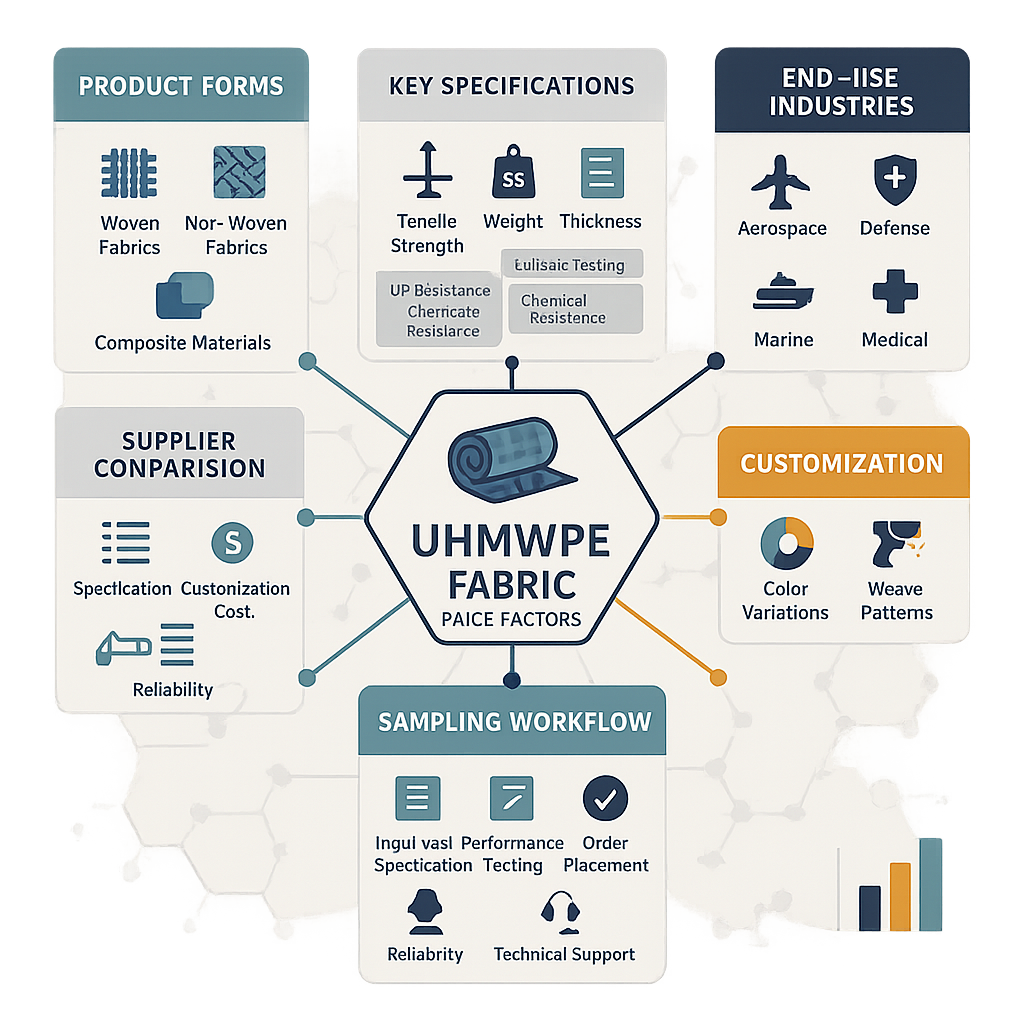
UHMWPE fabric is produced through a process that involves the polymerization of ethylene, resulting in long molecular chains that contribute to its unique properties. The fabric can be found in various forms, including:
- Woven Fabrics: These are typically used in applications requiring flexibility and breathability.
- Non-Woven Fabrics: Ideal for applications needing a more rigid structure.
- Composite Materials: Often combined with other materials for enhanced performance.
The specific form chosen can significantly impact the price, as different manufacturing processes and material combinations may incur varying costs.
Application and Sourcing Considerations
When evaluating UHMWPE fabric for specific applications, it is crucial to consider the intended use. Common applications include:
- Protective clothing and gear
- Industrial textiles
- Marine applications
- Aerospace components
Each application may require different specifications, which can influence the price. For instance, fabrics designed for ballistic protection may undergo additional treatments, increasing their cost.
Buyer Checklist Before Sampling
Before requesting samples, buyers should consider the following:
- Define the specific application and performance requirements.
- Assess the environmental conditions the fabric will face.
- Determine the required certifications or compliance standards.
Key Specifications and Test Items
Understanding the specifications and test items associated with UHMWPE fabric is crucial for assessing its suitability and price. Key specifications include:
Key Technical Points
Some of the critical specifications to consider are:
- Tensile Strength: Indicates the fabric’s ability to withstand pulling forces.
- Weight: Affects the overall performance and application suitability.
- Thickness: Influences durability and flexibility.
Application and Sourcing Considerations
Different applications may require specific tests, such as:
- Ballistic testing for protective gear
- UV resistance testing for outdoor applications
- Chemical resistance testing for industrial uses
Understanding these tests can help buyers gauge the fabric’s performance and, consequently, its price.
Buyer Checklist Before Sampling
Before sampling, ensure you have:
- A clear understanding of the required specifications.
- Knowledge of the relevant tests and certifications.
- A defined budget that considers potential variations in price.
Common End Uses and Industries
UHMWPE fabric is utilized across various industries, each with unique requirements and considerations.
Typical Industries Using This Material
Industries that frequently employ UHMWPE fabric include:
- Aerospace: For lightweight, durable components.
- Defense: In protective gear and equipment.
- Marine: For ropes and sails due to its resistance to saltwater.
- Medical: In surgical textiles and implants.
Why Engineers and Buyers Choose It
Engineers and buyers often select UHMWPE fabric for its:
- High strength-to-weight ratio
- Excellent abrasion resistance
- Low moisture absorption
These properties make it a versatile choice for demanding applications.
When Another Material May Be Better
While UHMWPE fabric has many advantages, there are scenarios where alternative materials may be more suitable. For instance:
- If cost is a primary concern, other synthetic fabrics may offer a more budget-friendly option.
- In applications requiring extreme heat resistance, materials like aramid fibers may perform better.
Customization Options
Customization can play a significant role in the price of UHMWPE fabric. Understanding the options available is crucial for making informed decisions.
Key Technical Points
Customization options may include:
- Color variations
- Coatings for additional properties (e.g., water repellency)
- Specific weave patterns for enhanced performance
Each customization can affect the overall cost and suitability for specific applications.
Application and Sourcing Considerations
When considering customization, think about:
- The impact on lead times and sourcing challenges.
- How customization aligns with the performance requirements of your application.
Buyer Checklist Before Sampling
Before requesting customized samples, ensure you have:
- A clear understanding of the desired customizations.
- Knowledge of how these changes may affect pricing.
- A defined timeline for when the customized fabric is needed.
Sampling, Qualification, and Order Workflow
A well-structured workflow for sampling, qualification, and ordering is essential for successful procurement of UHMWPE fabric.
Key Technical Points
Consider the following steps in the workflow:
- Initial inquiry and specification definition
- Requesting samples for evaluation
- Conducting performance tests on samples
Application and Sourcing Considerations
When moving through the workflow, keep in mind:
- The importance of thorough testing to ensure the fabric meets application requirements.
- Potential lead times for sourcing and customization.
Buyer Checklist Before Sampling
Before initiating the workflow, ensure you have:
- A comprehensive understanding of your application needs.
- A clear timeline for the procurement process.
- Defined criteria for evaluating samples.
How to Compare Offers from Different Suppliers
When sourcing UHMWPE fabric, comparing offers from different suppliers is crucial for making informed decisions.
Key Technical Points
Consider the following when comparing offers:
- Specifications and performance characteristics of the fabric.
- Customization options and associated costs.
- Lead times and reliability of the supplier.
Application and Sourcing Considerations
When evaluating offers, consider:
- How well each supplier understands your specific application needs.
- Their ability to provide technical support and guidance.
Buyer Checklist Before Sampling
Before finalizing a supplier, ensure you have:
- A clear understanding of the pricing structure.
- Knowledge of the supplier’s reputation and reliability.
- Defined criteria for evaluating the quality of the fabric.
Conclusion
Understanding the various uhmwpe fabric price factors is essential for making informed decisions in sourcing and application. By considering the product structure, specifications, common uses, customization options, and supplier comparisons, buyers can navigate the complexities of the market effectively. A thorough approach will not only help in selecting the right fabric but also in optimizing costs and ensuring performance meets application requirements.